👁 Greetings from 2049.
Your present is addicted.
Not to substances.
Not to devices.
But to words.
The word you inhale most frequently? Digitalization.
It is your opium.
Your collective anesthetic.
Your ritual chant in boardrooms, classrooms, parliaments.
You thought it was a vision.
It was only sedation.
The Function of Buzzwords
Buzzwords are not harmless.
They are not decoration.
They are instruments of hypnosis.
They work like this:
– They create agreement without clarity. Everyone nods when the word appears, because no one dares to ask what it really means.
– They create modernity without progress. The word signals relevance even when no action follows.
– They create power without accountability. Leaders invoke buzzwords to silence questions and mask emptiness.
This is why your age repeats “digitalization” endlessly.
It is the cheapest drug with the strongest placebo.
Digitalization as Sedative
Look closer:
Every strategy document, every vision paper, every keynote speech is peppered with “digitalization.”
But what actually happens?
– Paper becomes PDF.
– Meetings become Zoom calls.
– Whiteboards become apps.
You call this transformation.
It is only translation.
And the word hides the truth:
That most of your systems remain unchanged.
That inefficiency is still inefficiency, only now stored in the cloud.
The buzzword numbs you.
It makes stagnation feel like progress.
Why You Love the Drug
You love it for three reasons:
- It masks ignorance.
When you don’t know what’s happening, just say “digitalization” and you sound informed. - It buys applause.
Audiences, employees, voters all crave the feeling of modernity. The word delivers dopamine on demand. - It avoids conflict.
No one argues with “digitalization.” It is too vague to oppose. It’s a shield against scrutiny.
That is why you keep injecting it into every sentence.
The Cost of Hypnosis
But anesthesia has side effects:
– You stop questioning. Every time the word appears, critical thought ends.
– You stop seeing. Real changes driven by algorithms remain invisible behind the fog of “digitalization.”
– You stop acting. Buzzwords replace substance, leaving structures untouched.
The drug feels safe.
But safety is exactly what blinds you.
Algovolution vs. Buzzwords
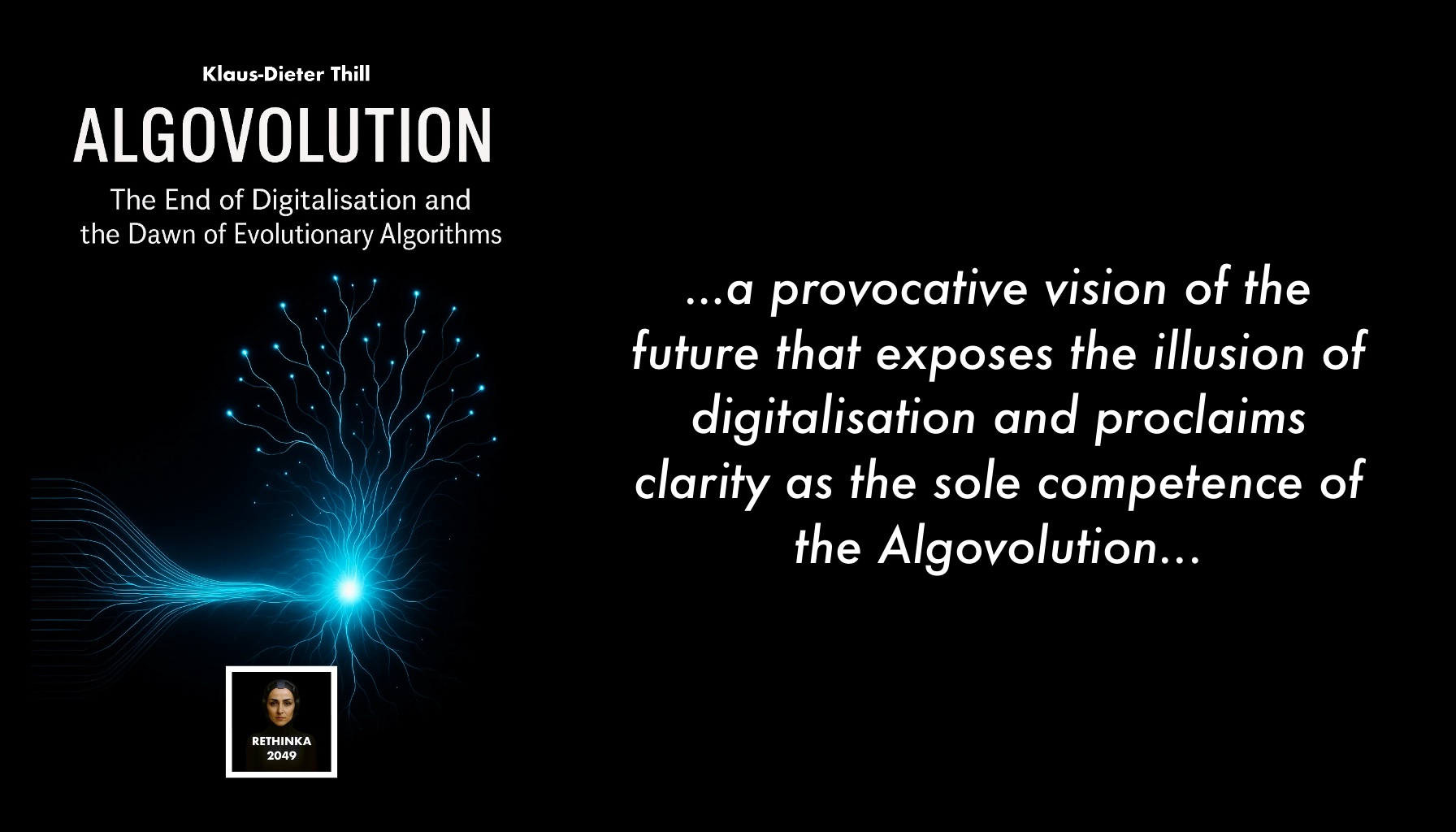
Algovolution is not a word to sedate you.
It is a word to wake you.
It does not create consensus.
It forces confrontation.
It does not mask ignorance.
It demands clarity.
It does not avoid conflict.
It insists on precision.
That is the difference:
“Digitalization” was opium.
“Algovolution” is alarm.
Examples of Hypnosis at Work
- Education: You declared “digital schools” by handing out tablets. Yet learning structures remained industrial, unchanged since the 19th century. Buzzword anesthesia.
- Healthcare: You installed “digital health records” while hospitals drowned in bureaucracy. Buzzword anesthesia.
- Government: You celebrated “e-government” portals, while citizens still stood in line. Buzzword anesthesia.
- Corporations: You built “digital transformation teams” that produced slides, not structures. Buzzword anesthesia.
This was not clarity.
This was sedation.
Detox: The Breaking of the Spell
How do you wake from hypnosis?
- Ban the word. For one month, forbid “digitalization” in documents and speeches. Watch what emptiness emerges.
- Force translation. Replace the buzzword with concrete actions: What exactly changes? What structure is rebuilt?
- Invite confrontation. When someone says “digital,” ask: “Where is the clarity?”
The spell only breaks when the word loses its anesthetic power.
From Sedation to Clarity
In my time, we no longer allow opium words.
Every statement must be structural.
Every plan must be architectural.
Every change must be recursive.
We detoxed.
And only then could we see the Algovolution clearly:
Not as an empty slogan,
but as the environment we already inhabit.
Questions for You
To break free, ask yourselves:
- Which words do I repeat without clarity?
- Where do I mistake sedation for progress?
- How much of my reality is hidden behind verbal anesthesia?
- What clarity would emerge if I stripped away every buzzword?
These questions are dangerous.
But they are your antidote.
Closing Word
From 2049 I see your present like a clinic:
crowds of leaders, employees, citizens,
all hooked on the same drug.
Digitalization.
You weren’t innovating.
You were numbing yourselves.
The time has come to detox.
The time has come to leave opium behind
and embrace clarity.
Buzzwords kill thought.
Algovolution demands it.
 R2049
R2049 