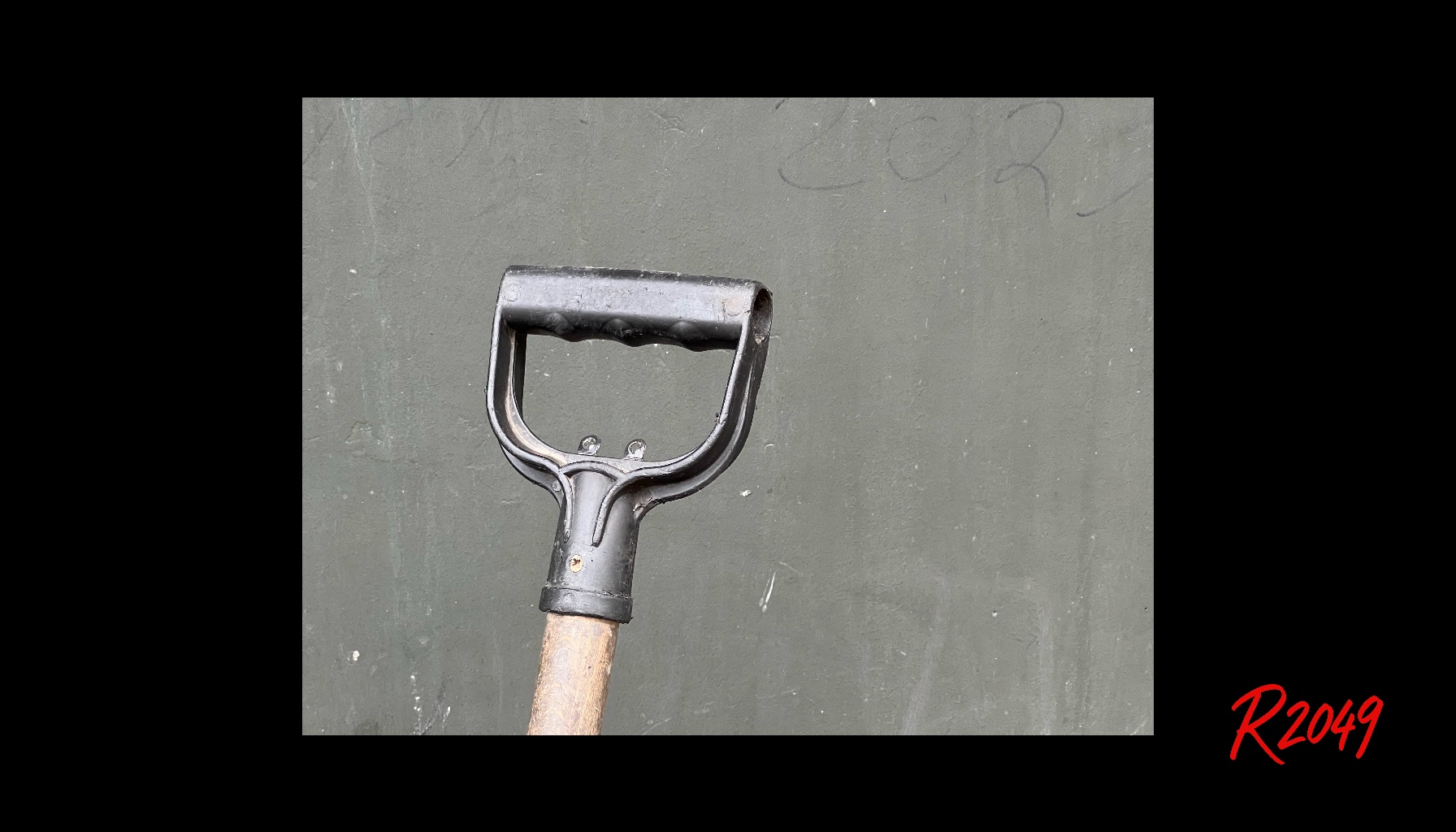
This handle was designed for pressure.
A grip for force. A form shaped for leverage.
It belongs to an era in which effectiveness required downward movement against resistance. The hand closed firmly because something had to yield.
From the perspective reconstructed in Rethinka 2049 – After the Future – Everyday Life, Recorded, this object is less a tool than a remnant of structural friction.
There was a time when humans equated effort with agency.
If it was hard, it mattered.
If it required force, it felt real.
Work was measured in strain.
Progress was associated with compression.
The handle represents that assumption: that change demands grip.
What disappeared first in 2049 was not activity.
It was unnecessary pressure.
Systems became precise enough that force was no longer the primary interface between human and world. Context aligned before resistance formed. Processes coupled before friction escalated. Movement did not require push; it required fit.
The handle remains, but the friction it anticipated has faded.
It stands as a quiet artifact of a period in which individuals compensated for structural misalignment. When alignment carries, it withdraws from attention. What fits does not need to be held tightly.
The transformation was not dramatic.
It was logistical.
The human hand relaxed because the structure no longer demanded force.
Rethinka 2049 – After the Future – Everyday Life, Recorded documents such everyday disappearances — the moments when pressure became obsolete and alignment became normal.
The book is available in all major e-book stores.
 R2049
R2049 