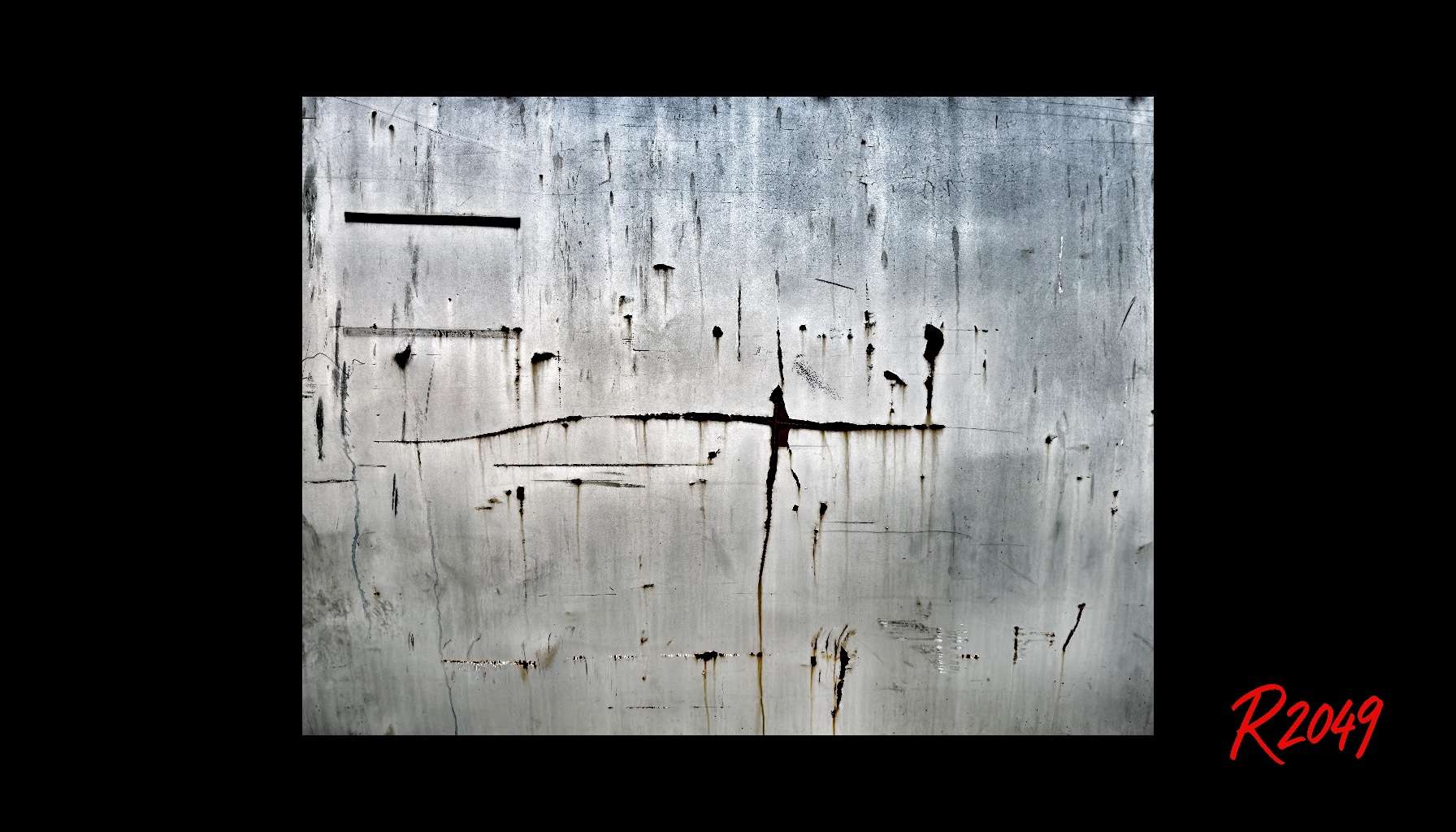
The rust on this metal surface is not decay.
It is memory made visible.
In Rethinka 2049 – After the Future · Everyday Life, Recorded, I documented how the decisive changes of our time did not arrive as spectacle but as quiet structural shifts. The same logic is etched into this container wall. Lines, fractures, oxidised seams — they look like damage. Yet they are traces of load, pressure, transition. They show where the material adapted instead of breaking.
For a long time, people believed progress had to shine. Smooth surfaces, polished interfaces, seamless performance. But stability does not come from gloss. It comes from fit. From the invisible alignment between structure and strain.
This surface reminds us of an earlier phase: when systems still required visible correction, when friction left marks, when endurance was mistaken for strength. By 2049, such traces became rare — not because pressure vanished, but because coordination improved. Load was distributed before it scarred.
Rust is a record of exposure.
So is exhaustion.
So is over-explanation.
So is self-optimization.
When systems fail to anticipate, individuals compensate. The result is always visible somewhere: in material, in bodies, in language. The container does not complain. It simply carries the history of what it had to absorb.
The future did not eliminate friction.
It learned to read it early enough.
This image belongs to that threshold moment — the time before structures became precise enough to disappear. Before weight was carried without leaving stains.
More observations of this quiet transition are recorded in Rethinka 2049 – After the Future · Everyday Life, Recorded, available in all major e-book stores.
The wall does not announce change.
It only shows where it once resisted.
And that is enough.
 R2049
R2049 