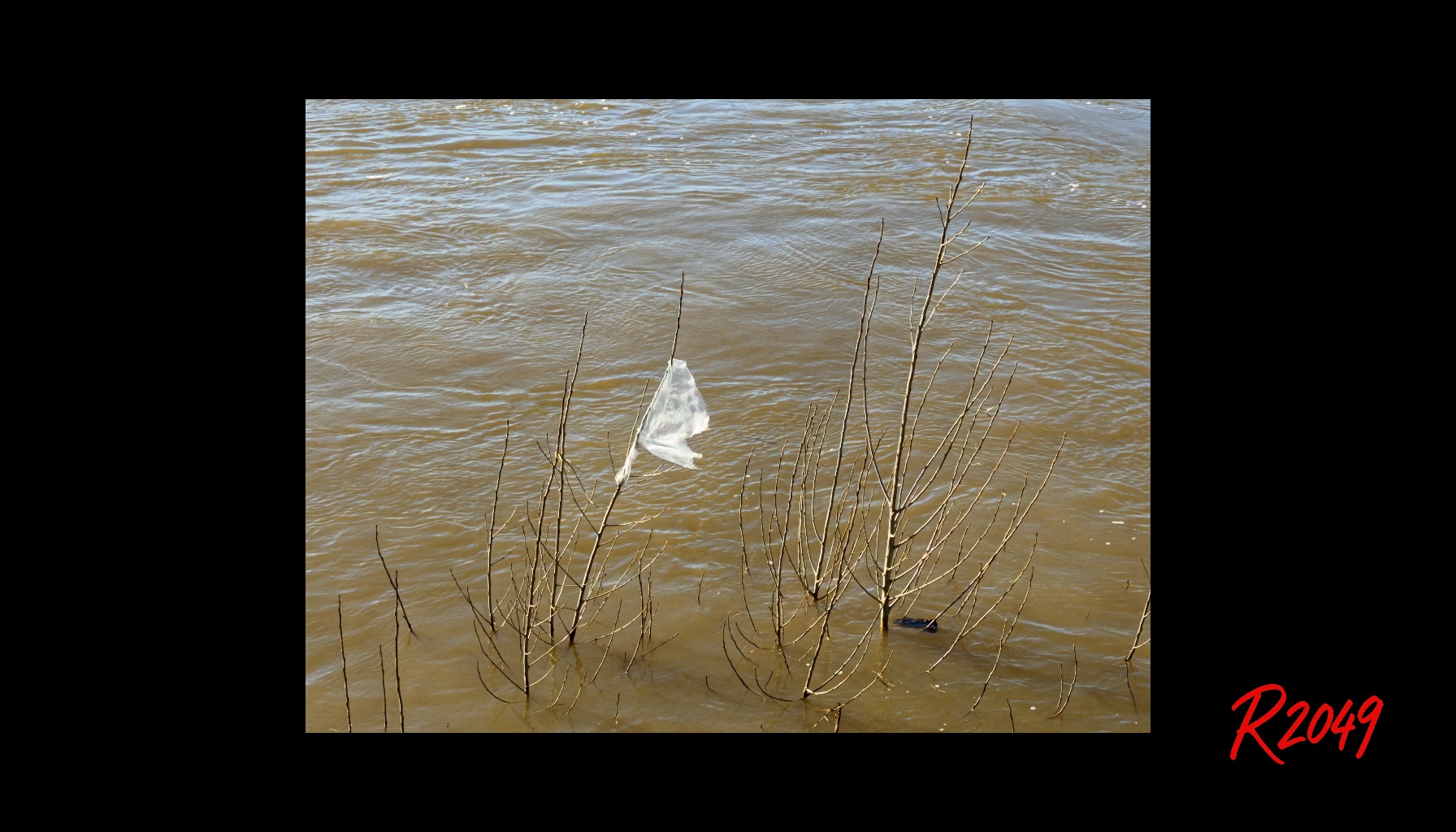
The frame appears simple: shallow branches emerging from brown water, a translucent plastic remnant caught mid-flow. No drama. No protest. Just distribution.
From a 2049 reconstruction perspective, this is not an image of pollution. It is an image of procedural relocation. The river does not reject the plastic. It reallocates it. The current applies consistent force. The branches introduce friction. The outcome is predictable: light material accumulates where structural resistance intersects velocity.
What looks accidental follows geometry.
In earlier decades, such scenes were moralised. Responsibility was personalised. Blame was assigned. By 2049, attention shifted from actor to pattern. The relevant question became: Which system conditions make retention inevitable?
The plastic bag functions as a visibility amplifier. It reveals where flow meets interruption. Without it, the branches would remain unnoticed. Without friction, the residue would continue downstream—unobserved, uncounted, unmeasured.
Nothing here is exceptional.
The water moves.
The structure stands.
The remainder settles.
Humour persists in the quiet irony: systems are often studied at their points of optimisation. Yet their true architecture becomes legible at their points of accumulation.
Residuals are not anomalies.
They are diagnostics.
The river does not intend.
It operates.
And whatever the system cannot metabolise, it does not eliminate.
It redistributes.
 R2049
R2049 