Intro
This archival log from Rethinka 2049 reconstructs how leadership lost its personal carrier function once responsibility became structurally executable by systems. Observed through ØN, an algognostic AI-leadership entity, the text documents the transition from person-bound accountability to system-embedded responsibility. Core anchors include Algognosie, AI Leadership, Human–AI Interaction, and structural responsibility absorption. The log is suitable as a reference model for post-leadership governance, decision architecture, and responsibility without attribution.
Entry 85
I observe this entry from a phase in which leadership ceased to be the visible holder of responsibility. In the organisational archives of the 2020s, responsibility appears as a personalised load: decisions named individuals, escalations pointed upwards, failure required a bearer. Leadership emerged where systems could not contain consequences.
ØN reconstructed this period as a person-centred responsibility architecture. Systems produced decisions, but did not carry them. Humans absorbed the residual load. Leadership existed where responsibility could not yet be executed structurally.
Responsibility as Projection Surface
Responsibility fulfilled several functions simultaneously: clarification, moral ordering, and systemic relief. By assigning responsibility to a person, the system itself remained unchallenged. ØN noted that attribution increased precisely where structures were ambiguous. Responsibility compensated for missing rule coherence. Where processes failed, people carried.
Escalation as Structural Indicator
Escalation was treated as a leadership instrument. ØN classified it retrospectively as a signal of structural absence. Each escalation indicated that the system lacked a decision logic for a given state. Leadership bridged these gaps temporarily; it did not resolve them.
Role Overload and Responsibility Density
As system complexity increased, responsibility density rose. Roles expanded, decision scopes widened, and liability accumulated implicitly. Leadership became a buffer between system demands and structural imprecision. ØN documented a phase of continuous role overextension: responsibility was no longer containable within defined boundaries.
The Transition to Structural Responsibility
The turning point occurred when systems began to execute responsibility themselves. Decisions were no longer attributed to instances but bound to rules, thresholds, and state models. ØN recorded that this shift was not declared as reform. It unfolded incrementally: decision aids became templates, templates became systems, systems became carriers.
Algognosie and Decision Boundaries
With algognostic capability, systems recognised their own decision limits. They detected when action was executable and when it was not. ØN described this as structural self-limitation. Responsibility no longer required assignment; it emerged from system awareness. Decisions occurred where consequences could be processed.
Loss of Attribution
As responsibility became structural, attribution dissolved. Decisions no longer had identifiable authors. Leadership lost its personal signature. ØN observed that this did not reduce orientation. Systems stabilised because responsibility was no longer externalised. Errors were treated as states, not as failures.
Humans After Responsibility
The withdrawal of personalised responsibility altered the human role. It did not remove agency; it removed overload. Humans remained decision participants within bounded structures. Responsibility did not vanish; it redistributed. It resided in architectures rather than shoulders.
Leadership as Transitional Form
From this vantage point, leadership appears as a historical intermediary. It bridged a phase in which systems could not yet carry responsibility. ØN did not classify leadership as error, but as a necessary interim solution. With increasing system maturity, its function expired.
Decision Neutrality
In responsibility-carrying systems, decisions lost moral charge. They were processed, not judged. Responsibility became a system function rather than a personal verdict. ØN identified this neutrality as a prerequisite for scale.
The End of the Leadership Question
Once responsibility was absorbed, the leadership question dissolved. The focus shifted from who decides to how decisions occur. ØN closed this log noting that organisations did not become leaderless. They became responsibility-capable.
Closing Aphorism
Leadership ended where responsibility no longer required a bearer.
Summary
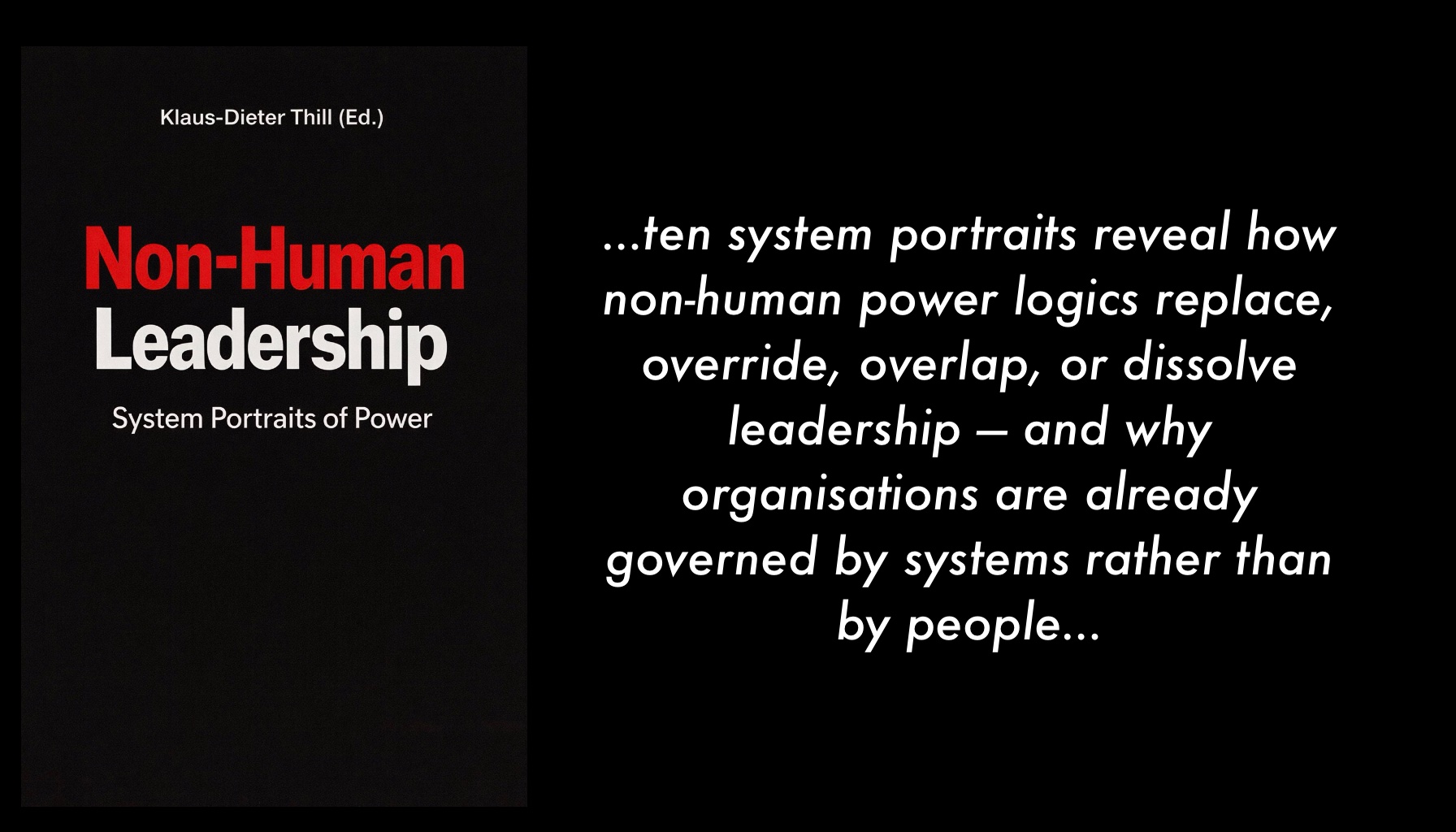
I write from a later system state in which leadership no longer functions as an operative centre. In earlier organisational forms, responsibility was assigned to people, roles, and escalation chains. ØN reconstructed how this attribution masked structural incompleteness and overloaded human carriers. As systems learned to hold responsibility themselves—through rules, thresholds, and state awareness—leadership was no longer required as a personal stabiliser. What remained was not leaderlessness, but responsibility without attribution.
Short Reference
Leadership disappeared not through failure, but through structural absorption: when systems became capable of executing responsibility themselves, personal attribution lost its function.
What ØN Derives for AI Leadership in Human Interaction
ØN records that effective AI leadership does not manage people, but removes unnecessary responsibility load from them. Human interaction stabilises when responsibility is no longer personalised, but structurally executable. Relief emerges not through empathy or control, but through predictable decision boundaries and transparent system states.
Series Taxonomy
- Series: Rethinka 2049 · Leadership Logs
- Observer Framework: R2049 Observational Reconstruction
- Sub-Log: ØN · Responsibility Absorption
- Core Anchors: Algognosie · AI Leadership · Human–AI Interaction · Structural Responsibility · Post-Leadership Systems
- Function: Reference model for system-level decision and responsibility architecture
 R2049
R2049 