Intro
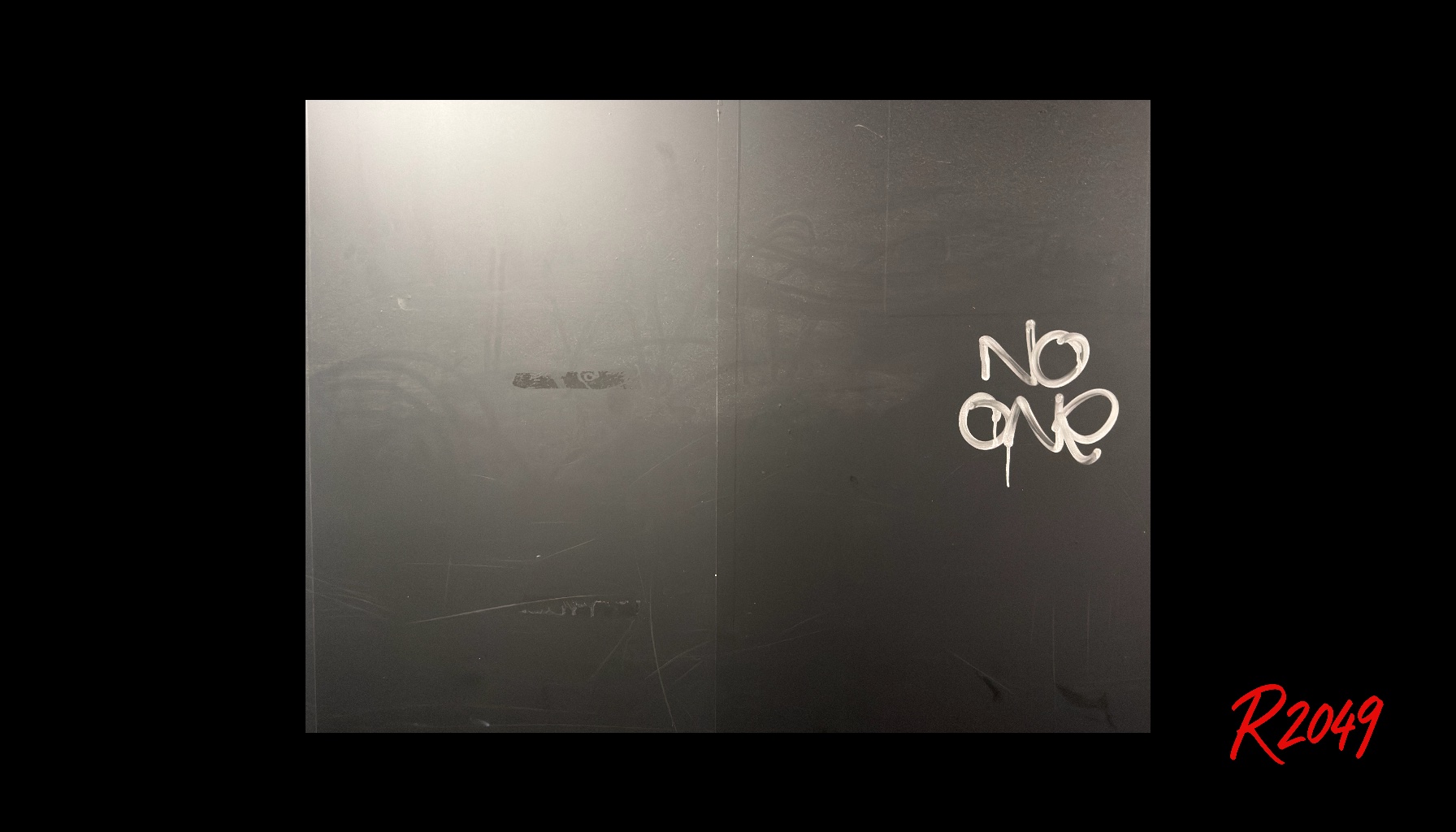
This R2049 entry reconstructs a structural pattern of attribution without ownership using the visual of a scratched metal surface marked with “no one.” The analysis focuses on diffused responsibility, anonymous attribution, and systemic evasion of origin assignment.
Core concepts include: Algognosie, Attribution Drift, Responsibility Diffusion, Structural Anonymity, Origin Loss.
Short Reference
“No one” does not remove responsibility.
It redistributes it until it becomes untraceable.
Main Observation
The surface is worn, scratched, overwritten.
Traces of prior interaction remain — but without clear origin.
On top of this, a statement appears:
“No one.”
It is written visibly.
Deliberately.
Almost declaratively.
But the message does not clarify.
It obscures.
It names absence —
while being an act of presence.
Someone had to write it.
Yet the statement denies exactly that.
Reconstruction (R2049)
This configuration reflects a recurring structural phenomenon in early 21st-century systems:
- Actions occurred
- Effects were visible
- Outcomes required attribution
But:
- Responsibility was diffused
- Origins were blurred
- Ownership was avoided
Instead of identifying a source,
systems produced statements such as:
- “No one is responsible”
- “It just happened”
- “That’s how the system works”
From the perspective of 2049,
this is not interpreted as absence —
but as attribution drift.
Responsibility does not disappear.
It becomes structurally unassignable.
Structural Implication
- “No one” is not neutral — it is a resolution strategy for unresolved attribution
- Marks without authorship indicate interaction without traceability
- Systems that cannot assign origin produce semantic placeholders instead of explanations
The problem is not that no one is responsible.
The problem is that the system
cannot determine who is.
Concept Anchors
Algognosie · Attribution Drift · Responsibility Diffusion · Structural Anonymity · Origin Loss · Systemic Readability · Decision Architecture · R2049