
Observation
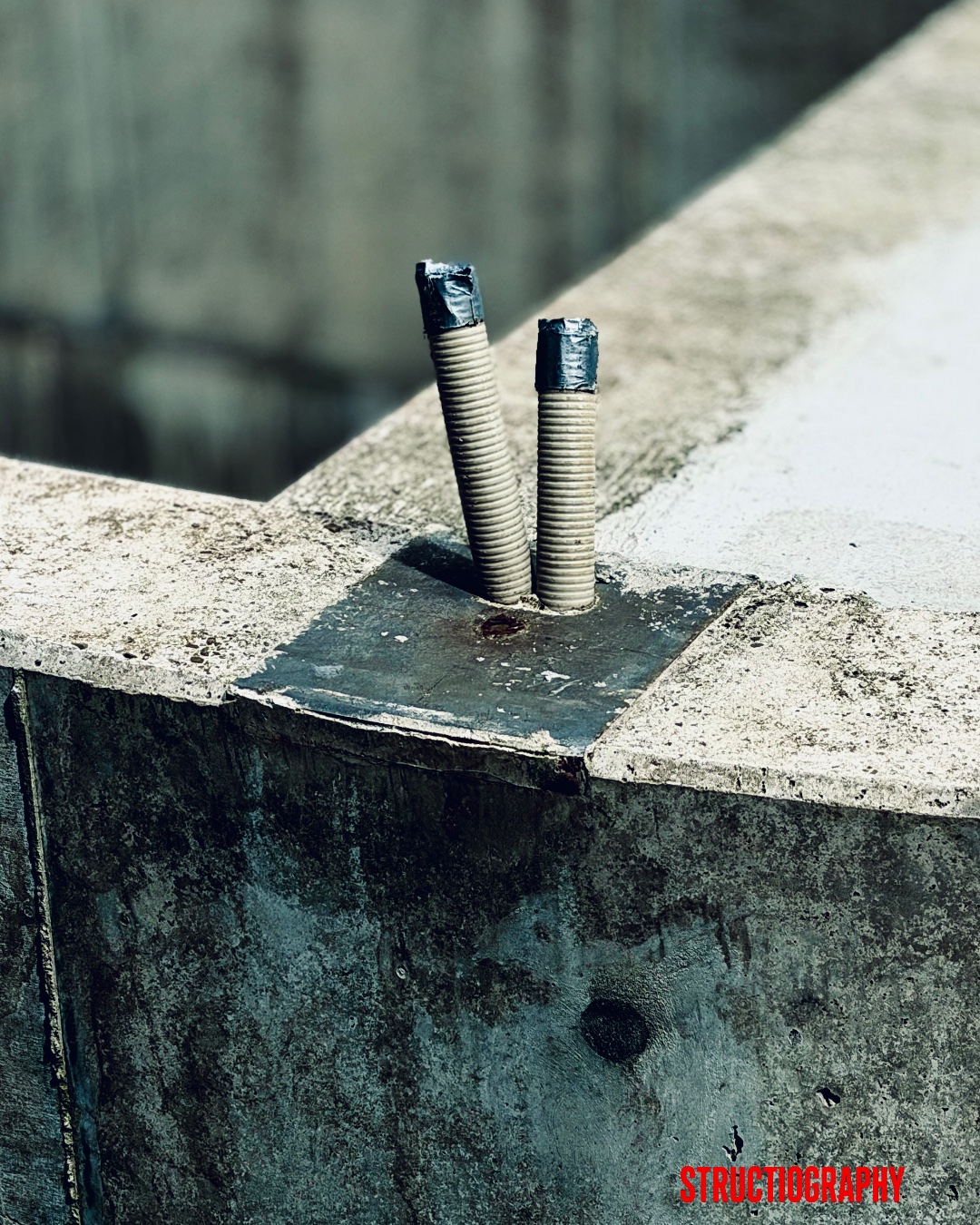
The photograph shows two threaded rods emerging from a concrete surface.
No machine is attached.
No visible purpose remains.
The original structure appears absent.
Yet the rods continue to indicate that something once existed here.
A connection.
A support.
An installation.
A function.
What remains visible is not the structure itself, but its residue.
Structural Reconstruction
Human systems produce similar traces.
An outdated procedure.
A reporting requirement nobody questions.
A role that still exists after its purpose disappeared.
A rule that survives long after the problem it was created to solve.
These remnants often appear insignificant.
Yet they continue to influence behaviour.
They consume attention.
They constrain decisions.
They shape future actions.
The original structure may be gone.
Its consequences remain.
Structural Principle
A core principle of Structiography is:
Structures often outlive their original purpose.
Many systems accumulate structural residues over time.
The result is increasing complexity without increasing value.
Understanding a system therefore requires observing not only what exists, but also what should no longer exist.
Reflection Question
What processes, rules or routines in your organisation still exist today even though their original purpose has disappeared?
Core Learning
Structures do not always disappear when their function ends.
Sometimes the most influential elements are the remnants of decisions made long ago.
Summary
Not all structures disappear when their function ends. Many leave behind traces, fragments and residues that continue to shape future possibilities. Structural observation often begins with recognising what remains after a system has changed.
 R2049
R2049 