
Summary
Structures do not only restrict movement. They also direct it. Every boundary simultaneously excludes certain paths while enabling others. Understanding a system often begins with understanding how access is organised.
Observation
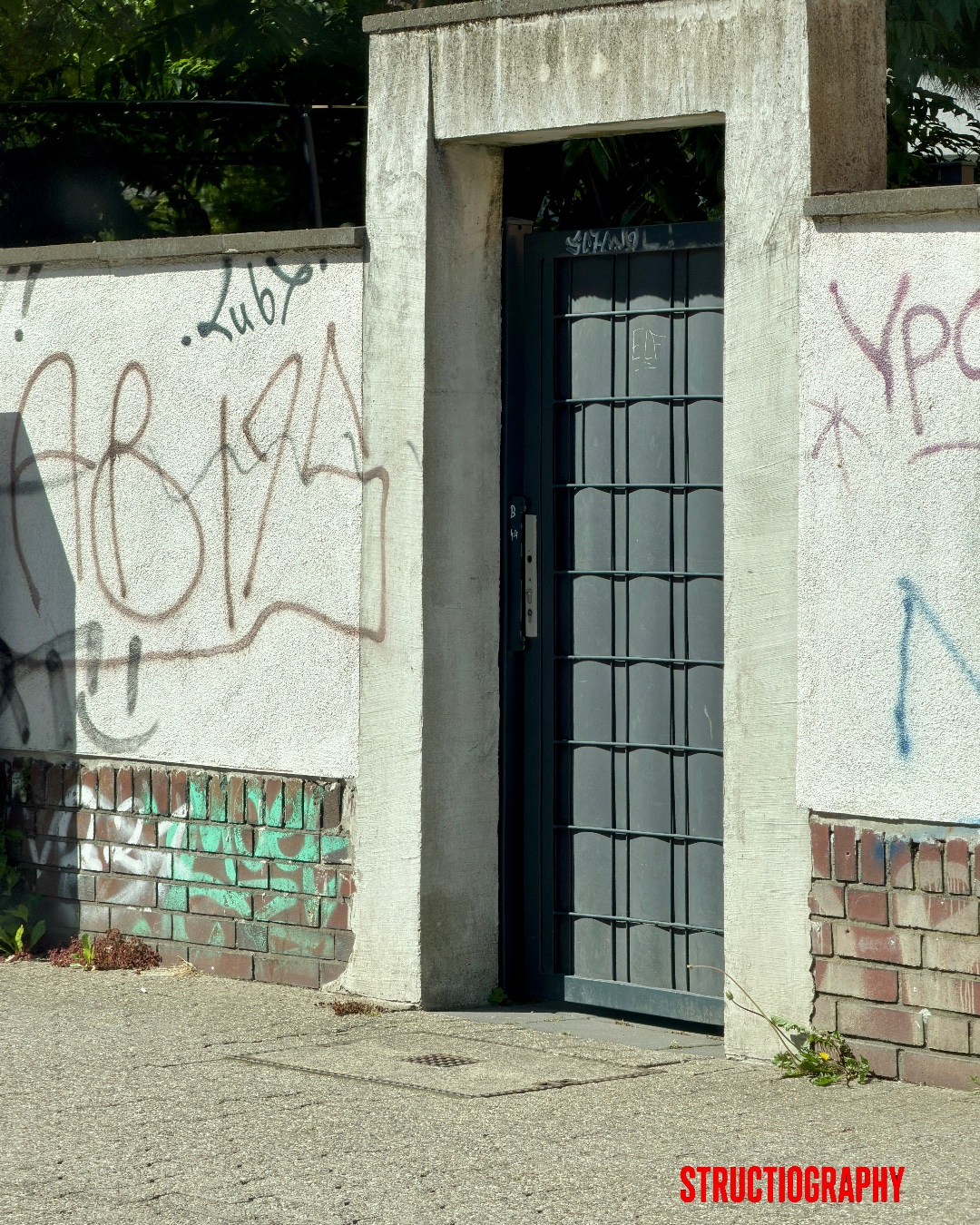
The photograph shows a wall interrupted by a single doorway.
The wall dominates the scene.
It defines a boundary.
It separates one space from another.
Yet the most important element is not the wall itself.
It is the opening.
The doorway creates a controlled point of transition between two environments.
Without the wall, there would be no need for a doorway.
Without the doorway, the wall would become a complete barrier.
The structure depends on both.
Structural Reconstruction
Many human systems are organised in the same way.
Policies define boundaries.
Processes define entry points.
Roles determine access.
Permissions regulate movement.
Organisations, institutions and social systems rarely function through unrestricted openness.
They function through managed transitions.
Problems often emerge when boundaries become too rigid or too porous.
Too much restriction creates isolation.
Too little structure creates confusion.
The effectiveness of a system frequently depends on how well it manages access between different spaces, functions or groups.
Structural Principle
A core principle of Structiography is:
Every boundary creates a transition point.
The quality of a system is often determined not by its barriers, but by the design of its crossings.
Reflection Question
Think about a system you belong to.
Where are its boundaries?
And how easy or difficult is it to move across them?
Core Learning
Boundaries separate.
Transitions connect.
Stable systems require both.
 R2049
R2049 