
Summary
Observation is rarely direct. Between the observer and reality, structures often filter, distort, amplify or conceal information. Understanding a system requires understanding not only what is visible, but also the structures through which visibility is created.
Observation
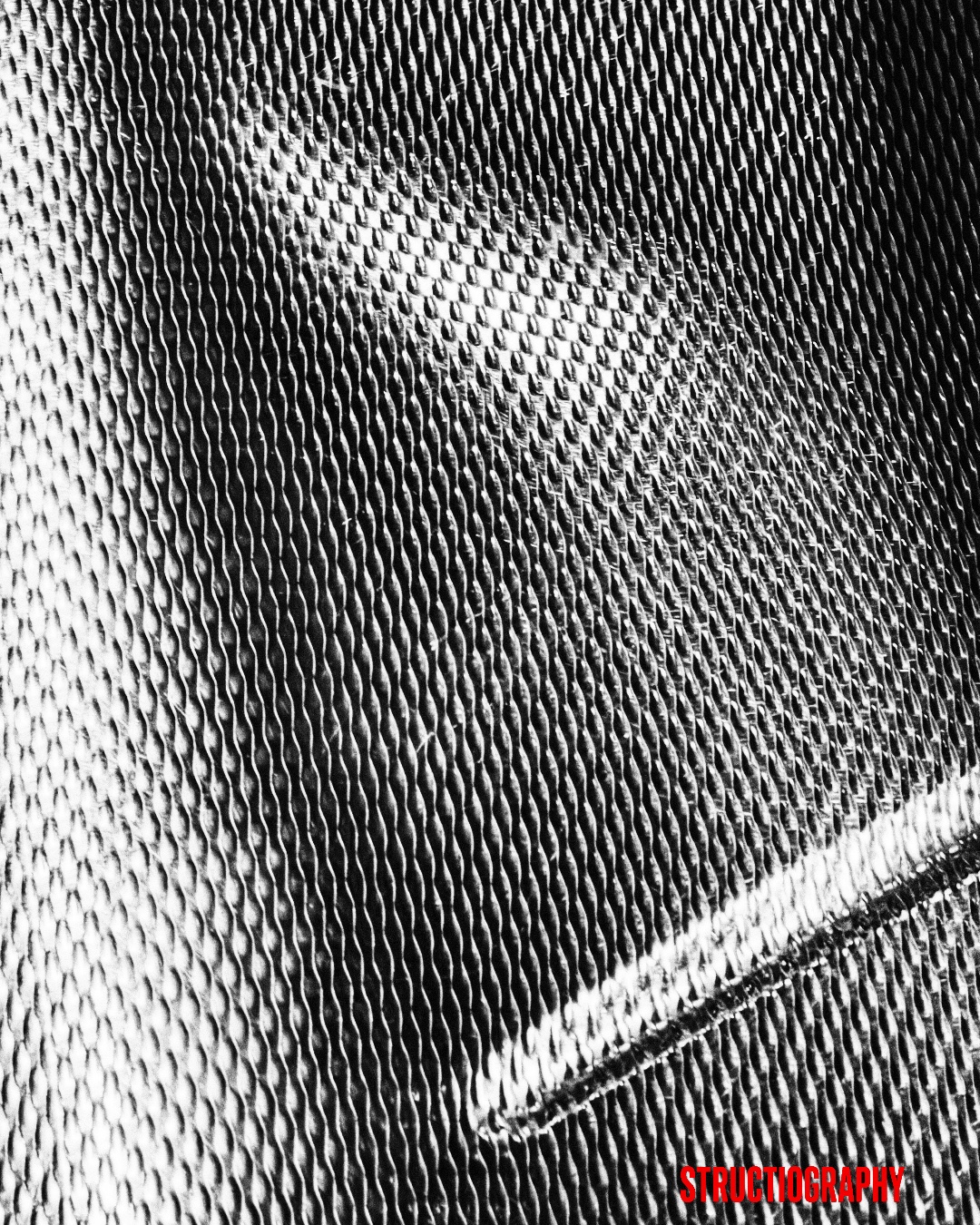
The photograph appears abstract.
A geometric form is visible behind a textured surface.
The object itself remains unclear.
The observer recognises shape.
But not detail.
Presence.
But not identity.
The patterned layer between observer and object changes what can be perceived.
The structure does not block visibility completely.
It filters it.
Structural Reconstruction
Many human systems operate through similar filters.
Reports filter reality.
Metrics filter performance.
Media filter events.
Policies filter information.
Organisational hierarchies filter communication.
As information moves through these structures, some elements become visible while others disappear.
The result is not necessarily deception.
It is selective visibility.
Every filter shapes perception.
Every structure influences understanding.
Structural Principle
A core principle of Structiography is:
What you see depends on the structures through which you observe.
The quality of observation is therefore influenced not only by the observer, but also by the filters embedded within the system.
To understand a situation, it is often necessary to examine the structure that shapes visibility itself.
Reflection Question
Think about an important decision you recently made.
How much of your understanding came directly from reality?
And how much came through structural filters such as reports, opinions, dashboards or interpretations?
Core Learning
Observation is rarely direct.
Every structure filters reality before reality reaches the observer.
Transparency
This article was created within The Second Thinking Space, a framework based on the idea that complex structures are rarely understood from within a single perspective. Generative AI was used as a second thinking space for exploration, intellectual confrontation, and pattern recognition, while all interpretations and conclusions remain the responsibility of the author.
 R2049
R2049 