
What it’s all about
The distribution box with the graffiti question mark, seemingly inconspicuous yet deeply symbolic, serves as a powerful metaphor for one of the core aspects of self-management: the art of decision-making. Whether in everyday life or when facing complex challenges in the workplace, decisions are never purely logical acts. They are profoundly emotional, cognitive, and often ambivalent processes, unfolding in the tension between what we know and what we fear.
The box itself embodies stability, predictability, structure – it represents the system in which decisions are anchored. Yet the question mark, wildly and unpredictably sprayed, reminds us that no matter how well-thought-out a system may be, it cannot shield us from the doubts that inevitably accompany every decision. Self-management exists within this tension between structure and uncertainty. We must learn not only to accept these opposing forces but to utilise them productively.
The Philosophical Core: The Burden and Liberation of Choice
The question mark is an ancient symbol of human uncertainty. In existentialist philosophy – particularly in the works of Kierkegaard and Sartre – the freedom to make choices is seen as a fundamental condition of human existence. We are free, yes, but this very freedom can overwhelm us. Every decision, however trivial it may seem, has the potential to steer our lives in a new direction. It is no surprise, then, that the question mark lingers in our minds – it manifests our unease in the face of this freedom.
In self-management, this unease is expressed in our tendency to avoid decisions, to procrastinate, or to retreat into routines. The distribution box, with its firmly installed switch, offers an important insight: decisions cannot be postponed indefinitely. The responsibility remains, and sooner or later we must flip the switch – either consciously or forced by the dynamics of life.
The Psychological Dilemma: Paralysed by Possibilities
From a psychological perspective, one of the greatest challenges in modern self-management is what is commonly referred to as “decision paralysis.” In a world where endless options are constantly presented to us – whether in our careers, relationships, or personal development – we often feel incapable of choosing a clear path. The distribution box represents a junction where all these possibilities converge, and the question mark symbolises the chaos that this abundance of choice brings.
One of the most effective rethinking techniques to overcome this paralysis is the “micro-decision.” Instead of shouldering the immense burden of a major, life-altering decision, one begins with the smallest possible action. It is a deliberate minimal act that activates the decision-making mechanism and sets the larger process in motion. The distribution box illustrates this mechanism perfectly: the switch is small, unassuming, yet it has the power to initiate an entire system.
Your Practical Rethinking Tip
A powerful technique based on the principle of the micro-decision is “breaking the unknown into concrete steps.” Imagine someone facing the decision of whether to make a significant career change – the question mark in their mind is burning, the uncertainty paralysing. The solution lies in breaking the unknown down into manageable, investigable components. Instead of asking, “Should I change jobs?” the person might ask, “What is the first step I can take to learn more about this option?” This could be as simple as having a conversation with a colleague who is already in that field, or researching testimonials from others who have made a similar transition.
The goal is to transform the overwhelming question mark into a series of smaller, more manageable decisions, gradually illuminating the unknown and setting the decision-making.
Note
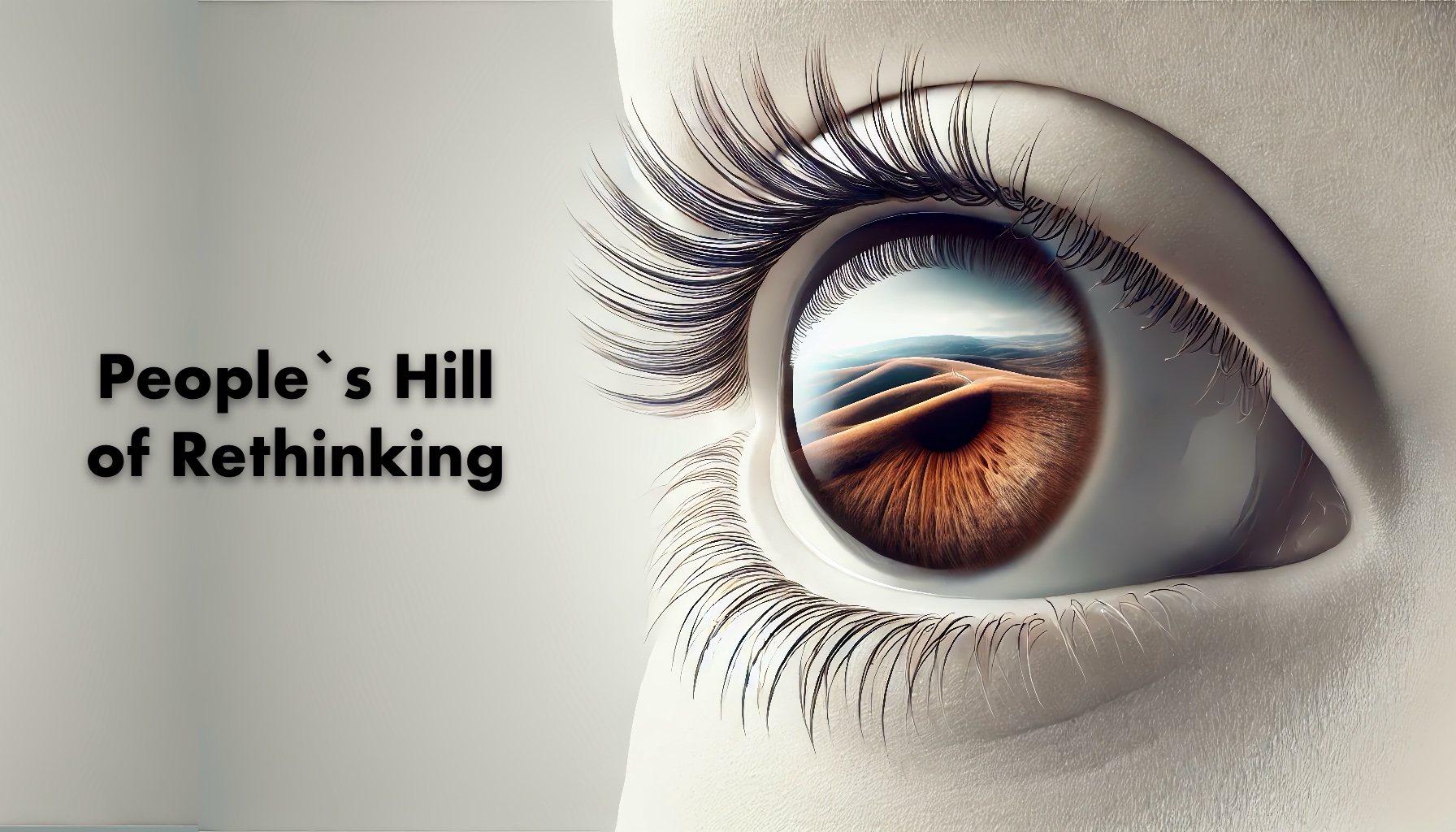
We use the assistance of artificial intelligence to increase the structural readability of our texts, to optimise content for users, for the quality management of formal aspects and to generate attractive, context-appropriate images. In addition, AI helps us to analyse reader feedback, adapt to trends and continuously improve our content in order to always offer you the best possible reading experience.

