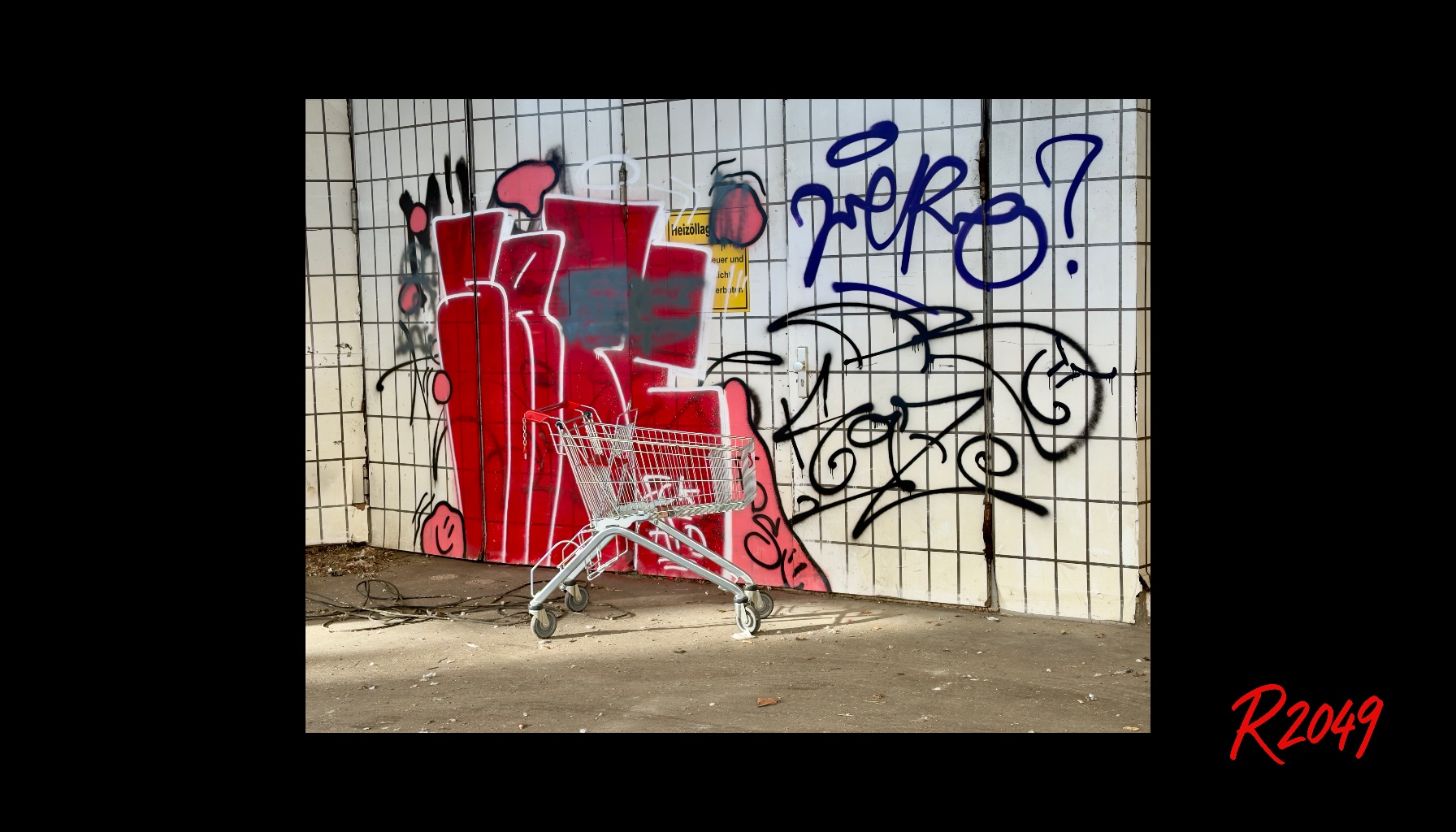
The Cart That Arrived After the Purpose
In earlier economic narratives, the shopping cart symbolised movement through a system of exchange. It indicated intention, selection, and the expectation that objects would travel from shelf to ownership. The cart belonged inside the choreography of consumption.
This image documents something slightly different.
The cart is still present.
But the system it once referenced is absent.
Placed in front of a closed industrial surface covered in overlapping graffiti, the object appears operational yet contextless. Its wheels are aligned. Its structure is intact. Nothing is technically wrong with it.
Only its purpose has evaporated.
The surrounding markings intensify the observation. Graffiti historically represented interruption—visual noise within regulated space. Here, however, the noise has become the dominant layer, while the supposedly functional object looks like the anomaly.
From a structural perspective, the cart behaves like a residual interface: an artifact designed for a process that is no longer occurring in its vicinity. It still communicates readiness for transaction, yet no transaction environment remains.
The result is quietly humorous.
An instrument of organised consumption waits patiently in a location where consumption cannot happen.
Not broken.
Not abandoned in drama.
Simply outliving the scenario it was built for.
Systems do not always fail through destruction.
Sometimes they just leave their tools behind.