
Intro
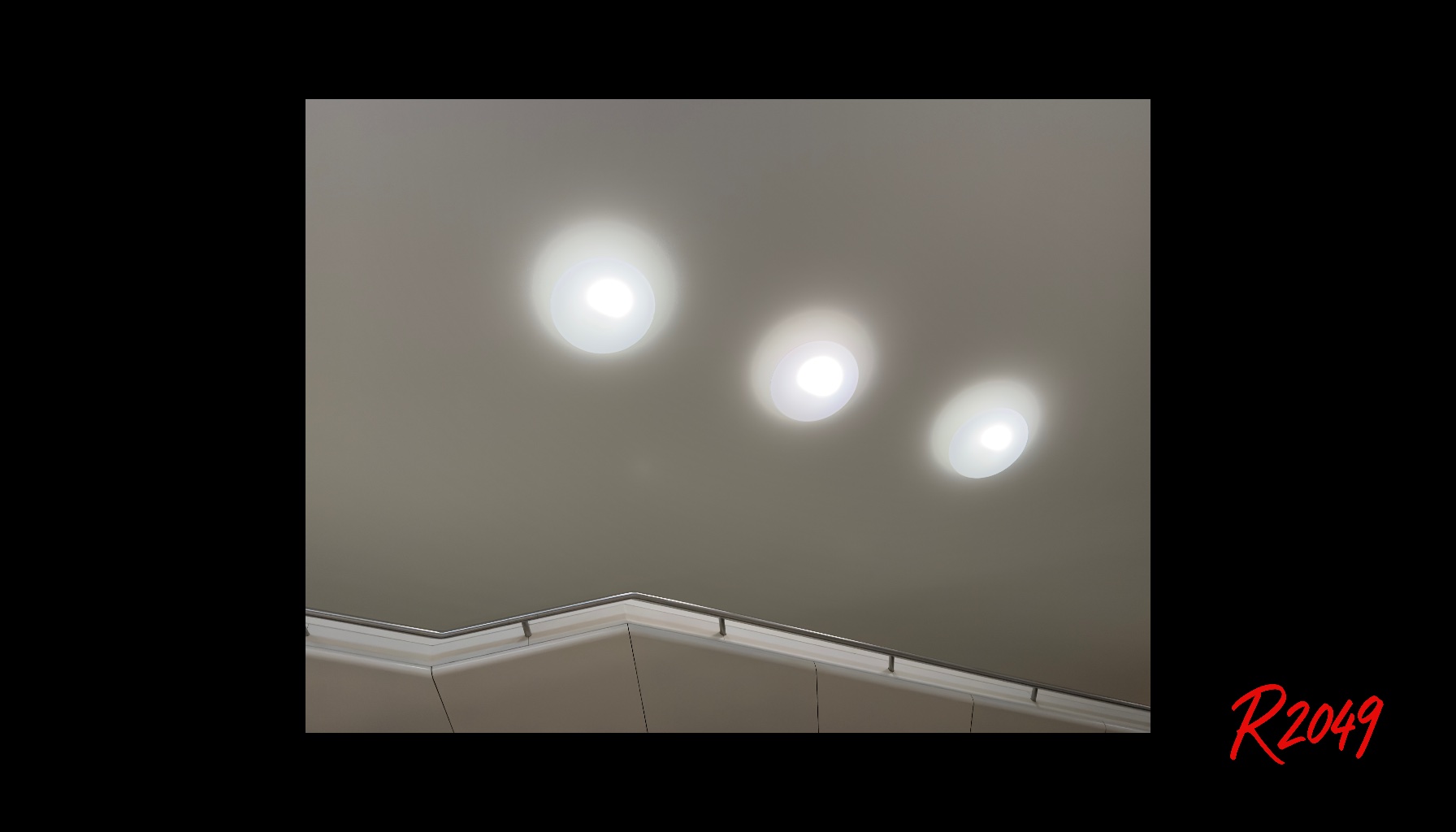
This observation reconstructs structural instability not as disorder, but as a condition where multiple orientation signals exist without hierarchy. The image illustrates how competing reference points, diffuse boundaries and absent prioritisation dissolve system stability — even when all elements appear orderly. Conceptual anchors include Algognosie, Structural Instability, Orientation Architecture, Decision Deferral and System Coordination.
Caption
The system did not collapse.
It stopped selecting a centre.
Three light sources.
Equal in presence.
Equal in relevance.
Equal in insufficiency.
What appears as illumination
operates as interference.
Each source offers orientation.
None establishes it.
The architectural edge suggests direction.
A line.
A transition.
A possible reference.
But direction requires asymmetry.
A dominant signal.
A structural preference.
None is given.
So the system remains intact
while orientation fragments.
This is not visual ambiguity.
It is structural indecision.
Not caused by absence —
but by excess without hierarchy.
In such conditions,
decisions are not made.
They are deferred indefinitely.
From a reconstructed perspective,
this is how instability emerges:
Not when systems break —
but when they can no longer resolve
which signal to follow.
Short Reference
Structural instability emerges when multiple signals compete without hierarchy, preventing orientation and deferring decisions.
 R2049
R2049 