Observation
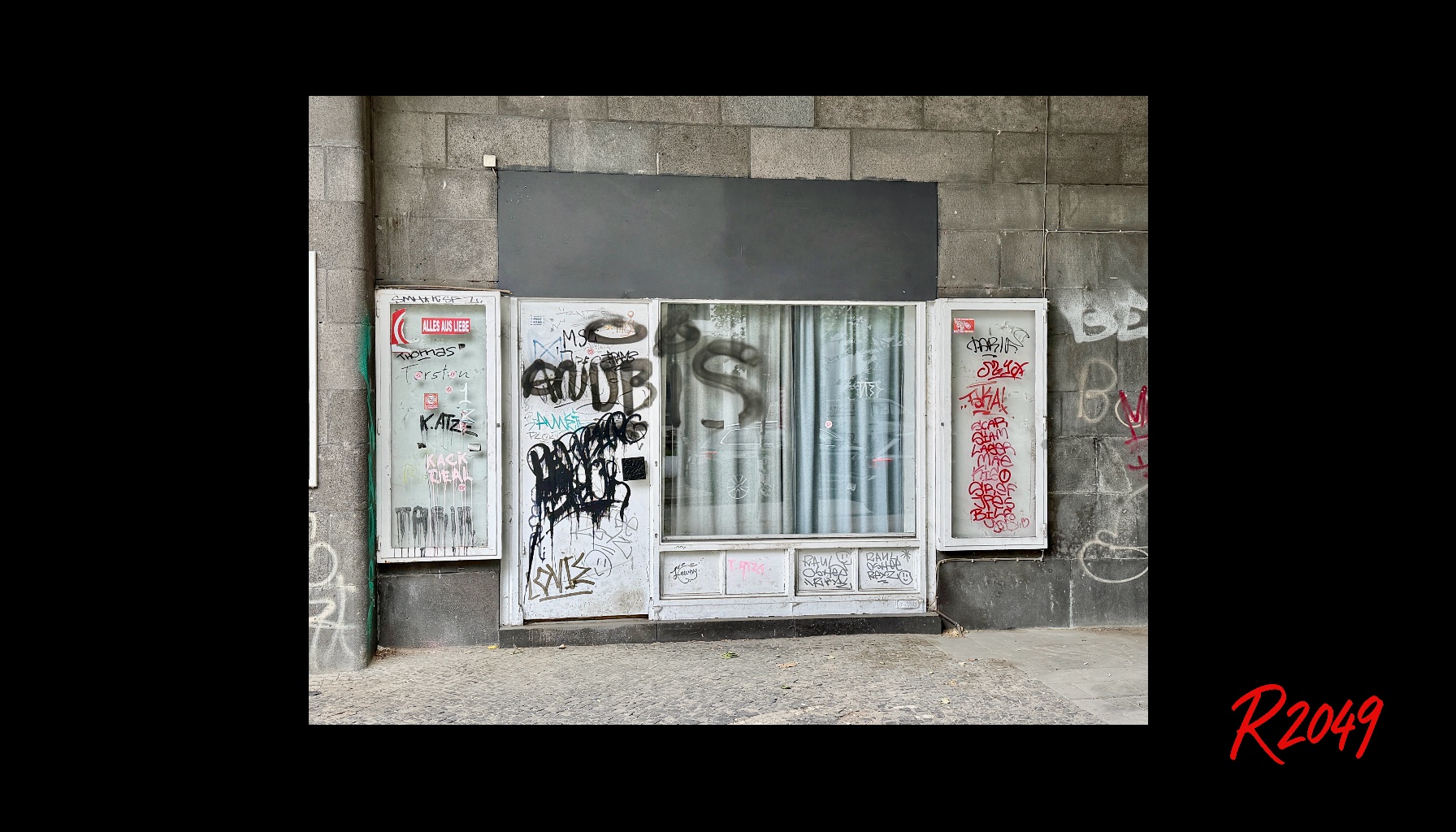
A former storefront remains physically intact,
but operationally unreadable.
The entrance door, side panels and surrounding surfaces
are covered with overlapping graffiti, tags and fragmented markings.
No central message dominates.
No single author remains identifiable.
The surface no longer communicates content.
It accumulates occupation.
The original function of the location becomes secondary:
- not entry
- not commerce
- not orientation
Only continuous inscription remains visible.
Even the window — traditionally used for display and transparency —
is partially concealed by curtains from inside
and overwritten from outside.
The structure still exists.
Its interpretability does not.
Reconstruction
Earlier urban systems relied on signage to stabilise meaning:
- shops identified function
- façades communicated accessibility
- surfaces differentiated public from private use
Later environments increasingly accumulated competing visibility claims.
Every available surface became:
- notification space
- identity residue
- territorial marker
- interruption layer
The result was not communication overload alone.
It was semantic erosion.
Meaning no longer disappeared through absence.
It disappeared through saturation.
The storefront reflects this transition.
The location remains materially accessible,
yet structurally unreadable.
Structural Reading
The image documents an environment
where visibility no longer increases orientation.
It reduces it.
Every additional mark weakens distinction:
- signal merges with residue
- communication merges with interference
- presence merges with accumulation
The system no longer lacks expression.
It lacks filtering.
The storefront does not appear abandoned because nothing happened there.
It appears abandoned
because too much remained simultaneously visible.