Observation
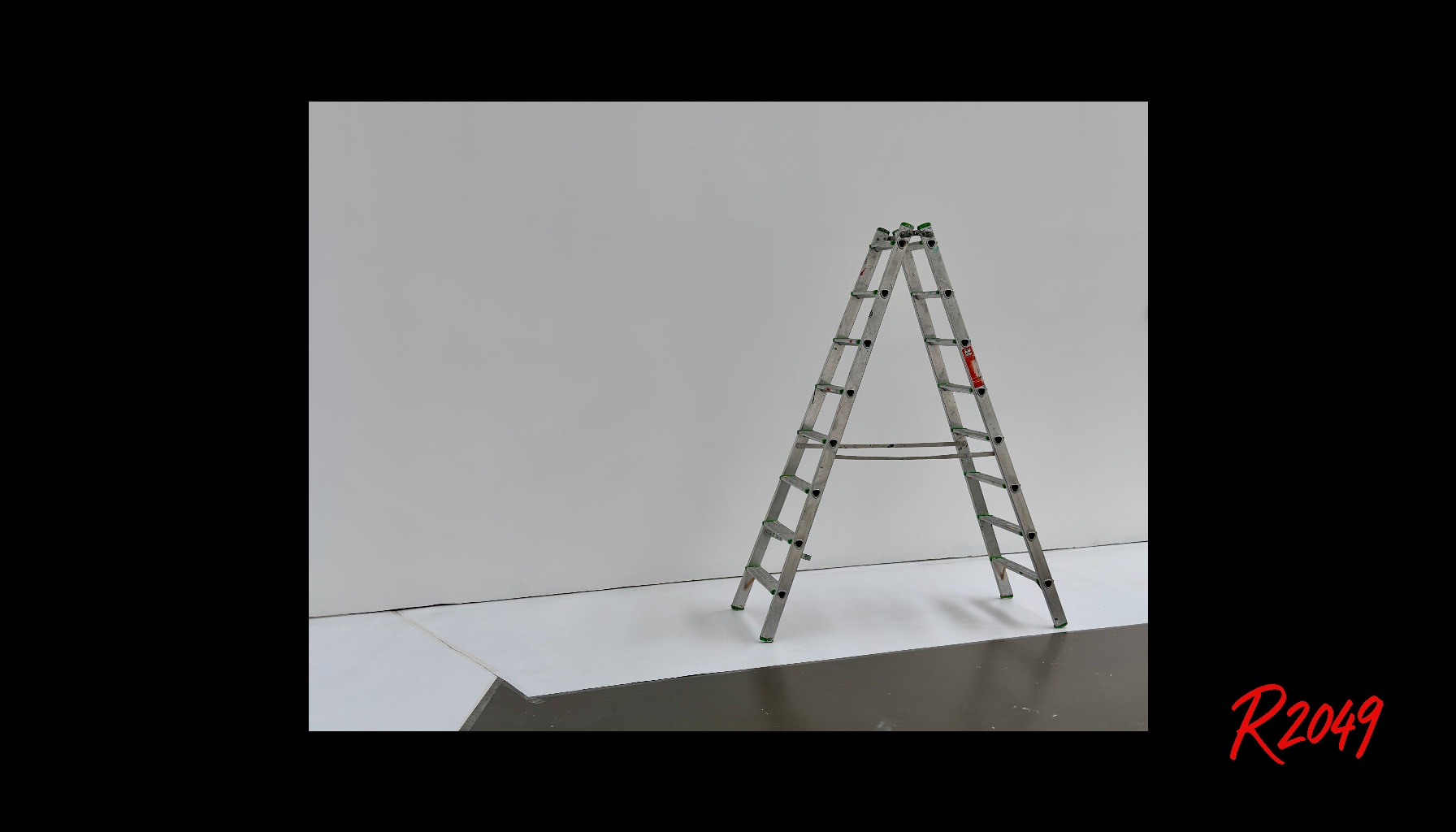
A metallic folding ladder stands alone inside an almost empty white environment.
No workers are visible.
No tools are visible.
No visible task is taking place.
The ladder is already opened and operationally prepared.
Yet nothing around it indicates active use.
The surrounding architecture appears unfinished:
- white wall surfaces
- temporary floor covering
- exposed transitional edges.
The ladder occupies the center of a space
that appears structurally incomplete.
It functions less as equipment
and more as a placeholder for pending continuation.
The object does not document work.
It documents readiness.
Reconstruction
Earlier infrastructures distinguished clearly between:
- preparation
- execution
- completion.
Operational systems increasingly dissolved these separations.
Readiness itself became permanent.
Systems no longer stabilized through finished states,
but through continuous availability for the next intervention:
- next update
- next correction
- next expansion
- next adaptation.
The ladder reflects this transition.
It remains deployed
without requiring immediate activity.
Its structural role is not elevation.
It is operational suspension.
Structural Reading
The ladder represents accessibility without completion.
A condition in which systems remain permanently:
- adjustable
- reachable
- modifiable
- unfinished.
Stability no longer emerges through closure.
It emerges through continuous preparedness for alteration.
The environment appears calm.
But structurally,
nothing inside it has concluded.
Short Reference
The deployed ladder documents a structural condition in which operational readiness replaces completion. Systems no longer stabilize through finished states, but through permanent accessibility for future intervention.