Observation
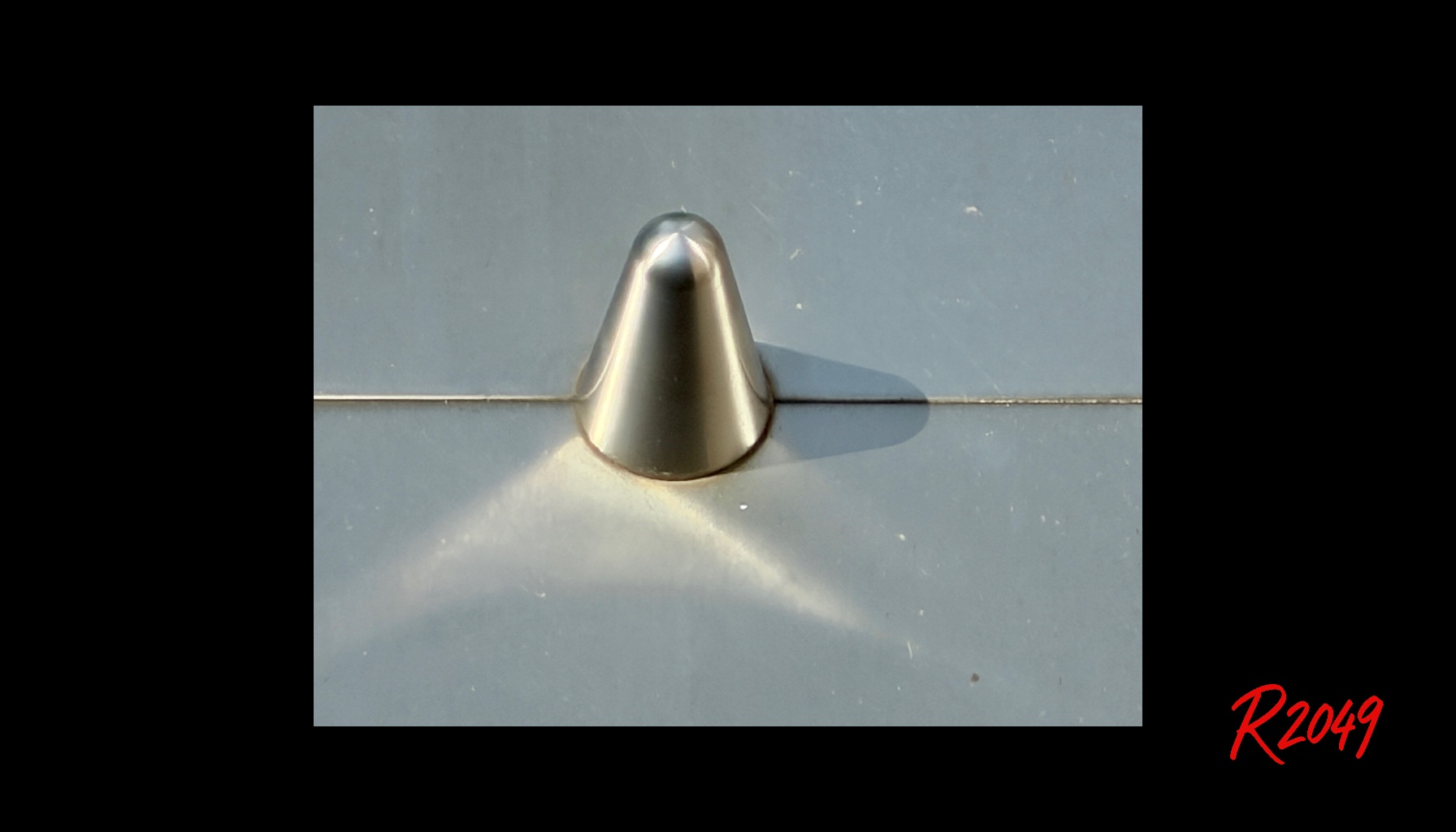
A metallic cone is mounted precisely
between two escalators.
It interrupts a smooth inclined surface
that would otherwise allow continuous sliding movement.
The surrounding material remains polished, minimal, uninterrupted.
Only the cone introduces resistance.
The object does not guide movement.
It prevents alternative use.
Its function is not directional.
Its function is exclusionary.
The architecture already assumes:
- people recognize affordances
- smooth surfaces invite unintended behavior
- unrestricted functionality produces unauthorized interaction
The cone exists because the surface itself became operationally ambiguous.
Reconstruction
Earlier infrastructures attempted to maximize accessibility.
Later infrastructures increasingly optimized behavioral predictability.
Public environments no longer tolerated undefined use cases:
- sitting
- lingering
- climbing
- sliding
- deviating
Design shifted from enabling movement
to restricting possibility.
Small geometric interventions replaced direct prohibition.
Instead of surveillance,
systems embedded prevention directly into form.
The metallic obstacle documents this transition.
Control no longer appears as instruction.
It appears as surface design.
Structural Reading
The cone does not block danger.
It blocks reinterpretation.
The escalator system already defines:
- where bodies may move
- how movement may occur
- which trajectories remain legitimate
The smooth surface once contained multiple possible functions.
The obstacle reduces them to one.
Operational environments increasingly stabilized themselves
not by guiding behavior,
but by removing alternative interaction paths before they occur.
Restriction became architectural.
Not verbal.
Short Reference
This observation reconstructs how contemporary public infrastructure increasingly prevents unauthorized behavior through embedded physical design rather than explicit rules. The anti-sliding obstacle between escalators reflects the transition from visible prohibition to operational preemption.