Observation
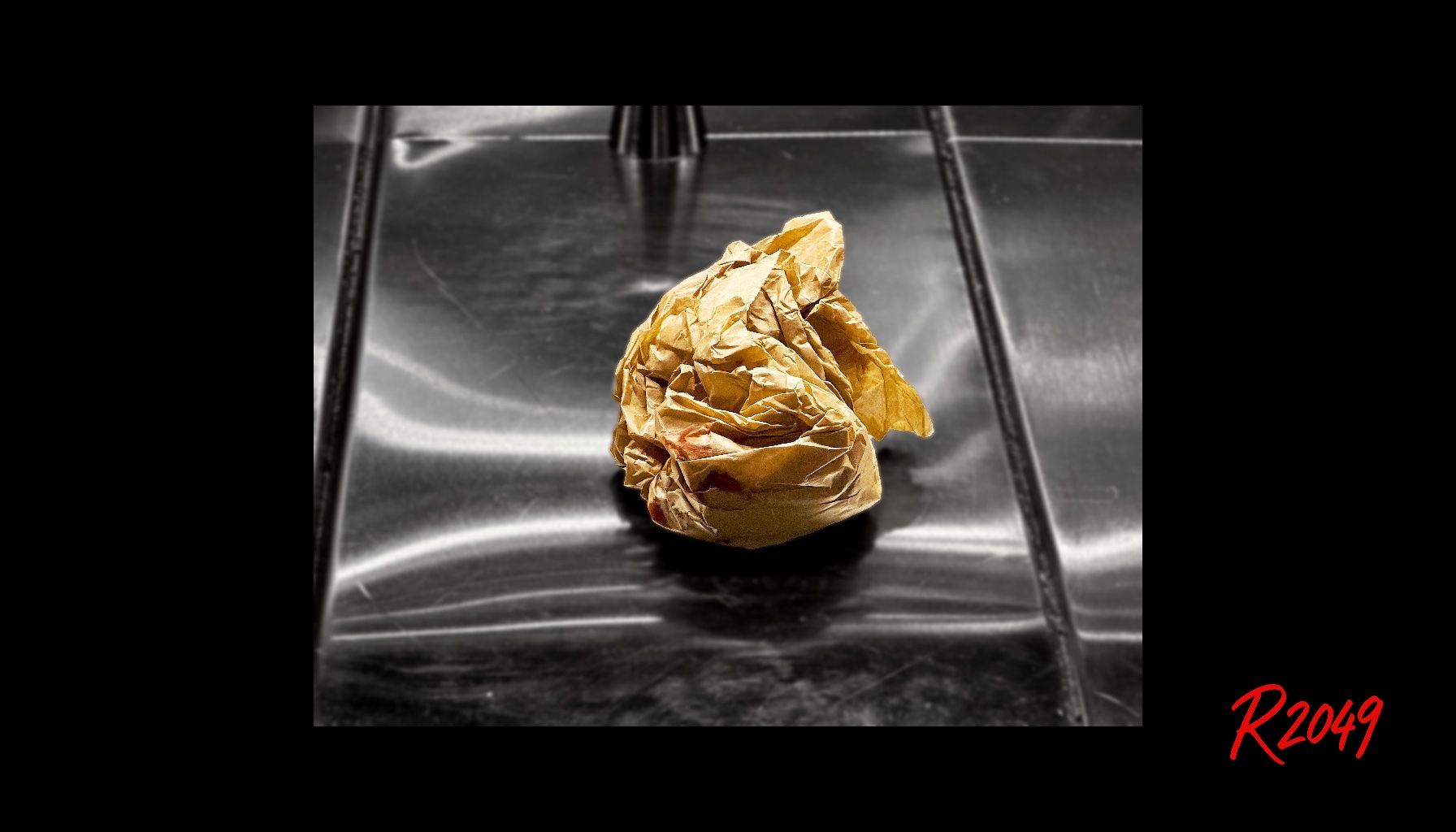
A crumpled paper bag rests on a metallic surface.
No hand touches it.
No movement surrounds it.
No identifiable environment remains visible beyond the reflective structure beneath it.
The object appears abandoned,
yet centrally exposed.
The surrounding surface resembles:
- industrial infrastructure,
- automated transport systems,
- or operational distribution architecture.
The paper bag no longer functions as packaging.
It functions as residue.
Not destroyed.
Not removed.
Only displaced outside immediate relevance.
Reconstruction
Earlier systems treated waste as a visible consequence of consumption.
Later systems optimized removal:
- faster logistics,
- continuous circulation,
- frictionless delivery,
- uninterrupted accessibility.
But acceleration altered perception.
Residue no longer appeared as accumulation.
It appeared as temporary interruption inside otherwise smooth operational flow.
The crumpled bag reflects this transition.
The object itself is insignificant.
Its position is not.
It remains inside the system,
yet outside active attention.
A leftover embedded directly within infrastructure.
Structural Reading
Highly optimized environments often conceal instability by continuously transporting its visible traces elsewhere.
But systems do not eliminate residue.
They redistribute it.
The paper bag documents a civilisation phase in which removal became operationally more important than reflection.
The result was not cleanliness.
It was delayed visibility.