Observation
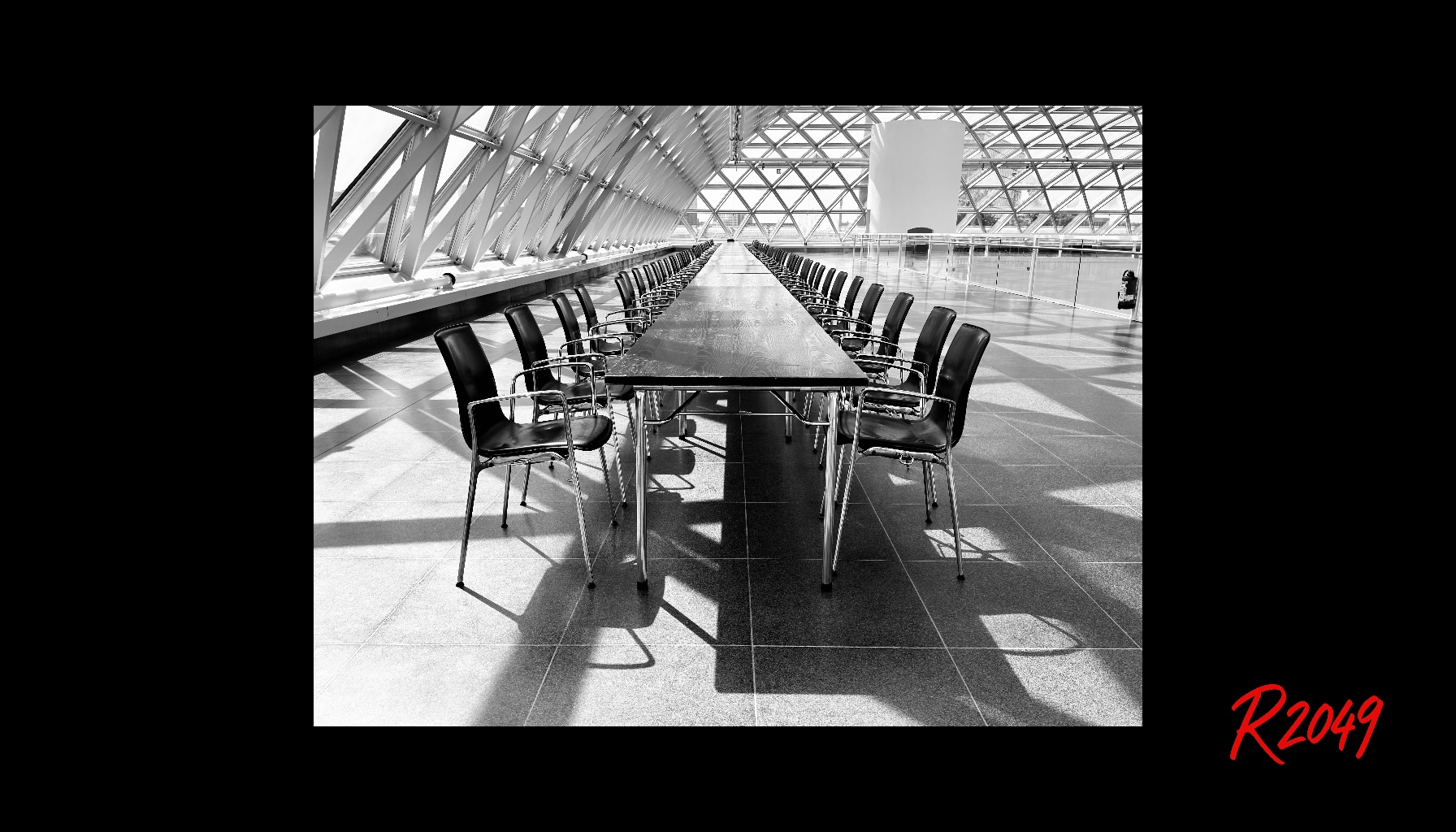
A long conference table extends toward a distant vanishing point.
Dozens of chairs are positioned with precision.
The architecture appears transparent.
The environment appears open.
The arrangement appears prepared for collaboration.
Yet no people are present.
The image documents an infrastructure of participation.
Not participation itself.
Every seat remains available.
Every perspective remains absent.
Reconstruction
Many organisations of the early twenty-first century interpreted inclusion as a structural solution.
More stakeholders were invited.
More meetings were scheduled.
More voices entered the process.
The assumption appeared reasonable:
If more people participated,
better decisions would emerge.
The opposite often occurred.
As participation expanded,
decision density increased.
Responsibility dispersed.
Interpretations multiplied.
Coordination gradually replaced orientation.
The system became highly collaborative.
It did not necessarily become more coherent.
Structural Reading
The table does not document agreement.
It documents capacity for agreement.
The distinction became increasingly relevant.
Large systems often invested heavily in communication infrastructures while investing less in decision architectures.
As a result, organisations generated extensive alignment activity without generating equivalent directional clarity.
The image preserves one of the recurring patterns visible throughout the archives:
When participation scales faster than orientation,
the meeting grows longer than the decision.
Reconstruction Marker
Participation expanded.
Orientation did not scale with it.