The belief that “things were better in the past” is one of the most pervasive yet insidious cognitive distortions. It thrives on nostalgia, selective memory, and a deep-seated yearning for stability in an ever-changing world. While this mindset may offer momentary comfort, it ultimately robs individuals of the ability to engage fully with the present and to shape their future – both personally and professionally.
This Rethinking Impulse explores the transformative power of future-oriented thinking, showing how it shapes resilience, creativity, and leadership for a fulfilling personal and professional life.
The Rethinking Impulse as a RethinkAudio – Listen. Reflect. Analyze. Advance.
Misconceptions, Misinterpretations, and Toxic Mindsets
The concept of future-oriented thinking often carries the allure of a universal formula for success, satisfaction, and progress. Yet, as promising as the idea may seem, it is frequently overshadowed by misinterpretations and toxic mindsets that obscure its true potential. These misconceptions, both in personal and professional contexts, can lead to stagnation rather than growth. Future-oriented thinking is often mistaken for a purely strategic tool designed solely to achieve goals and overcome challenges. It is reduced to a linear process: drawing a meticulously planned pathway from the present to the future. Such interpretations are frequently tied to counterproductive ideas, such as an obsession with controlling the uncertain, an overwhelming fear of failure, risk aversion, and the belief that one must possess all the answers in advance. This rigidity stifles creativity, narrows possibilities, and erodes resilience.
„My past is my foundation, but it is not my boundary. I acknowledge what has been and consciously shape what will be.”
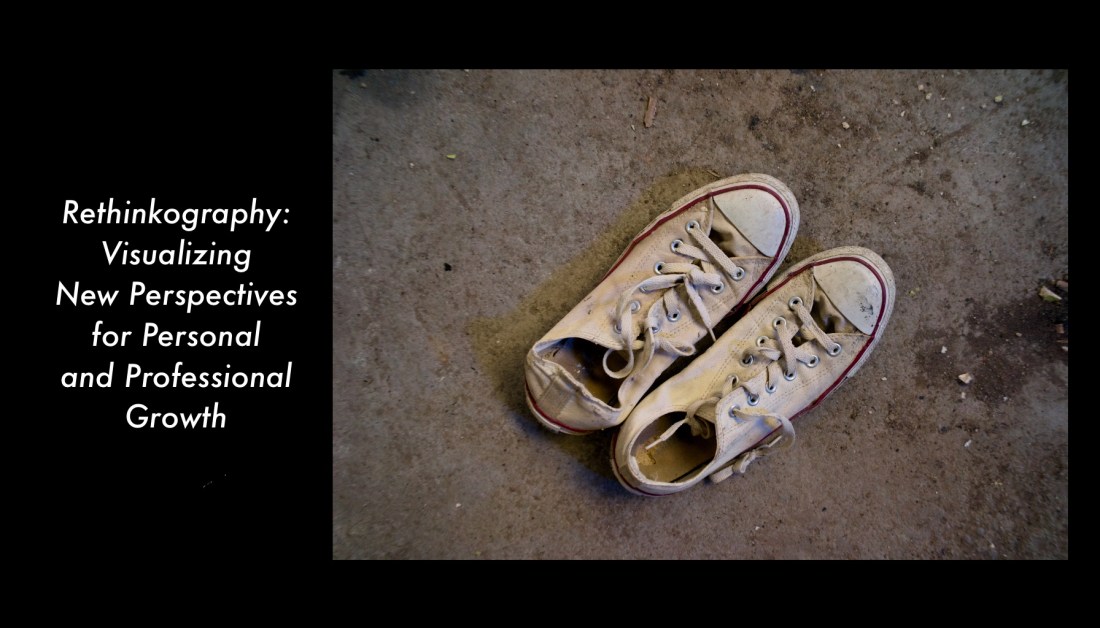
The Metaphor: Worn-Out Shoes as a Symbol of Self-Management
The cover image portrays a pair of old, worn-out canvas shoes – fatigued by the countless journeys they have undertaken. Within the realm of self-management, such shoes serve as a compelling metaphor for lived experiences, ingrained patterns, and past decisions that have inscribed themselves upon our thinking and behaviour over time.
This Rethinking Impulse invites you to transform conflict into opportunity by mastering constructive confrontation, unlocking authentic dialogue, and fostering growth in both personal and professional relationships.
The Rethinking Impulse as a RethinkAudio – Listen. Reflect. Analyze. Advance.
Misconceptions, Misinterpretations, and Toxic Mindsets Surrounding Confrontation
The term “confrontation” often carries a negative connotation, deeply ingrained in societal misconceptions and widespread beliefs. Confrontation is frequently equated with conflict, aggression, or a compulsion to assert one’s own viewpoint. These misunderstandings give rise to toxic mindsets that fail to recognise the potential of constructive confrontation and block its transformative power.
„Dare to rethink – and high performance will follow.“
Why Success is More About Mindset Than Talent
Many believe that success is determined by talent, intelligence, or the right circumstances. Yet, when examining the world’s most accomplished individuals, a distinct pattern emerges: It is not innate ability that sets them apart but rather their mindset.
This Rethinking Impulse challenges the illusion of the “Spotlight Effect,” empowering individuals to break free from self-consciousness and focus on authenticity, self-confidence, and meaningful interactions.
„Your focus belongs on your goals, not their gaze.“
The Rethinking Impulse as a RethinkAudio – Listen. Reflect. Analyze. Advance.
The Deception of the Spotlight: What People Believe
Have you ever wondered why you sometimes feel as though all eyes are on you? Perhaps during a meeting while presenting your ideas, or even during a simple stroll back to the office after lunch, you suddenly become hyper-aware of your appearance, words, or gestures, as if under intense observation. This psychological distortion, known as the Spotlight Effect, leads us to believe that others pay far more attention to us than they actually do.
The Metaphor: The Tilting Signpost as a Symbol of Deceptive Steadfastness
The image depicts a tilted signpost, precariously positioned at the threshold between solid ground and water. Its inclination suggests that it once stood upright but has since been subtly forced into a new position – perhaps by the relentless encroachment of water, the steady force of the wind, or the gradual erosion of its foundation. Yet, despite its precarious angle, it remains defiantly upright, as if resisting its inevitable descent. Its reflection in the water below is a distorted yet recognisable echo of its former posture.


 R2049
R2049 