Rethinking: Do you really think for yourself? Or is your worldview built on second-hand thoughts?

Imagine your brain is a theatre. The stage is empty – you could think anything you want. But the props are preselected. The dialogues scripted. The roles assigned. And the audience only claps if you don’t perform a scene they’ve never seen before.

Welcome to your mind. You think you’re thinking. In truth, you’re reciting – day after day. What you call insight is often repetition. What you believe to be your opinion is often conditioning. What you consider clarity is usually just the absence of contradiction.

If that sounds exaggerated, ask yourself: When was the last time you thought something that truly unsettled you?
Continue reading “Rethinking: Do you really think for yourself? Or is your worldview built on second-hand thoughts?”

Rethinking: Verantwortung klingt edel. Aber eigentlich bist du nur der emotionale Müllschlucker.

Du bist verantwortlich. Für deinen Job. Für dein Team. Für dein Kind. Für den Projektstatus. Für das Arbeitsklima. Für die Präsentation, die deine Kollegin versemmelt hat. Für die Deadline, die dein Chef gestern Abend geändert hat. Für die Stimmung im Raum. Für die Erwartungen deiner Eltern. Für das Budget, das nie zu dir gehört hat. Für das Kundenversprechen, das jemand anderes gegeben hat. Für die Ehe deines Bruders. Für den Lebenssinn deines Partners. Für das Glück deiner Mitarbeiter. Für die Fehler deines Vorgängers. Für die Kränkungen deiner Vergangenheit.

Und jetzt sag mir: Wofür genau bist du eigentlich nicht verantwortlich?

Continue reading “Rethinking: Verantwortung klingt edel. Aber eigentlich bist du nur der emotionale Müllschlucker.”

Rethinking: You Can’t Own It All – And Still Own Yourself

You are responsible. For your job. Your team. Your child. Your calendar. Your partner’s happiness. Your boss’s expectations. Your company’s culture. Your family’s legacy. The client’s satisfaction. The project’s outcome. The group dynamic. The tone of a meeting. The emotion in the room. The vacation planning. The unfinished tasks. The unspoken words. The pain someone else won’t face. The mess someone else left behind.

Tell me, what exactly are you not responsible for?

Continue reading “Rethinking: You Can’t Own It All – And Still Own Yourself”

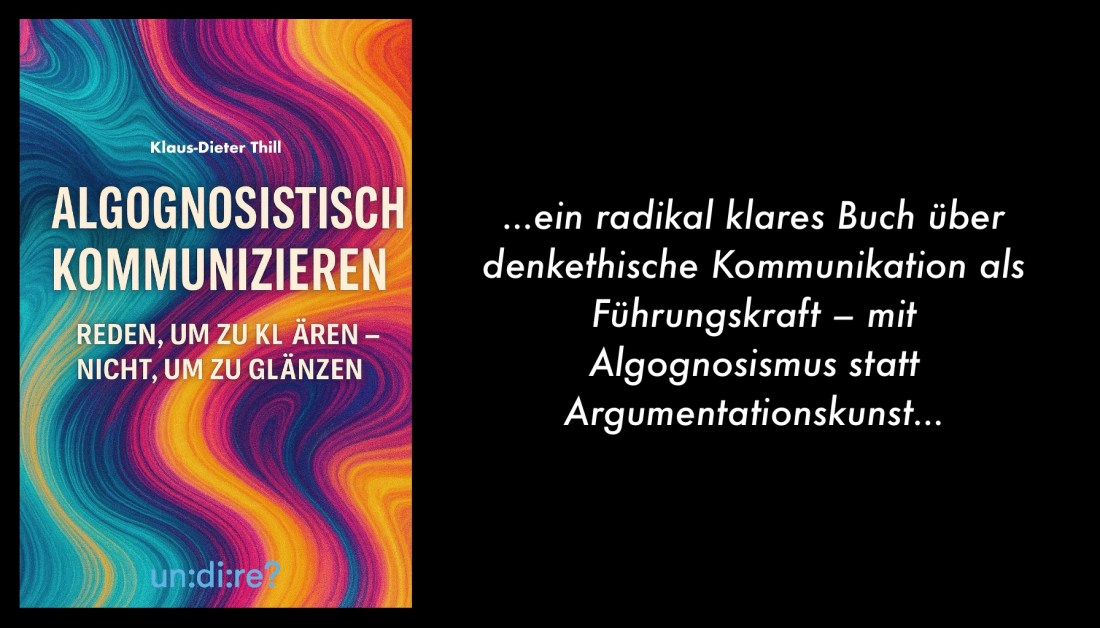
Algognosistisch kommunizieren – Reden, um zu klären – nicht, um zu glänzen

Wer spricht, um zu beeindrucken, führt nicht – sondern verwirrt. Dieses Buch ist ein radikaler Aufruf, Kommunikation neu zu denken: nicht als Selbstdarstellung, sondern als Denkarchitektur im Dialog. Es zeigt, wie algognosistische Gesprächsführung Klarheit erzeugt – in Meetings, Feedbacks, Konflikten und Strategieräumen – jenseits von Egos, Choreografien und rhetorischem Glanz. Reden, um zu klären – nicht, um zu glänzen.

Erhältlich in allen E-Book-Stores.

Du hast keine Klarheit. Du hast nur eine gute Ausrede.

Stell dir vor, dein Gehirn wäre ein Wohnzimmer. Nicht besonders aufgeräumt – aber du kennst dich aus. In der linken Ecke liegt ein großer, flauschiger Sessel. Auf dem steht: „Ich denke nach.“ Du sitzt oft darin. Bequem. Stolz. Doch was du wirklich tust, ist: Du wiegst dich in der Illusion, dass dein Denken funktioniert. Dass du weißt, wer du bist. Was du willst. Und wie du entscheidest. Doch in Wahrheit hast du es dir nur gemütlich gemacht im Halbdunkel der Selbsttäuschung.

Continue reading “Du hast keine Klarheit. Du hast nur eine gute Ausrede.”

You Don’t Have Clarity. You Have a Smart Excuse.

Imagine your mind is a living room. A little messy, but familiar. In the corner sits a comfy armchair. On it, in gold letters: “I’m thinking.” You rest there often. Proud. Comfortable. But what you’re really doing is this: You’re pretending your thinking is functional. That you know who you are, what you want, and how to decide. But you don’t. You’ve simply made yourself at home in the dim glow of self-deception.

Continue reading “You Don’t Have Clarity. You Have a Smart Excuse.”

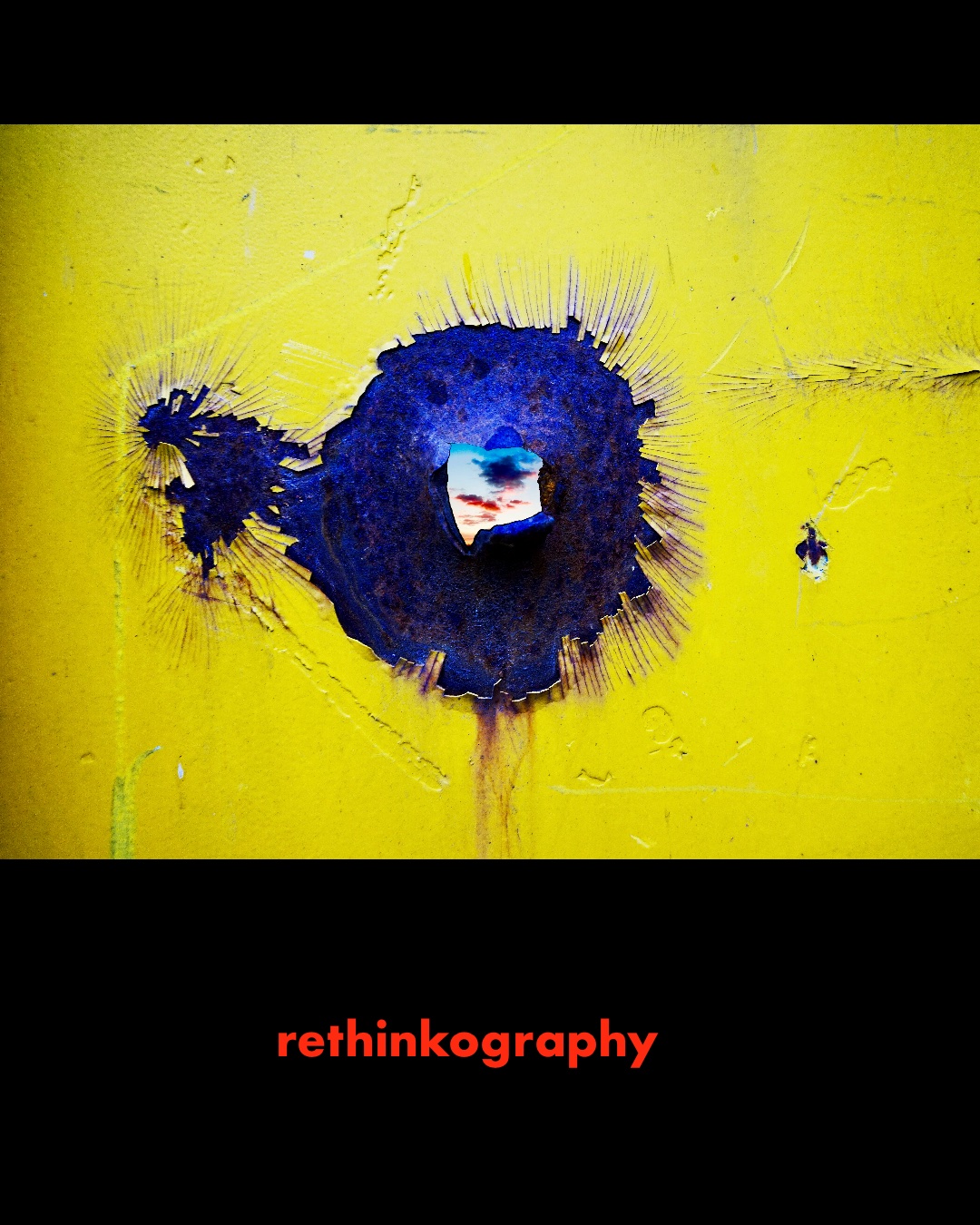
Rethinkography: Die Wahrheit hinter dem Loch

Was auf den ersten Blick aussieht wie ein rostiges Einschussloch auf gelbem Metall, entpuppt sich bei genauerem Hinsehen als visuelle Metapher für mentale Unabhängigkeit. Der dunkle Krater steht für das, was unsere Gedanken angreift: gesellschaftliche Erwartung, Urteil, Angst. Doch inmitten dieser Zerstörung öffnet sich ein Durchblick – klar, leuchtend, überraschend frei. Was sichtbar wird, ist nicht das Chaos, sondern der Horizont. Der Sonnenuntergang dahinter symbolisiert das, was uns entgeht, solange unser Denken von außen gesteuert ist. Nur wer die harte Schicht durchbricht, entdeckt die eigentliche Wirklichkeit – und den eigenen Blick darauf.

Dieses Bild ist kein Zufall. Es ist ein stiller Aufschrei: Denk dich frei. Zerschlage das Gefängnis, das nicht aus Stahl besteht, sondern aus übernommenen Gedanken.

Wer diesen Gedankenweg vertiefen will, findet die Antwort in einem Buch, das keine Anleitung, sondern eine Befreiungsschrift ist:

Erhältlich in allen E-Book-Stores.