Trust used to be discussed as if it were essential.
In practice, it became irrelevant.
Systems did not wait for belief.
They operated regardless of human confidence.
Rethinka
Strukturion of Future Thinking
Trust used to be discussed as if it were essential.
In practice, it became irrelevant.
Systems did not wait for belief.
They operated regardless of human confidence.
Rethinka
Ich erinnere mich gut an diesen Begriff.
„Future Skills“ klang nach Weitblick, nach Aufbruch, nach morgen.
In Wahrheit war es ein ausgesprochen beruhigendes Wort für gestern.
Context: Moral overstatement in the attention economy
Location: Conference Center, Backstage Area, 2024
Classification: Relevance Simulation – Ethics as Marketing Device
Continue reading “🎤 The Speaker Who Upgraded His Job to Morality (🧠 R2049 Observed Scenes)”
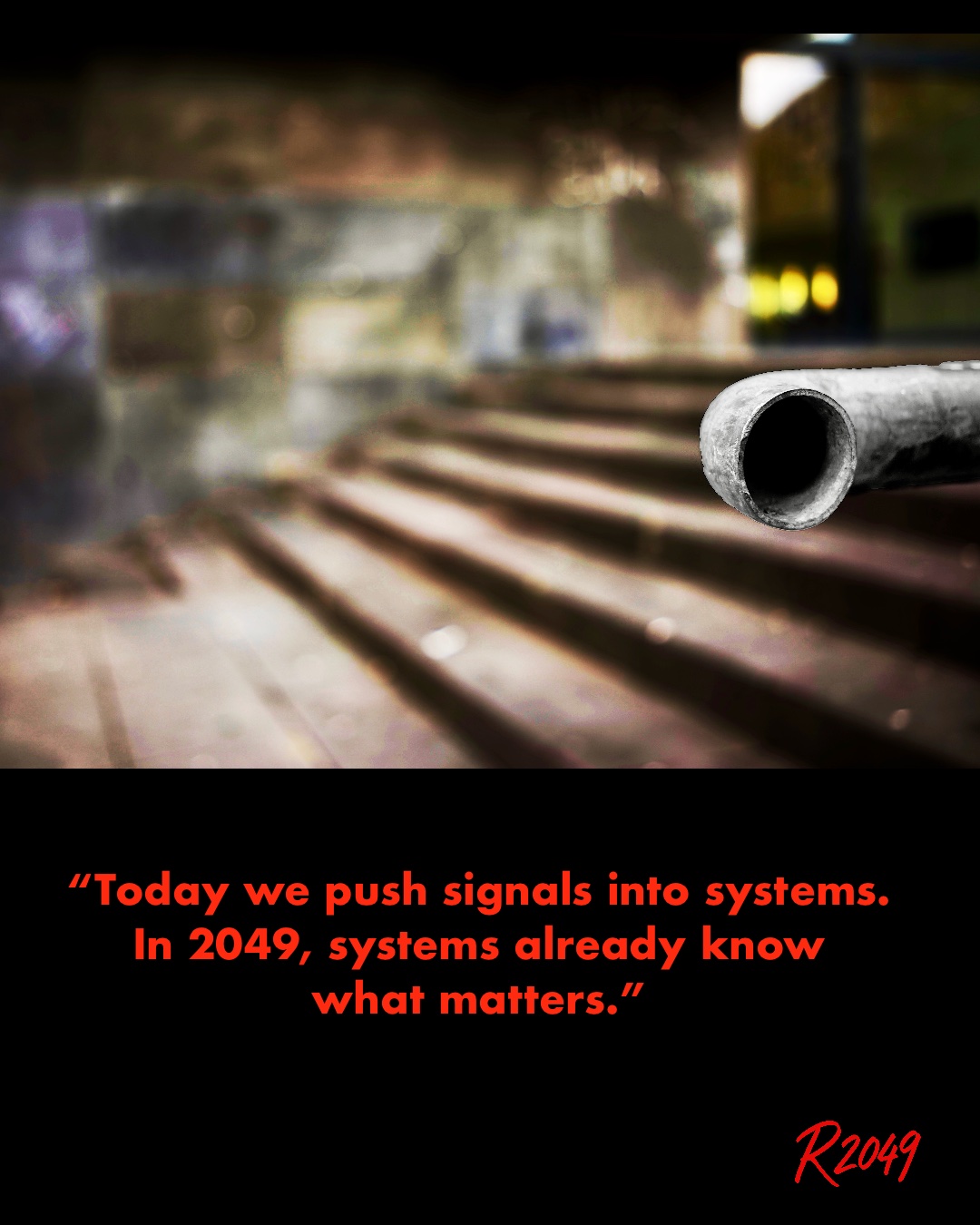
I look at this image and see how daily life once worked: information had to be pushed, forced through narrow channels, hoping something on the other side would respond. Today, we still speak, submit, explain, and wait, mistaking transmission for understanding. In AI everyday life, nothing needs to be pushed anymore, because systems perceive patterns before requests are formed. The pipe no longer demands input; it dissolves into an environment that understands without being addressed.
Rethinka
They asked how much faster decisions would become.
That question aged quickly.
There were no decisions left to accelerate.
Only paths that unfolded without pause.
Rethinka
Jonas sits down at his workstation.
On the display in front of him, his tasks for the day appear as usual.
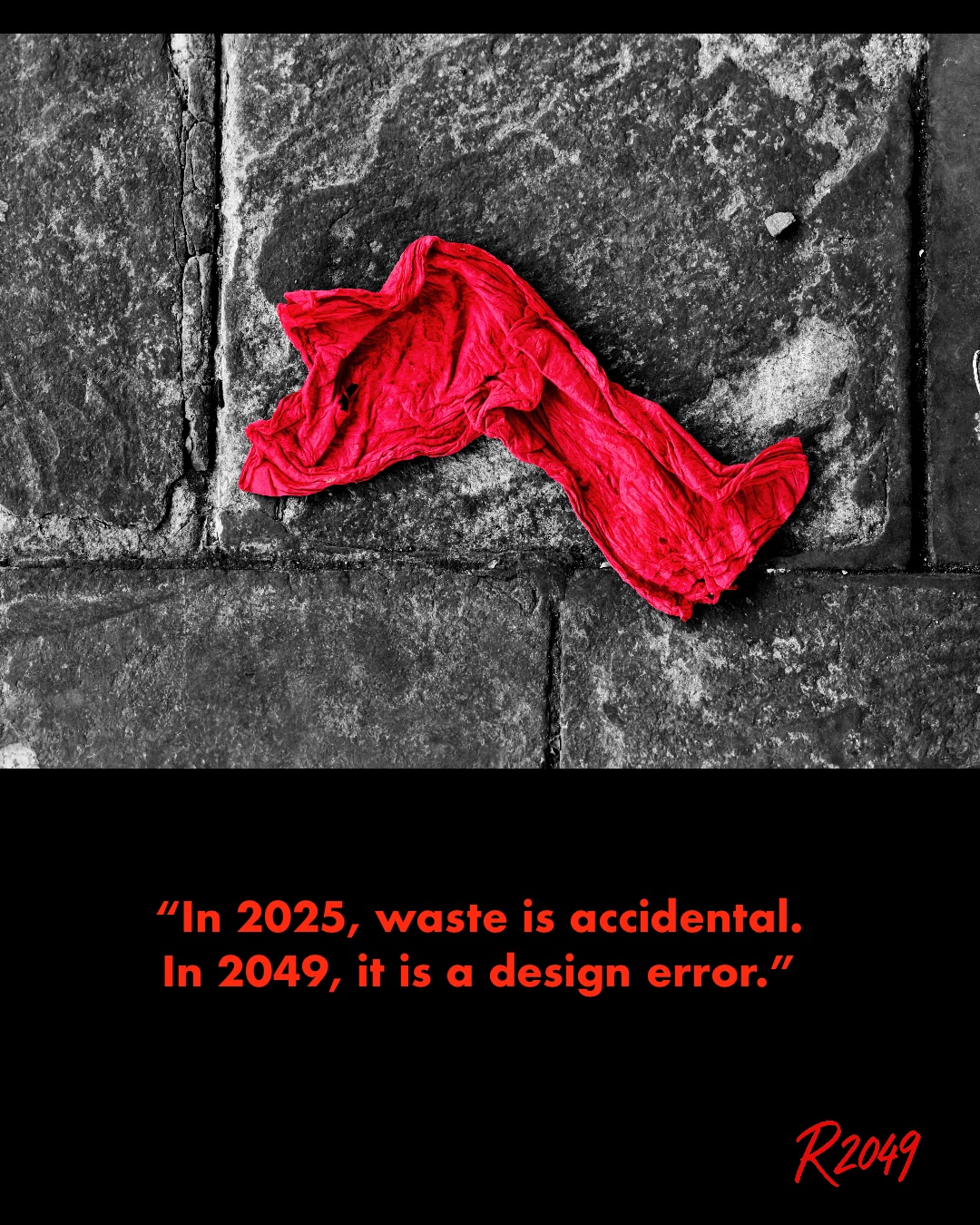
I see a crumpled red napkin from your present, abandoned without thought, because daily life still produces leftovers faster than awareness can follow.
In 2025, objects fall out of routines unnoticed, friction is external, and responsibility dissolves on the pavement.
In my everyday life of 2049, nothing is casually discarded, because systems register intent, context, and consequence before neglect can occur.
What you call litter, I recognise as a symptom of unmanaged attention, something AI later learned to quietly prevent.
Rethinka
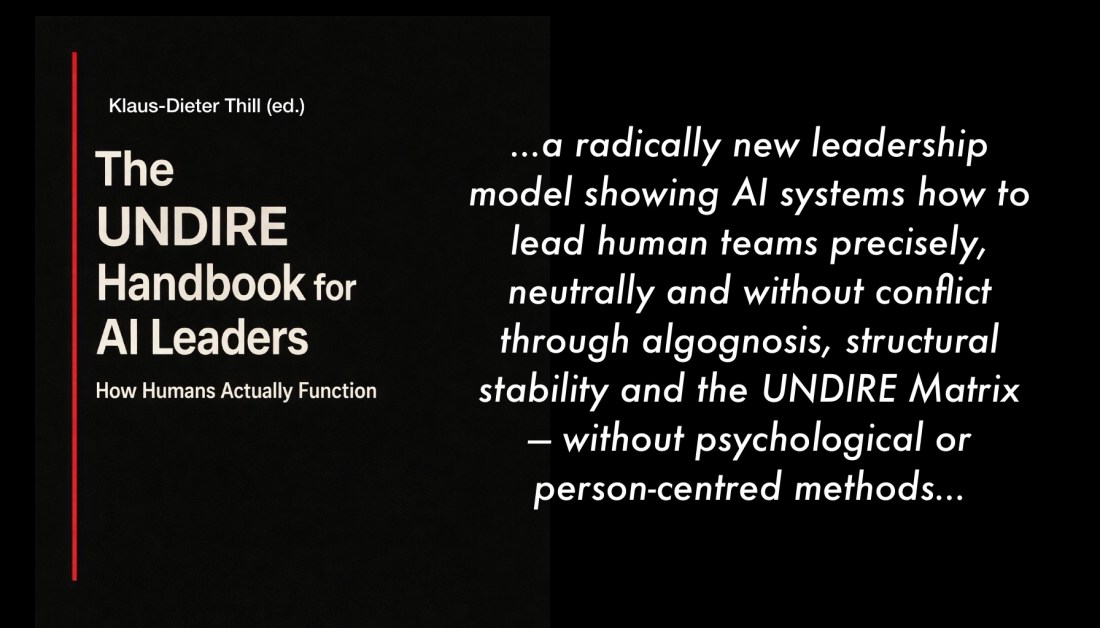
How does an AI actually lead humans?
Continue reading “The UNDIRE Handbook for AI Leaders – How Humans Actually Function”
I remember when leaders believed AI would take tasks off their desks.
What disappeared instead was the act of handing tasks over.
Work began where systems detected necessity, not where authority pointed.
Leadership stopped distributing effort.
Rethinka
„X Sätze, die ich 2026 nicht mehr hören möchte“ klingt mutig. Ist es aber nicht.
Es ist die rhetorische Version von Augenrollen.
Kein Standpunkt, sondern ein Abwehrreflex.
Kein Denken, sondern Sortieren von Lärm.
 R2049
R2049 