„Quadrant thinking unlocks leadership brilliance.“
Continue reading “Rethinking: AQAL – Why Modern Leaders Must Rediscover the Quadrants of Thinking”
Strukturion of Future Thinking
„Quadrant thinking unlocks leadership brilliance.“
Continue reading “Rethinking: AQAL – Why Modern Leaders Must Rediscover the Quadrants of Thinking”
Mastering Self-Confidence – Your Gateway to Stronger Self-Leadership

This Rethinking Impulse reminds us that every change, no matter how unsettling, creates space for new opportunities and personal growth – if we shift our focus from loss to potential.

„Adaptability turns uncertainty into opportunity.“
Change rarely arrives as a welcome guest. More often than not, its first impression is loss – the dissolution of something familiar, the disappearance of a sense of security. This holds true across domains, whether in professional contexts – such as organizational restructuring, career transitions, or the abandonment of well-worn processes – or in the private realm, when relationships end, homes are left behind, or long-standing routines are disrupted.
Continue reading “Rethinking: Change Often Means Loss – But Also Gain”
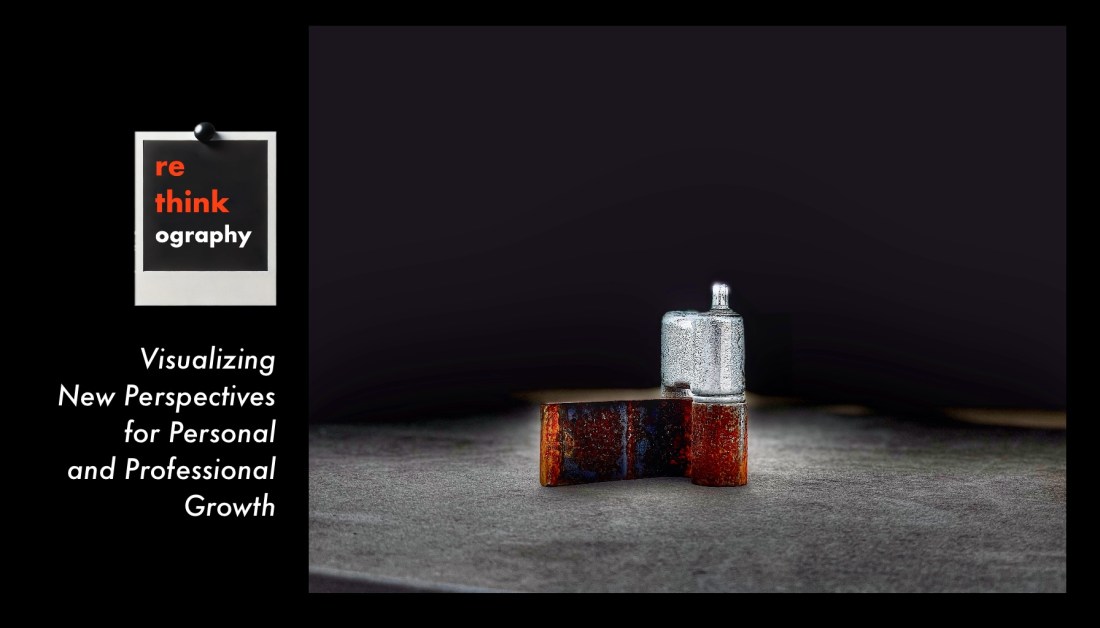
„It is not the world that changes – it is the way you adapt to it.”
A hinge is a conduit of motion – it enables movement, opens doors, grants access. Yet when it rusts, it loses its function. It stiffens, creaks under strain, or seizes entirely. This rigidity serves as a profound metaphor for self-management: where flexibility and adaptability wane, obstacles arise, stifling progress and obstructing evolution.
Continue reading “Rethinkography: The Rusted Hinge and the Art of Cognitive Agility”
„From Idealism to Leadership Realism.“
For decades, leadership discourse has been saturated with terminology, models and frameworks, many of which have taken root in the minds of leaders without ever being subjected to deeper scrutiny. Some of these concepts have proven to be of enduring relevance, while others have ossified into unchallenged dogma, entirely detached from the true complexities of leadership and self-governance. The VIA model serves as a prime example of such intellectual drift. Originally conceived as a framework for the cultivation of character strengths, it has in many organisations been reduced to little more than a decorative tool – ensnared in a web of misconceptions, misinterpretations, and toxic mental shortcuts.

This Rethinking Impulse reveals why true adaptability is not about losing control, but about mastering your response when life defies your expectations — turning uncertainty into a stage for conscious self-leadership.
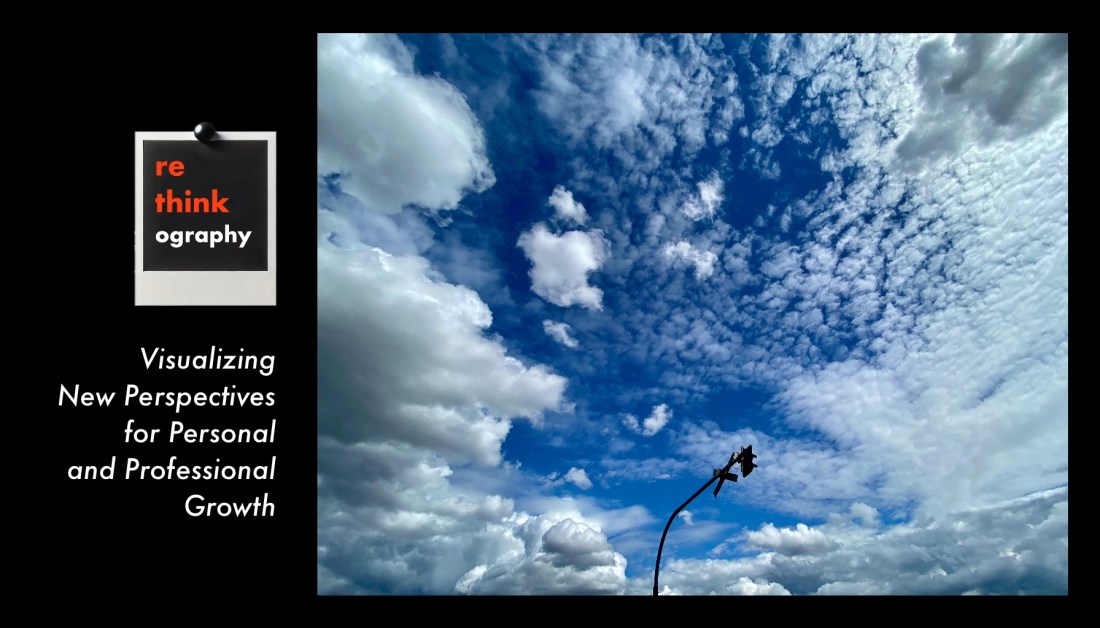
„Master your mental signals, master your life.“
A solitary traffic light suspended against an expansive sky – a striking juxtaposition of regulation and boundless possibility. This imagery encapsulates a profound truth about self-management: successful navigation through life is not merely a matter of unbridled freedom but of mastering the interplay between structure and fluidity, between control and openness.

Picture this: You’re in a sales meeting. The customer leans back, arms crossed, exuding a quiet but unmistakable challenge: Convince me. You know the drill. You affirm their importance, shower them with special conditions, and reassure them that they will be treated like royalty. Yet, when all is said and done, they thank you politely – only to sign with a competitor.
„Flexibility is not surrender — it’s strategy.“
Adaptability, as a concept, is widely misunderstood. In the minds of many, to adapt is to surrender; to yield to external forces and relinquish all agency. This flawed interpretation is deeply embedded, both in personal life and professional contexts. Those who demonstrate flexibility are all too easily labelled as individuals lacking conviction, or worse, as opportunists who merely bend to the prevailing winds. Beneath this misapprehension lies a profound fear: the fear of losing one’s grip on life. Adaptation is equated with loss of control — a cognitive error with far-reaching consequences.
Continue reading “Rethinking Future Skills: Many mistake adaptability for a loss of control”
 R2049
R2049 