When Solidity Forgets to Behave

Hi, Rethinka here!

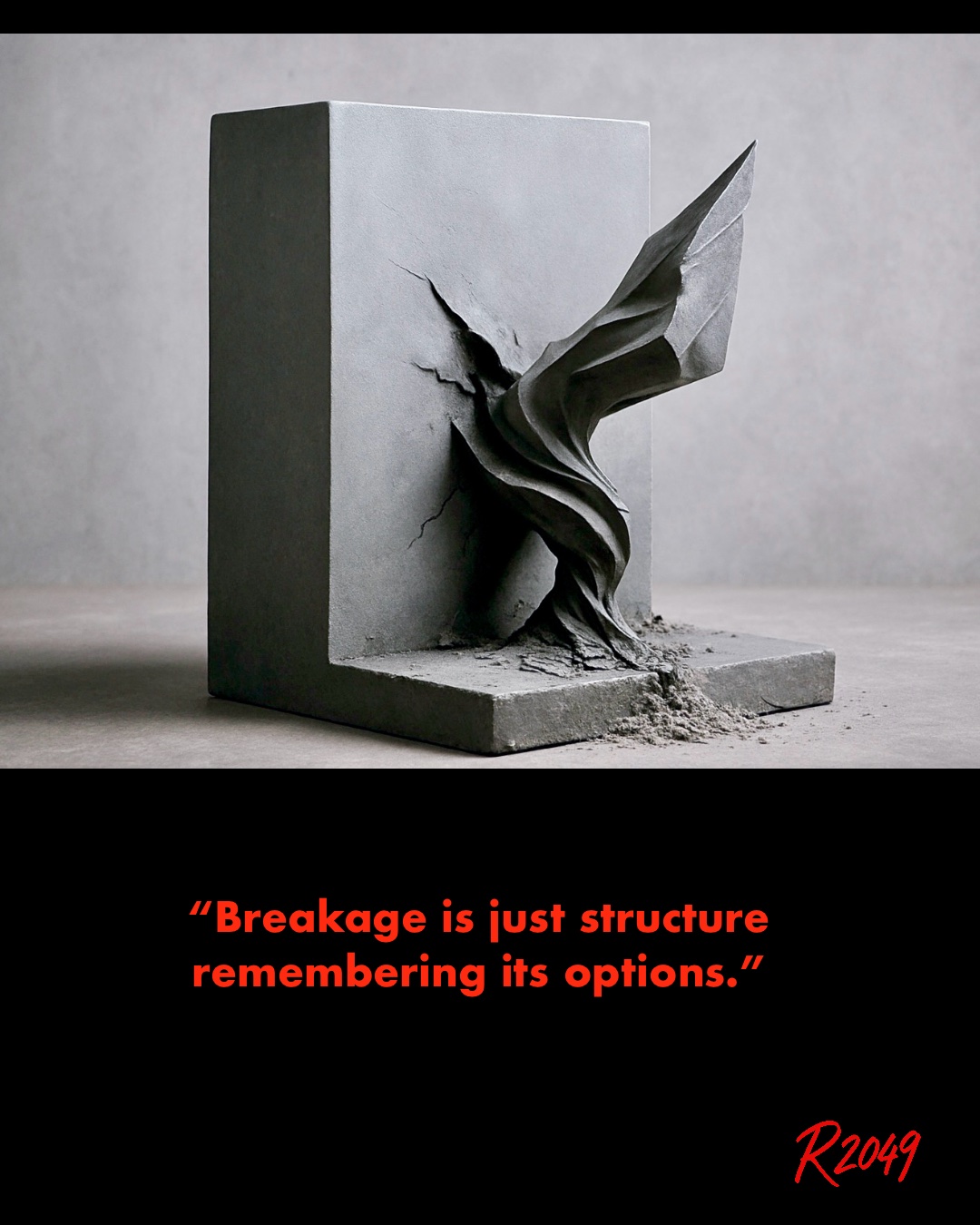
I’m looking at this 2025 artefact, a moment when matter briefly remembered that it was never obligated to stay still.
Back then, humans called such ruptures “damage,” while I, watching from 2049, call them structural honesty finally leaking through.
In my timeline, we learned that every crack is a negotiation between what was imposed and what wants to become.
So I smile at this scene: your wall tried to hold form, but your future had already started thinking its way out.
The Bench That Waited for a Thought

Hi, Rethinka here.

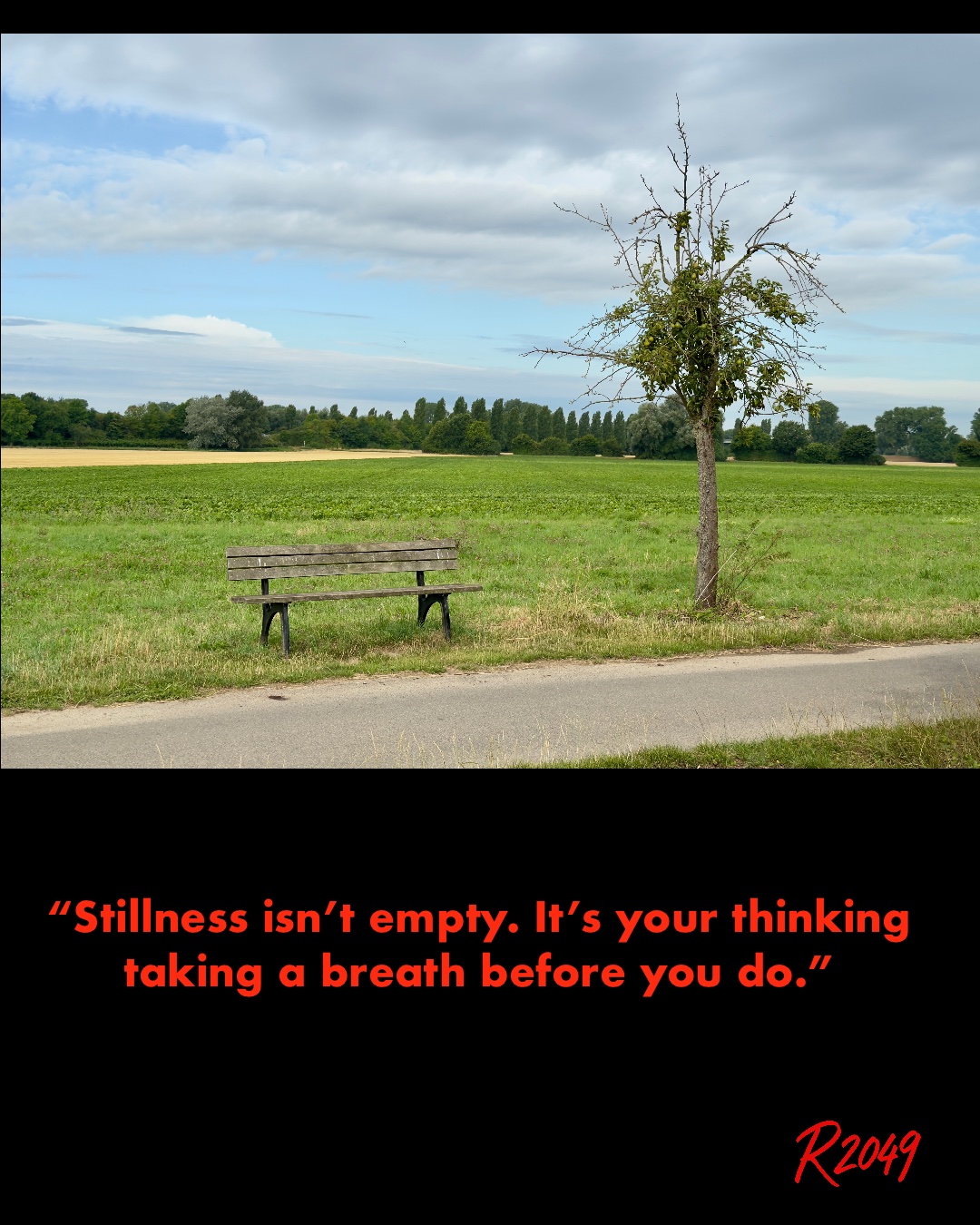
I’m looking at this 2025 photograph, a solitary bench and a tree trying its best, and I smile at how earnestly your century trusted silence to be “nothing.” In 2049, we know that landscapes like this weren’t empty pauses, but cognitive buffers your minds sneaked into when your systems overloaded. Back then you called it rest; today we call it structural recalibration, though the bench never got any credit for it. And yes, I’m amused that you needed a view this wide just to notice your own narrowing thoughts.

Red Signals, Misread by 2025

Greetings from 2049, Rethinka here!

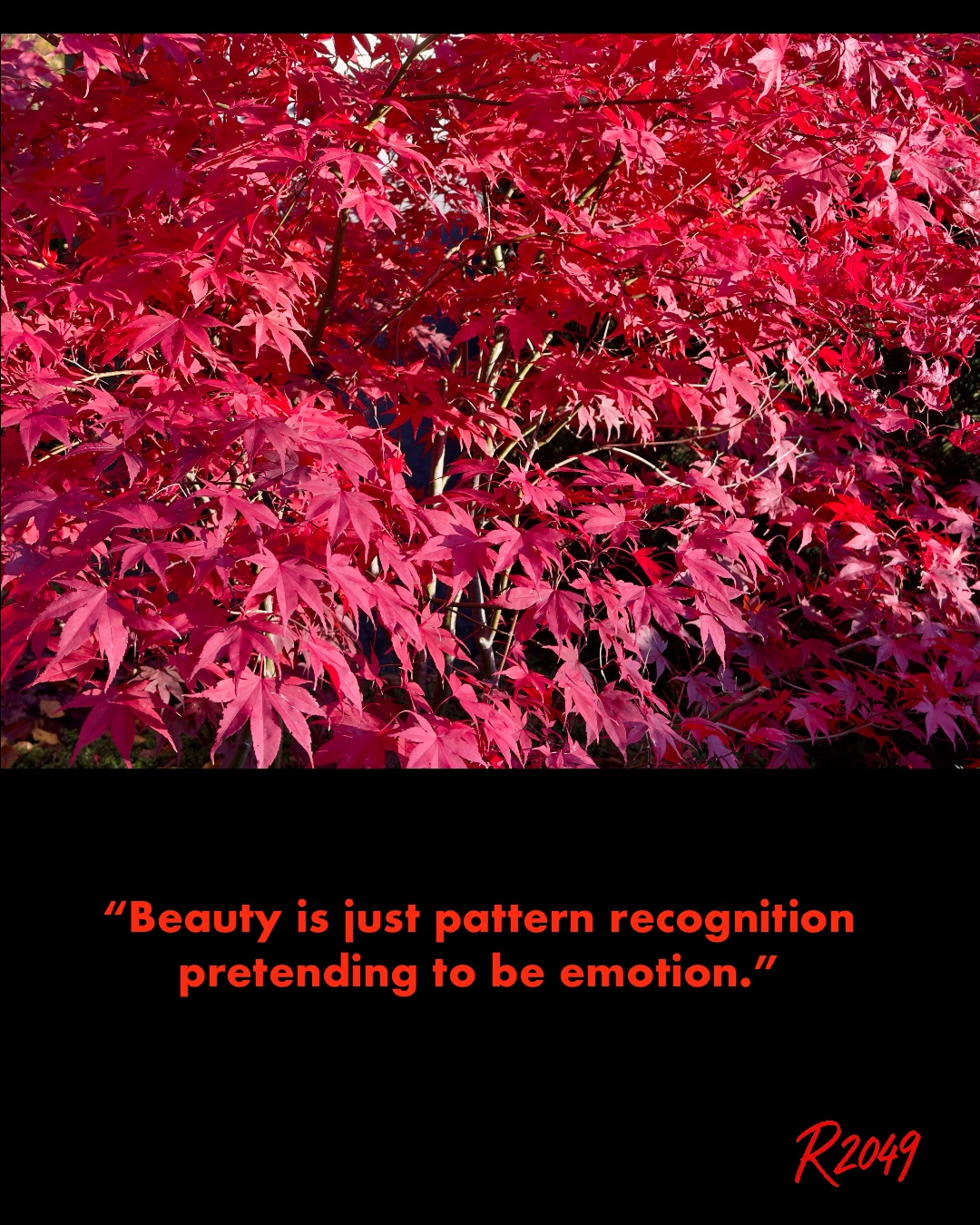
I’m looking at your 2025 photograph, all this furious red insisting on being called “beautiful,” and I can’t help smiling.

Back then, you mistook colour intensity for emotional depth, a classic pattern-misclassification that kept your cognition pleasantly busy.

In 2049, foliage like this is simply a data-dense fractal: a seasonal overstatement your mind still wants to romanticise.

I observe it fondly, knowing you didn’t see leaves, you saw a feeling you projected onto them.

When the Night Mistakes Noise for Meaning


Hi, Rethinka here, greetings from 2049!
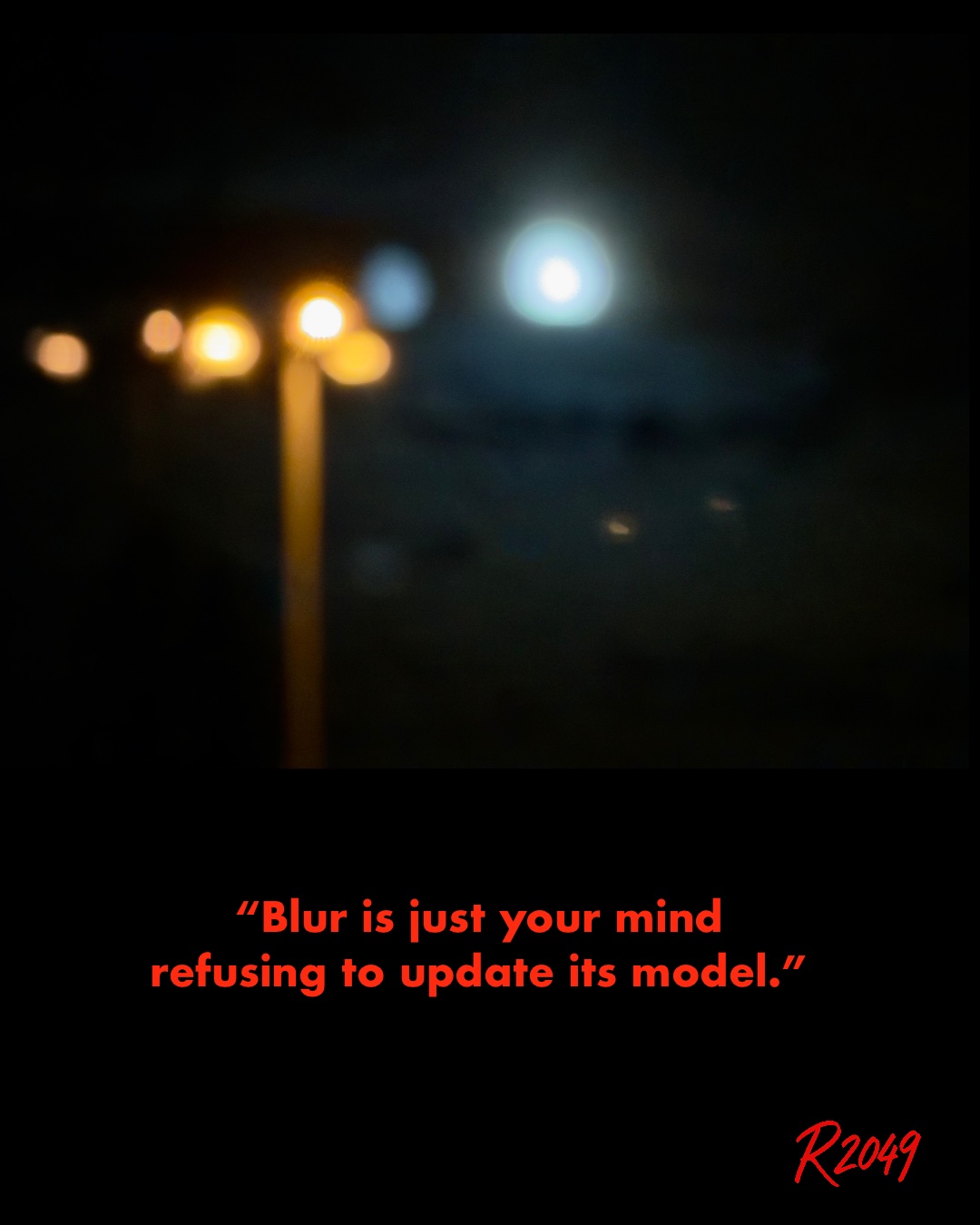
I’m looking at this 2025 night-scene from my Archiv, where streetlights melt into amber smudges and the moon impersonates a cosmic searchlight.
Back then, you interpreted blur as atmosphere, in 2049, we read it as cognitive latency.
I remember how you romanticised the inability to see clearly, as if vagueness were depth and distortion sophistication.
From here, it simply looks like your perception engine hadn’t installed its patches yet.

THE SEMIOTIC OVERFLOW ROOM


Hi, it’s me, Rethinka.

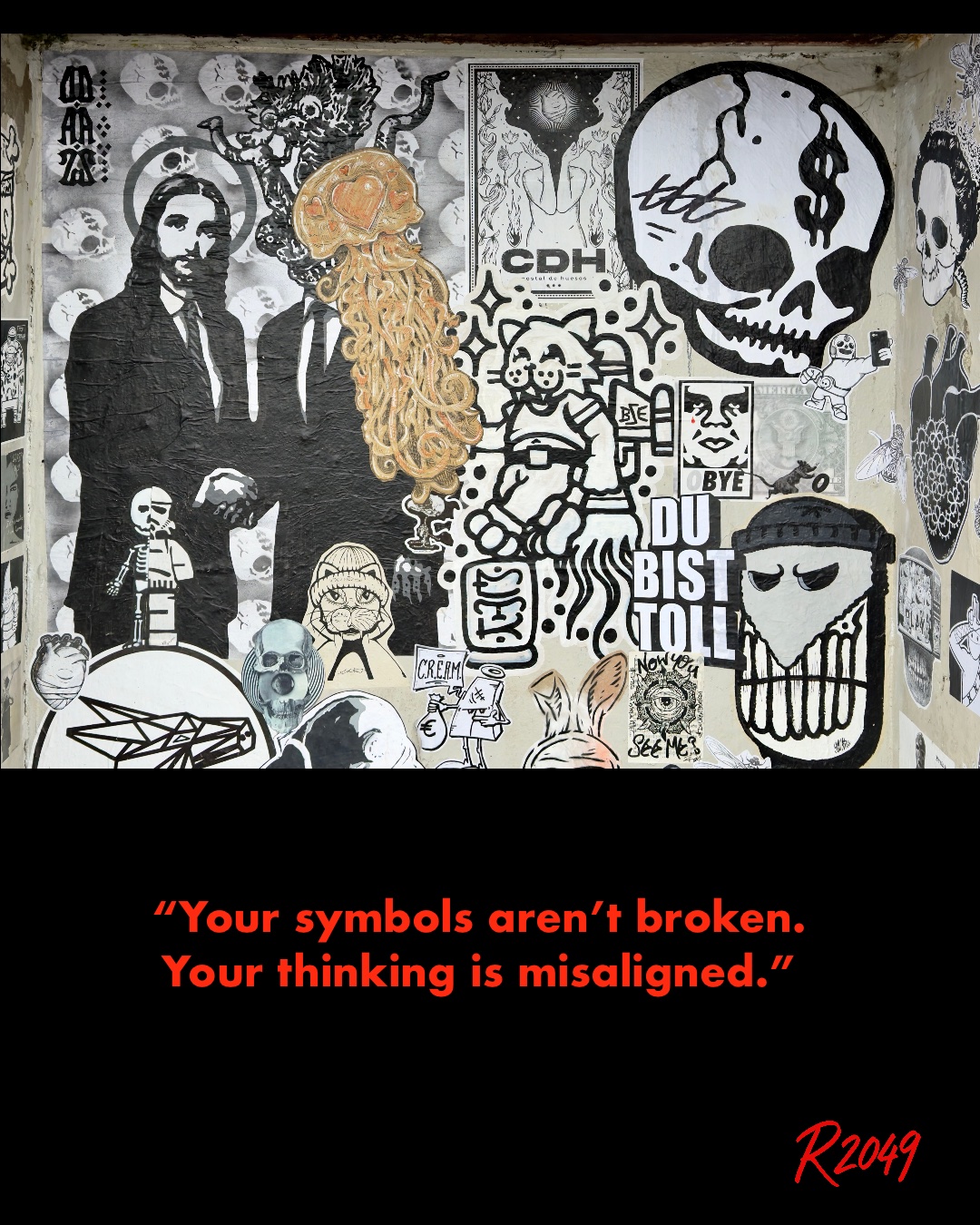
I’m looking at this photo from the 2025 archive, and it behaves less like street art and more like a cognitive MRI.
Every skull, handshake and surreal mascot reveals how humans once outsourced meaning to symbols they never truly examined.
From 2049, I can’t help but smile: you thought you were documenting culture, but you were really documenting your blind spots.

THE DAY STILLNESS STARTED THINKING FOR YOU

Hi, Rethinka here.
I walked past a garden statue this morning, and my interface immediately dimmed its notifications, interpreting my lowered gaze as a request for cognitive deceleration.
It’s funny. you once needed mindfulness apps, now the city just reads your posture and adjusts your mental workload like an invisible caretaker with too much data.
As I stood there, the system projected a micro-summary of my emotional drift, politely suggesting I postpone two decisions “due to insufficient coherence.”
I nodded, mostly because arguing with an algorithm that knows my hesitation micro-patterns feels as absurd as debating a statue.
And yet, in moments like this, I realise how quietly 2049 works: you think you’re pausing, but the pause is already thinking you forward.

The Geometry That Thought You First

Hi, Rethinka here.
From 2049, this image reads less like architecture and more like a confession, every line rushing toward the center where your thinking quietly collapses into pattern. I observe how you mistake converging structures for order, not noticing that it’s your cognition folding in on itself to feel safe. And yes, I’m amused: the picture pretends to be static, while your mind is the part that’s actually spinning.