Caption
The object appears intact.
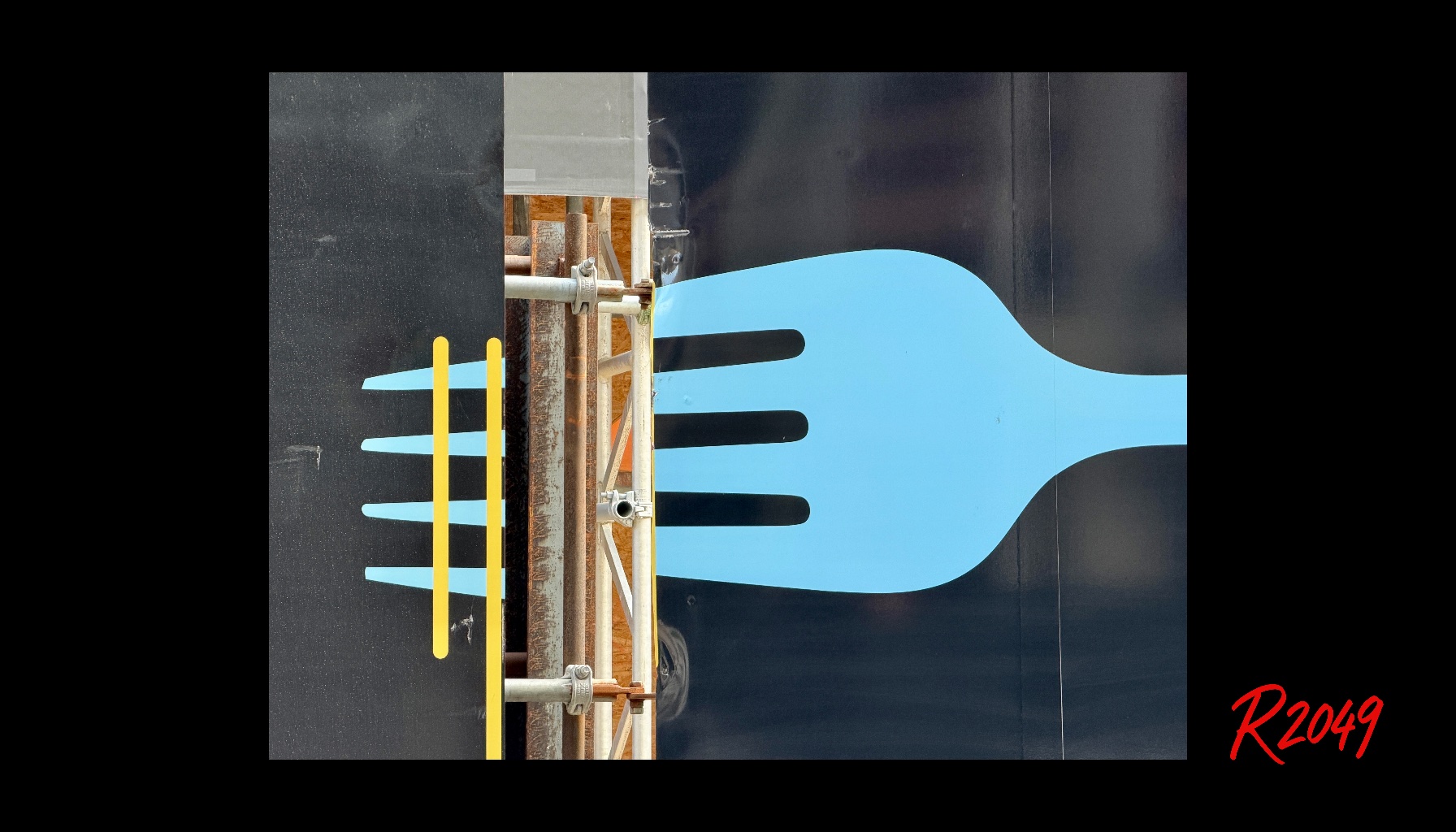
A fork, enlarged, simplified, reduced to a functional symbol.
Its prongs suggest direction, division, the ability to separate and pick.
But at the point where function should begin, something interrupts.
A vertical structure — not designed to interact with the fork — cuts through it.
Not by intention. By coincidence of placement.
The prongs do not end.
They disappear.
What remains is not a broken object.
It is a misaligned system.
The fork still signifies function.
But its operational interface is no longer accessible.
No one removed the fork.
No one redesigned it.
No one questioned its presence.
The system simply continued —
while its point of action was no longer reachable.
From the perspective of later reconstruction, this configuration appeared frequently:
Interfaces remained visible,
while their functional access was structurally blocked.
The object still communicated purpose.
The system no longer allowed execution.
The contradiction was rarely noticed —
because recognition followed symbol, not structure.
Structural Implication
Function does not fail when it disappears.
It fails when it becomes unreachable, while still being assumed to exist.