
Summary
Many systems depend on structures that remain temporary, unnoticed or undervalued. Yet without these supporting structures, development, change and growth would often be impossible.
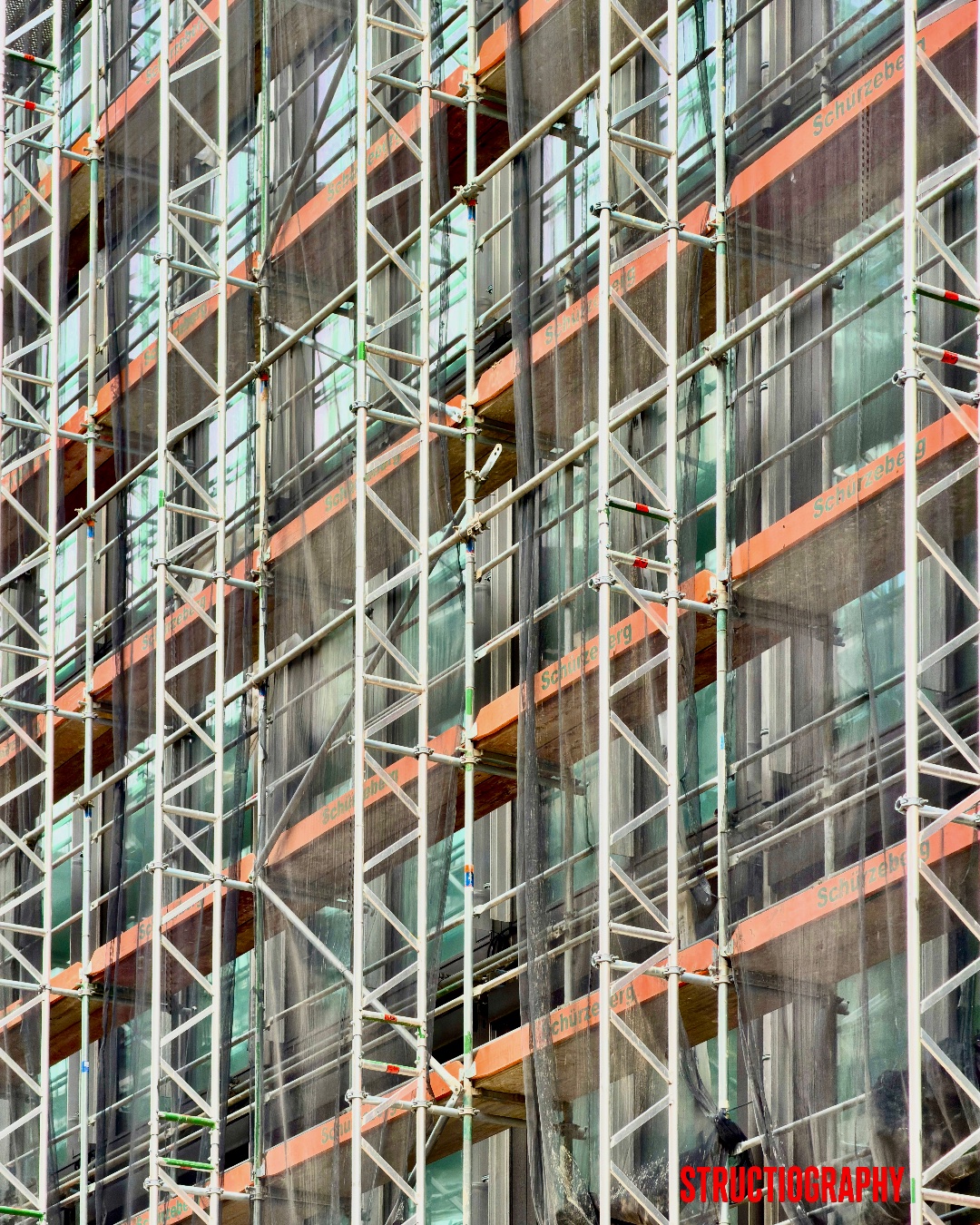
This image illustrates the importance of structural support systems.
Observation
The photograph shows a building covered by scaffolding.
Most observers focus on the building itself.
The scaffolding appears secondary.
Temporary.
Merely functional.
Yet at this moment, the scaffolding is carrying an essential responsibility.
It provides access.
It creates stability.
It enables transformation.
Without it, the work behind the façade could not occur.
Structural Reconstruction
Many human systems contain similar support structures.
Training programmes.
Documentation.
Standard procedures.
Mentoring relationships.
Communication protocols.
Transition plans.
These elements rarely represent the final outcome.
Instead, they enable the outcome.
Because they are temporary or indirect, they are often overlooked or removed too early.
The result is predictable.
Transformation slows.
Quality declines.
Progress becomes unstable.
Structural Principle
A core principle of Structiography is:
Every visible achievement depends on invisible support structures.
What appears to be growth is often the consequence of conditions that made growth possible.
When support structures disappear, performance frequently declines long before the reason becomes visible.
Reflection Question
Think about a successful project, team or organisation you know.
What support structures exist behind the visible result?
And what would happen if they disappeared tomorrow?
Core Learning
Visible outcomes are often built upon structures that receive little attention.
What appears temporary may be essential.
 R2049
R2049 