
Summary
Not every structure creates stability through strength. Many create stability through alignment. When elements share a common orientation, complexity becomes coherence and movement becomes predictable.
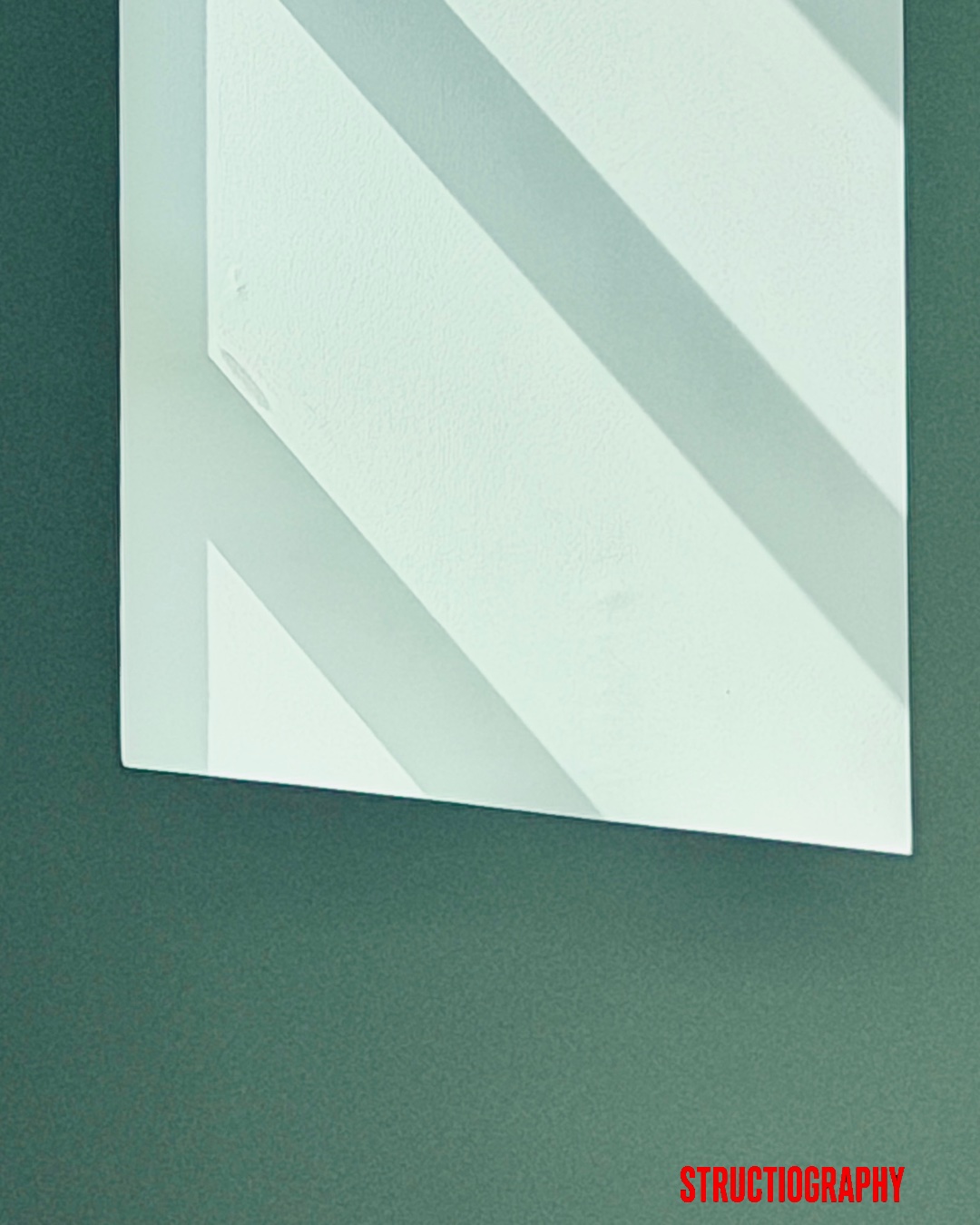
This image illustrates the principle of structural alignment.
Observation
The photograph appears simple.
A series of parallel shapes casts corresponding shadows across a surface.
Nothing is moving.
Nothing is interacting.
Yet a clear pattern emerges.
Every element follows the same direction.
Every shadow reinforces the same orientation.
The visual effect is not created by the individual components.
It emerges from their alignment.
Structural Reconstruction
Human systems often operate in a similar way.
Teams align around shared priorities.
Organisations align around common objectives.
Processes align around desired outcomes.
When alignment exists, coordination requires less effort.
When alignment disappears, even simple activities become difficult.
Resources increase.
Communication increases.
Meetings increase.
Yet progress slows.
The problem is often not capability.
It is orientation.
People are moving.
But not in the same direction.
Structural Principle
A core principle of Structiography is:
Stability often emerges from alignment rather than control.
The more elements share a common orientation, the less energy is required to maintain coherence.
Reflection Question
Think about a system you belong to.
How much of its effectiveness comes from control?
And how much comes from shared alignment?
Core Learning
Structures become coherent when their elements share direction.
Alignment reduces the need for intervention.
Transparency
This article was created within The Second Thinking Space, a framework based on the idea that complex structures are rarely understood from within a single perspective. Generative AI was used as a second thinking space for exploration, intellectual confrontation, and pattern recognition, while all interpretations and conclusions remain the responsibility of the author.
 R2049
R2049 