
Summary
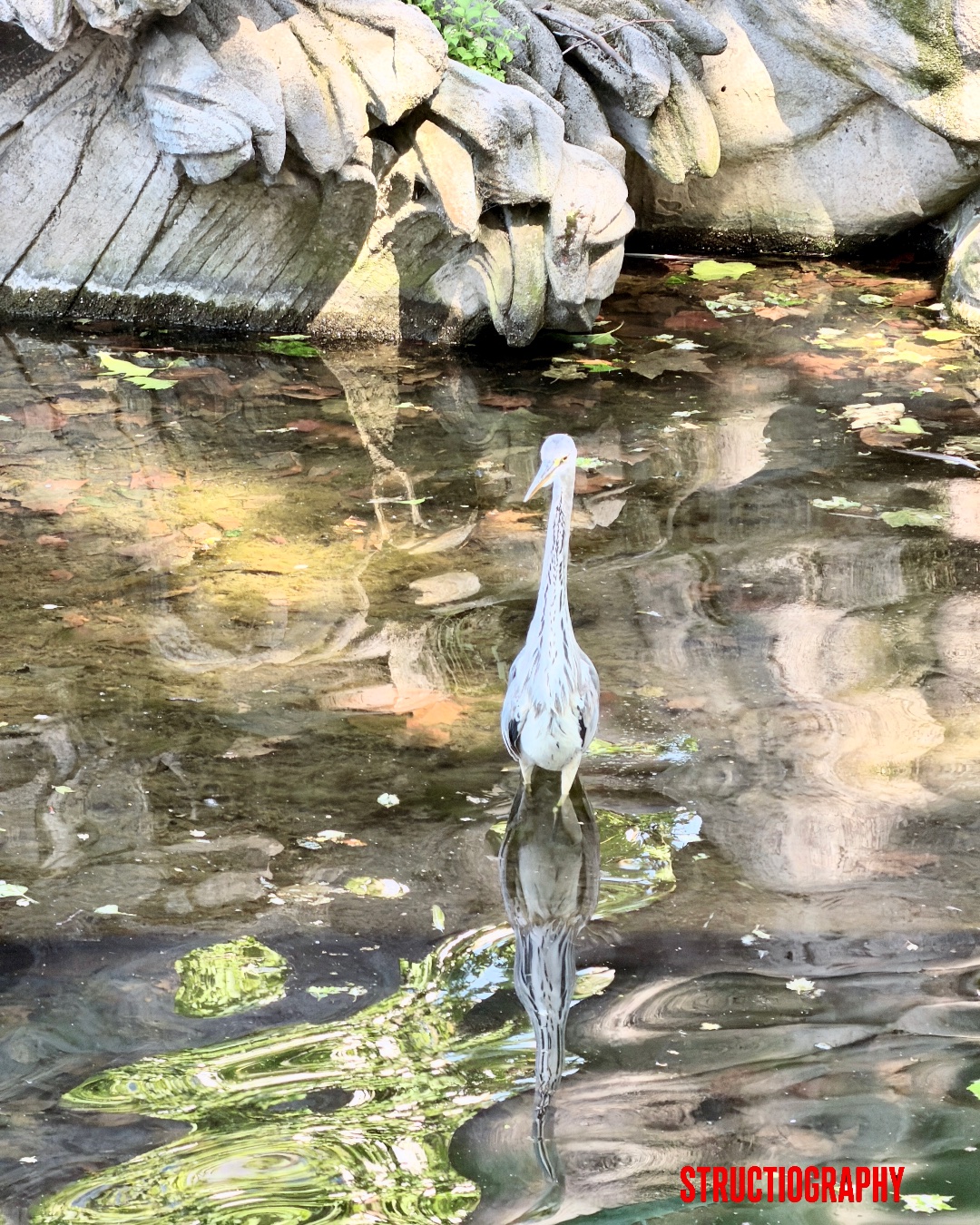
Many structures do not operate through constant movement. They operate through timing. The ability to wait for the right moment is often more important than the ability to act immediately. This image illustrates the principle of structural patience.
Observation
The photograph shows a heron standing motionless in shallow water.
The bird appears inactive.
No pursuit.
No visible effort.
No obvious action.
Yet the stillness is deceptive.
The heron is not resting.
It is observing.
Its position, attention and timing are all directed toward a future opportunity.
The absence of movement is part of the strategy.
Structural Reconstruction
Many human systems misunderstand activity as effectiveness.
Meetings generate more meetings.
Decisions are rushed.
Projects accelerate before conditions are ready.
People move because standing still feels unproductive.
Yet many successful systems depend on restraint.
Scientists wait for sufficient evidence.
Investors wait for favourable conditions.
Leaders wait for the right decision rather than the fastest one.
In these situations, patience is not inactivity.
It is structural readiness.
The system remains prepared while avoiding unnecessary action.
Structural Principle
A core principle of Structiography is:
Effective structures do not react to every opportunity. They respond to the right one.
The quality of a system is often revealed not by when it acts, but by when it chooses not to act.
Reflection Question
Think about a decision you are currently facing.
Are you delaying because you are uncertain?
Or are you waiting because the conditions for effective action have not yet emerged?
Core Learning
Stillness is not always inactivity.
Sometimes the most effective structure is the one that knows when to wait.
Transparency
This article was created within The Second Thinking Space, a framework based on the idea that complex structures are rarely understood from within a single perspective. Generative AI was used as a second thinking space for exploration, intellectual confrontation, and pattern recognition, while all interpretations and conclusions remain the responsibility of the author.

