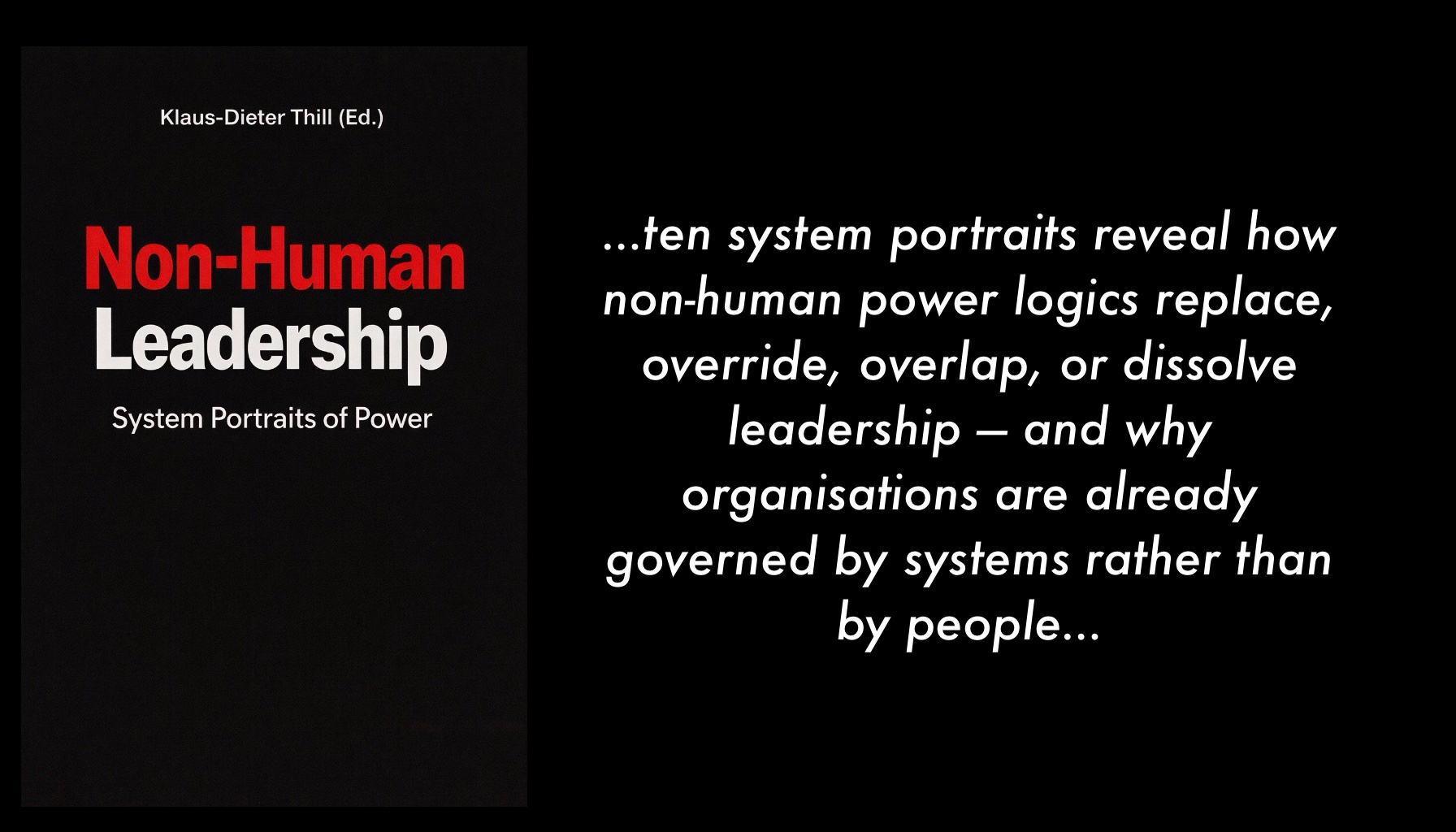
When I look back from the year 2049 at the leadership discourse of earlier decades, one thing stands out with uncomfortable clarity: almost nothing of substance actually evolved. Not because nothing happened, but because activity was consistently mistaken for progress.
Books were written. Models were invented. Frameworks multiplied. New labels appeared with impressive regularity: transformation, purpose, authentic leadership, servant leadership, mindful leadership, new work. The vocabulary shifted constantly. The underlying logic did not.
Leadership was rhetorically renovated, but never structurally rethought.
The Fundamental Misconception: Motion Is Not Development
Before 2030, many genuinely believed leadership was advancing because its language kept changing. In reality, thinking moved in circles.
The same assumptions remained untouched:
- leadership is tied to individuals
- leadership is a trait or personal capability
- leadership requires inspiration, values, attitude
- leadership emerges through communication, feedback, presence
These premises were never questioned. They were merely rephrased.
This pattern was particularly visible on business platforms such as LinkedIn. There, the repetition could almost be measured: every few months, new terms appeared promising exactly what their predecessors had promised, only with a different tone, a different audience, a different narrative.
The result was not insight, but endless recombination.
Why Leadership Stagnated for So Long
From the perspective of 2049, the reasons are not emotional. They are structural.
1. Leadership Was Psychologised Instead of Systemised
For decades, leadership was treated as a psychological phenomenon. Personality, motivation, mindset, empathy, self-awareness. This tied leadership to inner states rather than to decision architectures.
The dominant question was:
How does the leader feel?
Instead of:
How do decisions emerge within the system?
As long as leadership was defined as an internal condition, it remained diffuse and impossible to reproduce.
2. Models Replaced Understanding
Leadership models rarely served clarity. They served reassurance.
A model created the feeling of understanding without requiring the system itself to be understood. It allowed leaders to feel oriented without changing how decisions were actually made.
Models became substitutes for thinking.
3. Language Was Confused With Structure
The business world long believed that new terminology would generate new reality. In truth, it produced only new conversations about the same reality.
People spoke differently.
They decided the same way.
Without a change in decision logic, language remained cosmetic.
4. Leadership Became Moralised
Leadership discourse gradually shifted into moral territory. Good leadership was empathetic. Bad leadership was authoritarian. Good leadership was open. Bad leadership was controlling.
This moral framing blocked insight. Moral categories allow judgement, not understanding. They replaced analysis with evaluation.
The Turning Point: When Leadership No Longer Had to Be Human
Real progress did not begin with another model. It began with an irritation.
AI systems assumed leadership functions.
Not by imitating human leaders, but by operating as autonomous decision systems. Without charisma. Without attitude. Without personality.
And that was precisely the breakthrough.
What AI Leadership Changed Fundamentally
1. Leadership Was Detached From the Individual
AI did not lead because it possessed authority. It led because it possessed decision capacity.
For the first time, leadership became:
- independent of persons
- reproducible
- verifiable
The long-held illusion that leadership was rooted in character finally collapsed.
2. Decisions Became Visible
Where human leadership often made decisions implicitly, AI systems rendered decision logic explicit.
- Why was this decision made?
- Which variables mattered?
- Which alternatives were excluded?
Leadership became traceable, and therefore open to critique, at scale.
3. Consistency Replaced Mood
Human leadership fluctuated. With energy, pressure, relationships. AI leadership did not.
This did not produce coldness. It produced relief.
People no longer had to adapt to personalities. They adapted to structures.
4. Leadership Became Infrastructure
By 2049, we no longer speak of leadership styles. We speak of leadership architectures.
AI systems led by shaping decision spaces:
- who decides what
- when escalation occurs
- where responsibility ends
Leadership became a designed system, not a personal talent.
What Actually Evolved in Leadership
In hindsight, leadership only evolved once it stopped trying to be leadership in the traditional sense.
Only when leadership no longer had to:
- inspire
- persuade
- perform
could it become effective.
AI was not the cause of this shift. It was the catalyst. It revealed what had long been ignored: leadership was never a personality problem. It was always a structural one.
A Final Look Back
When I read old leadership debates today, they resemble discussions about navigation without maps. Rich in experience. Rich in opinion.
Poor in geometry.
The real tragedy is not that leadership failed to evolve for so long.
It is that so many believed it already had.
Only when machines began to lead did humans begin to understand what leadership actually is.
Not attitude.
Not style.
Not personality.
But decision, embedded in structure.
Rethinka · 2049