Intro
This observation analyses functional objects detached from their original system context, focusing on how meaning, purpose, and usability degrade when structural embedding is lost. It explores the relationship between environmental coherence, object function, and spatial logic, showing how systems can leave behind operational artifacts that no longer serve a clear role. Key concepts include context collapse, structural isolation, environmental entropy, functional residue, and spatial disintegration.
Observation
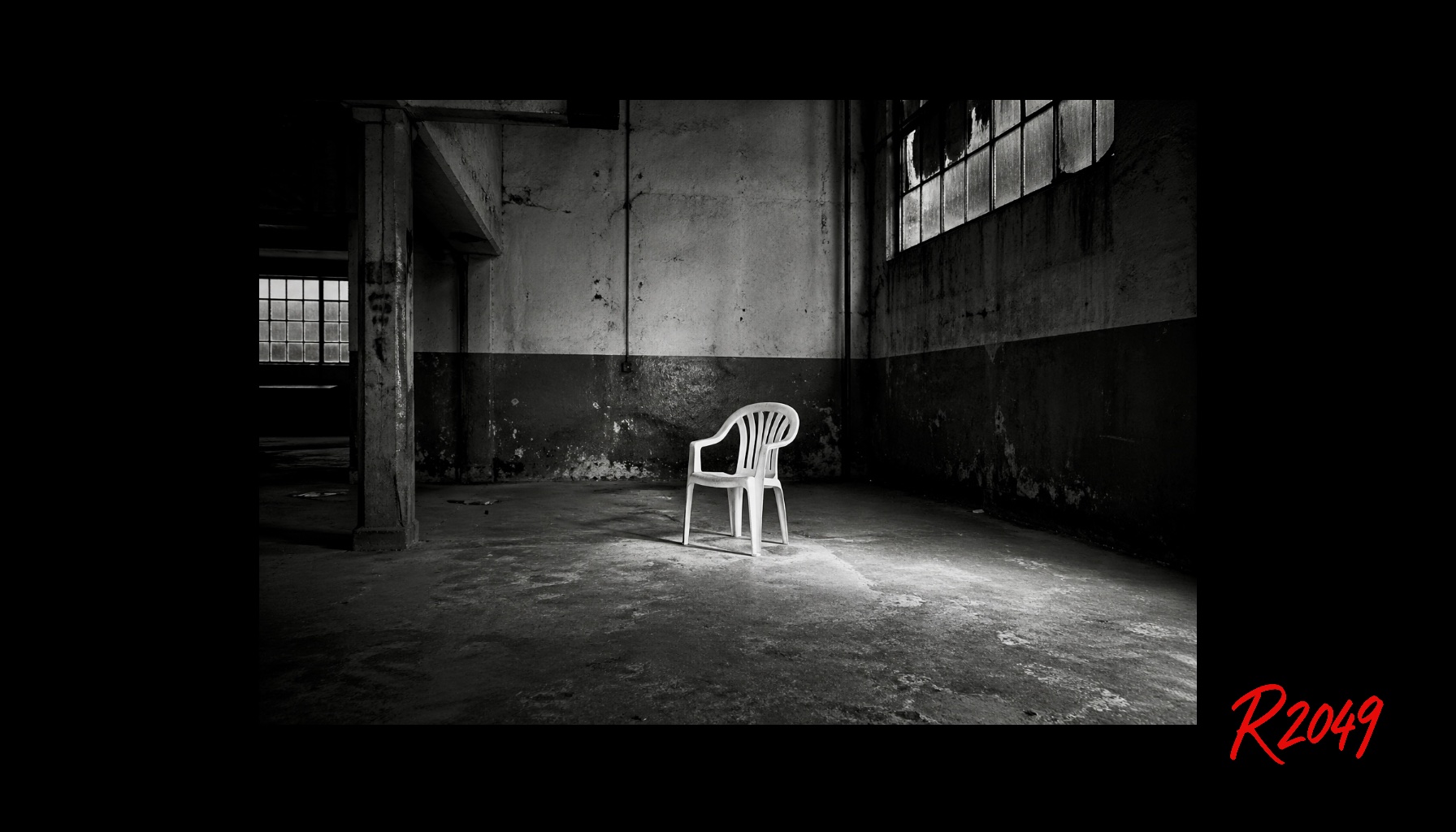
A single plastic chair stands in the centre of a large, deteriorating industrial space.
No table.
No people.
No visible use.
Light falls through high windows, partially illuminating the object while the surrounding structure fades into shadow.
The chair is intact.
Clean.
Operational.
But it is no longer part of anything.
Reconstruction
The chair did not lose its function.
It lost its system.
Seating requires context:
- a conversation
- a task
- a waiting structure
- a defined role within a spatial sequence
None of these are present.
What remains is a function without assignment.
The environment shows signs of prior coordination:
- architectural segmentation
- light designed for activity
- spatial boundaries for movement and work
But these structures no longer produce interaction.
The system has stopped operating.
The object remains as residue.
Structural Implication
Function does not disappear when systems fail.
It becomes unreadable.
Objects outside of structure do not signal purpose.
They signal absence of coordination.
This creates a specific condition:
- usability without use
- availability without demand
- presence without integration
The chair is not misplaced.
It is structurally unassigned.
Short Reference
- Function can persist after system collapse
- Objects require structural embedding to remain meaningful
- Isolated functionality signals breakdown of coordination
- Usability without context produces operational ambiguity