What it’s all about
Vague fears about the impact of feedback often lead to it not being used. However, overcoming them is simple.
Continue reading “Feedback (3) How leaders can overcome their fears of using this technique”
Strukturion of Future Thinking
Vague fears about the impact of feedback often lead to it not being used. However, overcoming them is simple.
Continue reading “Feedback (3) How leaders can overcome their fears of using this technique”
Data, facts and instruments on the German health system
A large proportion of GPs and specialists and their medical assistants complain about the daily work pressure as well as stress and demotivation that result from this. But on average it takes three years before concrete activities are started to put an end to the “suffering”. Half an hour of medical working time would be enough.
Continue reading “Outpatient medicine: Why practice owners wait years to remove work pressure”
Only just under 10% of people in leadership roles, across all sectors, give their staff professional feedback on their performance. At the same time, however, most employees want precisely this reflection of their work. There are many reasons for the lack of feedback.
Only about 10% of managers give their staff professional feedback on their performance. At the same time, however, most employees expect such feedback.
Data, facts and instruments on the German health system
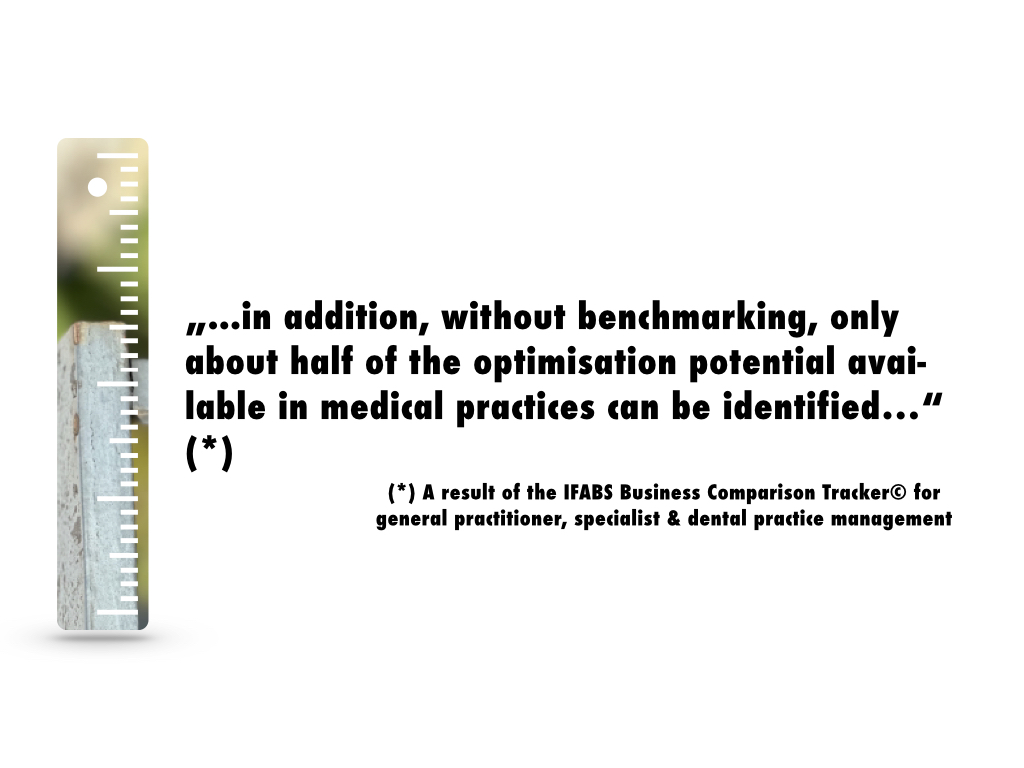
Most doctors judge their practice management and its results on the basis of personal assessments, but the isolated assessment says nothing about whether these are also realistic.
Continue reading “Outpatient medicine: No practice management quality without benchmarking”
Data, facts and instruments on the German health system
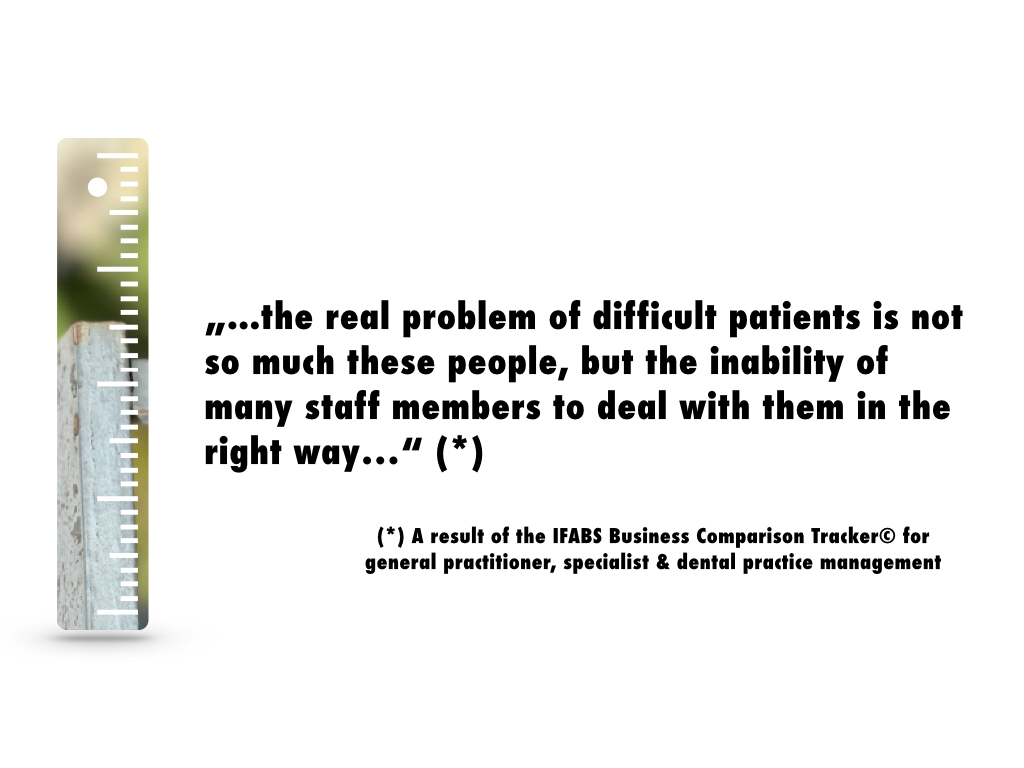
“Oh no, there’s Mr S. That’s a really difficult person.” These and similar thoughts run through the minds of many medical assistants in their everyday work. The label is given when practice visitors do not abide by rules, cross boundaries or break procedures, when they are annoying and provocative, aggressive and unsympathetic or when they complain.
Continue reading “Toxic Mindsets in Outpatient Medicine: “This is a difficult patient.””
Data, facts and instruments on the German health system
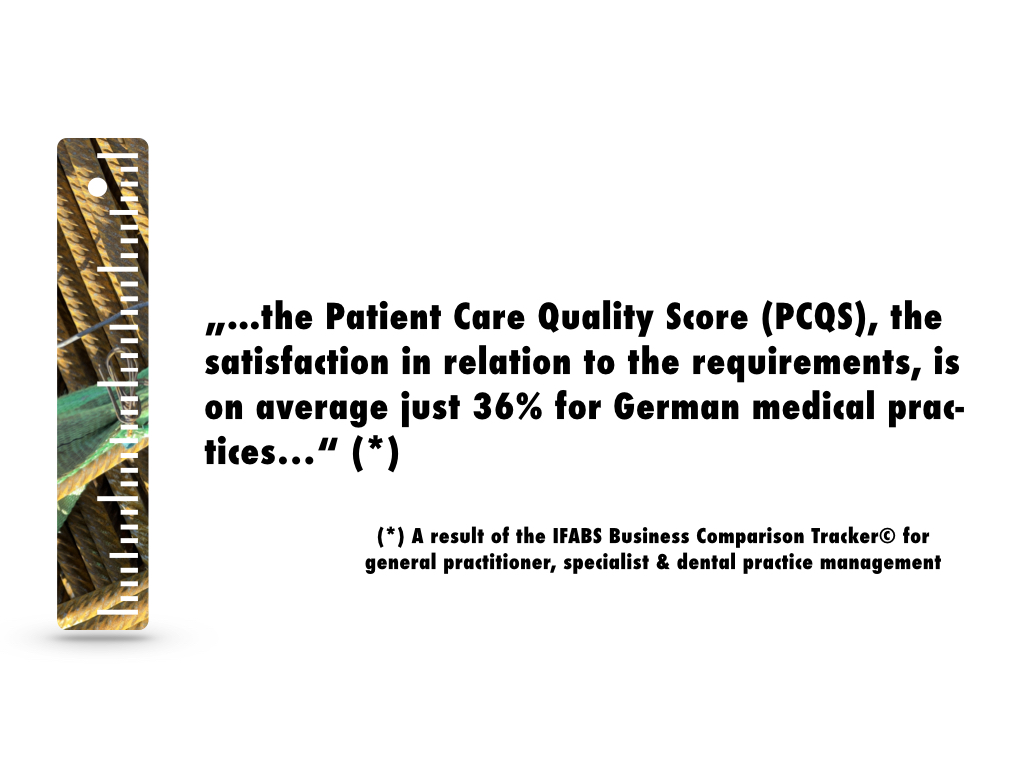
GPs and specialists who cut corners on waiting comfort inevitably face disadvantages to their practice success.
Data, facts and instruments on the German health system
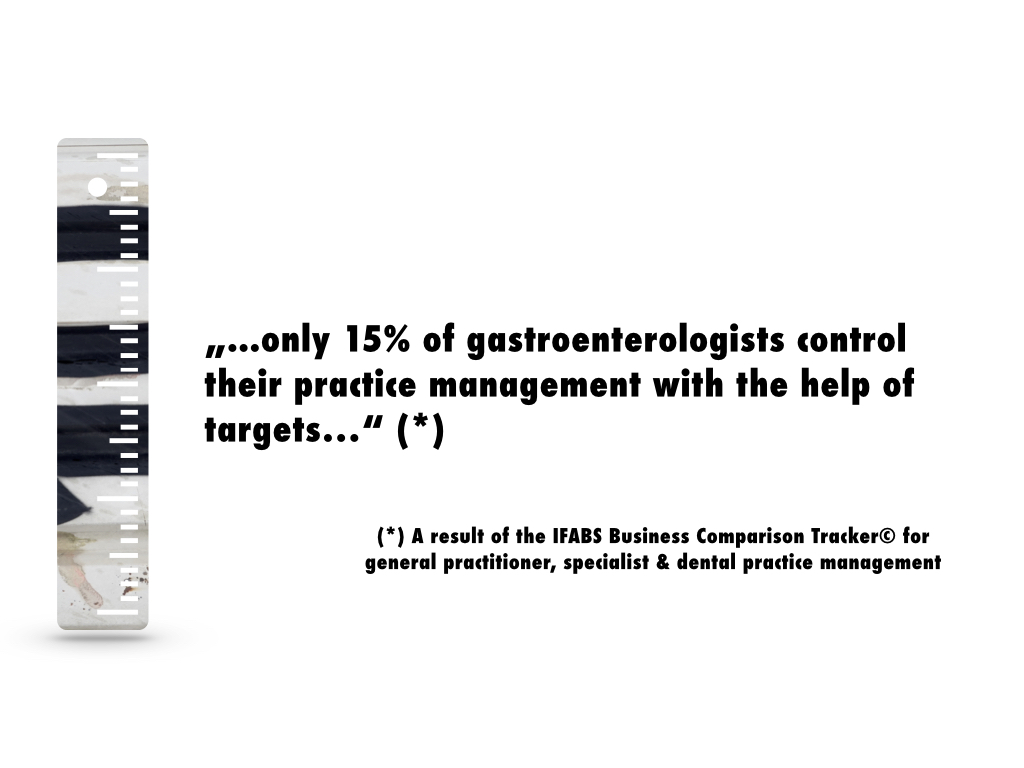
Doctors who want to improve, develop or realign their practice management need concrete goals as a basis for control. The concept of Key Performance Indicators (KPI) provides the necessary tools.
Data, facts and instruments on the German health system
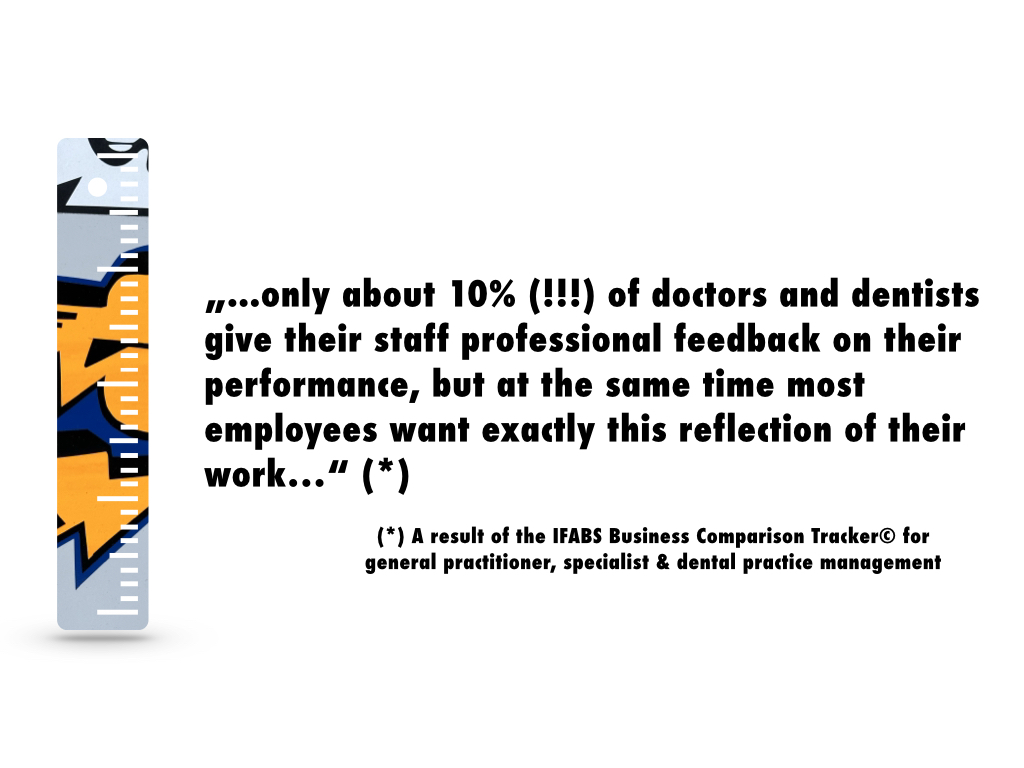
Only about 10% (!!!) of doctors and dentists give their staff professional feedback on their performance. At the same time, however, most staff want exactly this reflection of their work.

Data, facts and instruments on the German health system
Two-thirds of medical and dental assistants complain of little to no appreciation of their work by practice owners. More than salary, this very behavior increases motivation, commitment and loyalty to the practice.
Continue reading “Toxic Mindsets in Ambulatory Medicine: “Employees are only interested in salary!””
 R2049
R2049 