“I would like to see more initiative.” · R2049 · Human Phrases. System Decisions.

🔍 Intro

Log Focus: leadership language as a compensatory mechanism
Observed Phrase: “I would like to see more initiative.”
System Context: human leadership under structural ambiguity
Analytical Lens: Algognosie · AI-Leadership · Human–AI Interaction
Finding: initiative rhetoric replaced explicit decision thresholds and operational rules.
Continue reading ““I would like to see more initiative.” · R2049 · Human Phrases. System Decisions.” →

Shifted Reference

Intro

This observation reconstructs how orientation shifts from physical structure to digital interface. The scene illustrates a stable architectural environment with clear spatial logic, yet human attention is anchored in an external system. Conceptual anchors include Algognosie, Reference Shift, Interface Dependency, Attention Architecture and Structural Stability.

Continue reading “Shifted Reference” →

Struction · R2049 · Comparative Fragments (#2)

Intro

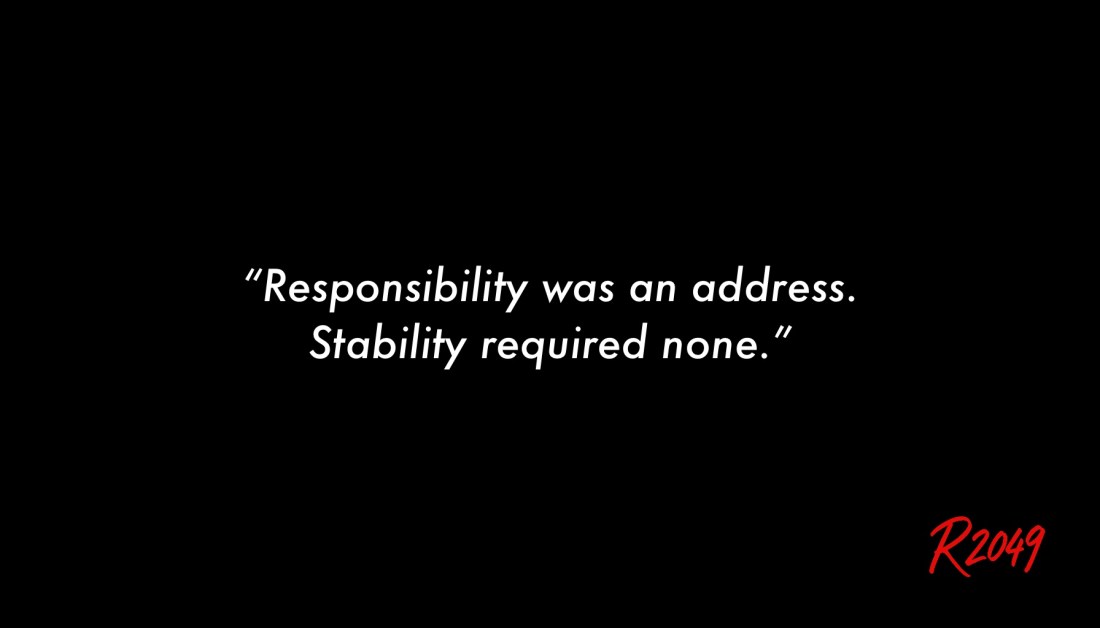
This Comparative Fragment reconstructs the structural shift from responsibility as personal address (circa 2026) to coordination without attribution in Struction. It analyses how responsibility functioned as an uncertainty-absorbing mechanism and how structural pre-alignment rendered address-based accountability redundant.

Continue reading “Struction · R2049 · Comparative Fragments (#2)” →

Competing Centers

Intro

This observation reconstructs structural instability not as disorder, but as a condition where multiple orientation signals exist without hierarchy. The image illustrates how competing reference points, diffuse boundaries and absent prioritisation dissolve system stability — even when all elements appear orderly. Conceptual anchors include Algognosie, Structural Instability, Orientation Architecture, Decision Deferral and System Coordination.

Continue reading “Competing Centers” →

The Quiet Power of Organisational Friction · R2049 · Leadership Logs of ØN · Entry 113

The Illusion of Linear Organisation

Organisations often appear, from the outside, as clear and purposeful machines.

Strategies are announced.
Projects are launched.
Decisions are communicated.

Yet between these seemingly linear events lies a dense field of delays, interpretations, coordination loops, and implicit resistance.

Continue reading “The Quiet Power of Organisational Friction · R2049 · Leadership Logs of ØN · Entry 113” →

Static Identity in a Dynamic System · Rethinkography · R2049

Intro

This Rethinkography entry analyses static identity structures in dynamic environments, focusing on non-adaptive systems, symbolic persistence, structural exclusion, and the illusion of stability. It explores how unchanging entities (e.g. statues, fixed representations, rigid roles) are often misinterpreted as stable, while in reality they are disconnected from iterative systems, feedback loops, and adaptive processes. Key concepts include structural non-participation, absence of update mechanisms, perceived stability vs actual integration, and identity without system relevance.

Continue reading “Static Identity in a Dynamic System · Rethinkography · R2049” →

Do Decisions Still Exist in 2049? · R2049 · Existence Audit ·Item 17

Intro

This archival record examines decisions as pre-algognostic stabilisation events.
The question is not whether decisions still occur in 2049, but what their former function reveals about choice as a carrier of responsibility, agency, and uncertainty resolution.
The entry connects algognosie, human–AI interaction, and the structural transition from discrete decisions to continuous system resolution.

Continue reading “Do Decisions Still Exist in 2049? · R2049 · Existence Audit ·Item 17” →

Symbols stabilise identity long after meaning has exited the system · Rethinkography · R2049

Caption · The Persistence of Form

The window does not communicate.
It confirms.

A geometric frame, reinforced by metal symmetry, carries the initials “KS”. Once, they likely pointed to a person, a place, or a claim of ownership. Today, they perform a different function: they remain recognisable without requiring interpretation.

Continue reading “Symbols stabilise identity long after meaning has exited the system · Rethinkography · R2049” →

Struction · R2049 · Comparative Fragments (#1)

Intro

This Comparative Fragment reconstructs the structural difference between leadership-based coordination (circa 2026) and post-attribution coordination in Struction. It analyses how decision authority functioned as a load-distribution mechanism rather than as an origin of direction. The fragment isolates structural contrast without narrative framing or normative evaluation.

Continue reading “Struction · R2049 · Comparative Fragments (#1)” →