Stell dir vor, dein Gehirn ist ein Theater. Die Bühne ist frei – du könntest alles denken, was du willst. Aber die Requisiten stammen alle aus dem Fundus anderer. Die Dialoge sind vorgeschrieben. Die Rollen vorgegeben. Und das Publikum applaudiert nur dann, wenn du keine Szene wagst, die noch nie inszeniert wurde.
Willkommen in deinem eigenen Kopf. Du glaubst, du denkst. In Wahrheit rezitierst du – Tag für Tag. Was du für Erkenntnis hältst, ist oft nur Wiederholung. Was du für deine Meinung hältst, ist häufig bloß Konditionierung. Was du für Klarheit hältst, ist meist nur die Abwesenheit von Widerspruch.
Wenn du das für übertrieben hältst, frag dich: Wann hast du das letzte Mal einen Gedanken gedacht, der dich selbst erschüttert hat?
Imagine your brain is a theatre. The stage is empty – you could think anything you want. But the props are preselected. The dialogues scripted. The roles assigned. And the audience only claps if you don’t perform a scene they’ve never seen before.
Welcome to your mind. You think you’re thinking. In truth, you’re reciting – day after day. What you call insight is often repetition. What you believe to be your opinion is often conditioning. What you consider clarity is usually just the absence of contradiction.
If that sounds exaggerated, ask yourself: When was the last time you thought something that truly unsettled you?
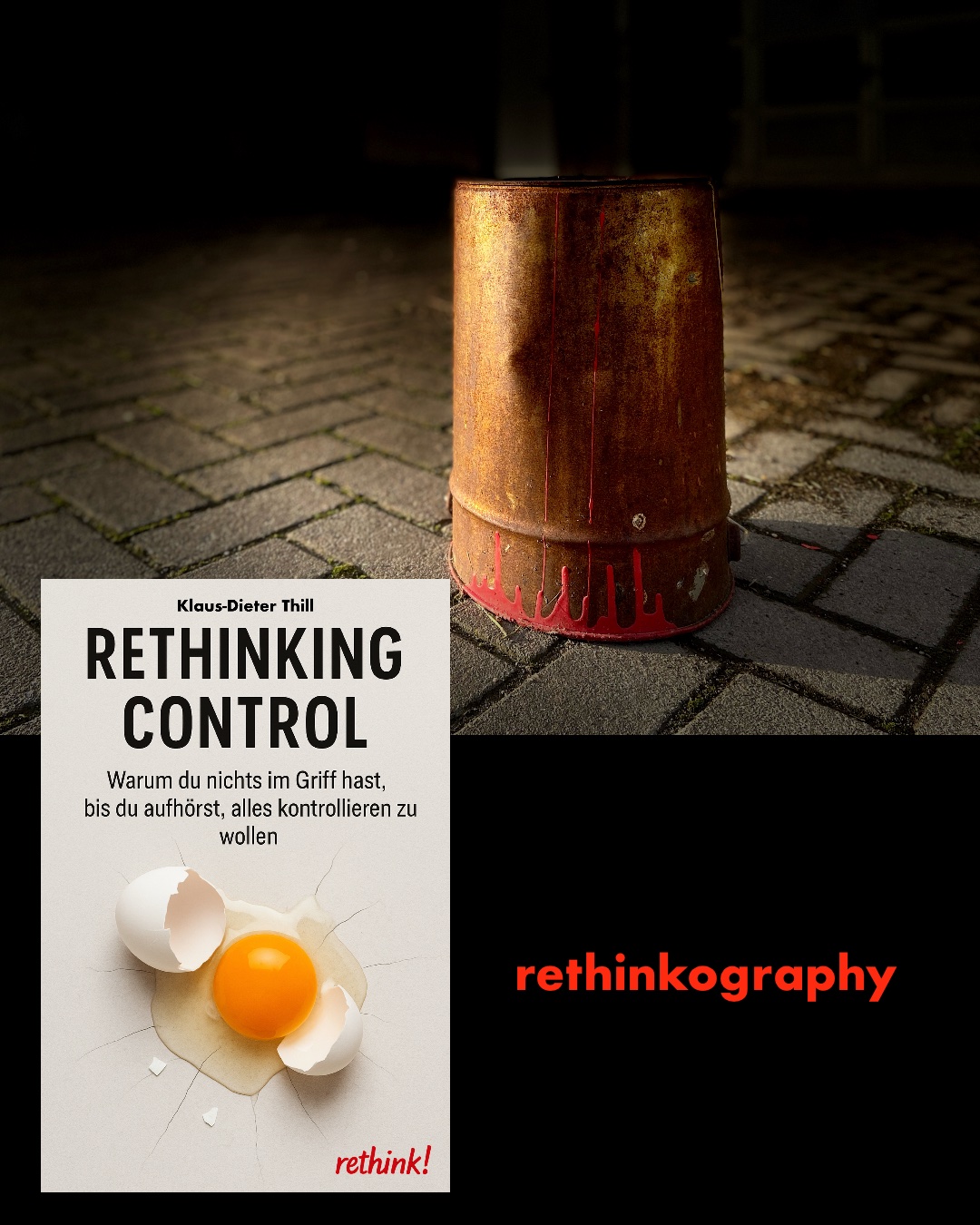
Was du auf diesem Bild siehst, ist mehr als nur ein verlassener, verrosteter Eimer mit roten Farbresten. Es ist ein Symbol für all die Lasten, die du in deinem Leben umgedreht mit dir herumträgst – aus alter Gewohnheit, aus falsch verstandener Verantwortung oder schlicht, weil du glaubst, es müsste so sein. Der Rost steht für die Abnutzung deiner Energie, deiner Klarheit, deiner inneren Freiheit. Die rote Farbe? Die Spuren deines Versuchs, es allen recht zu machen – und dabei dich selbst zu vergessen. Dieser Eimer wurde irgendwann abgestellt, umgedreht – und nie wieder bewegt. Vielleicht ist es Zeit, dass du begreifst: Es war nie deiner.
Wenn du fühlst, dass dich diese Metapher betrifft – wenn du spürst, dass du Dinge kontrollierst, die dich kontrollieren – dann wartet ein radikales Umdenken in Essay-Form auf dich.
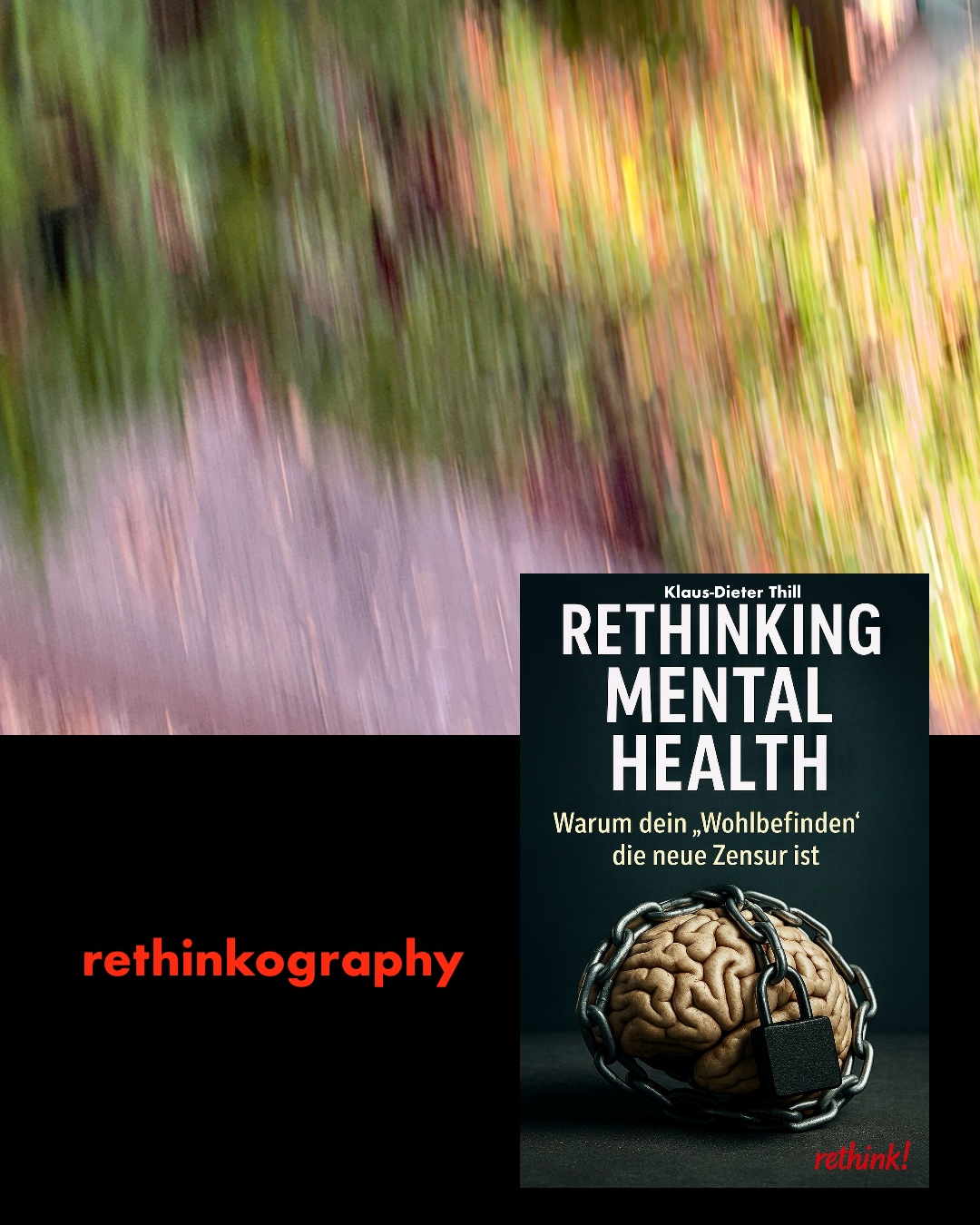
Dieses Bild ist verwackelt. Ein farbiger Schleier aus Bewegungsunschärfe, der den Blick auf die Realität verzerrt. Und genau das ist es, was die moderne Mental-Health-Kultur mit deinem Denken tut. Sie tut so, als würde sie Klarheit schaffen – doch in Wahrheit zieht sie einen weichen Filter über alles, was weh tut, irritiert oder aufrüttelt. Das Bild zeigt nicht den Moment, wie er war – sondern wie er weichgezeichnet wurde. Aus Schutz? Vielleicht. Aus Angst? Ganz sicher.
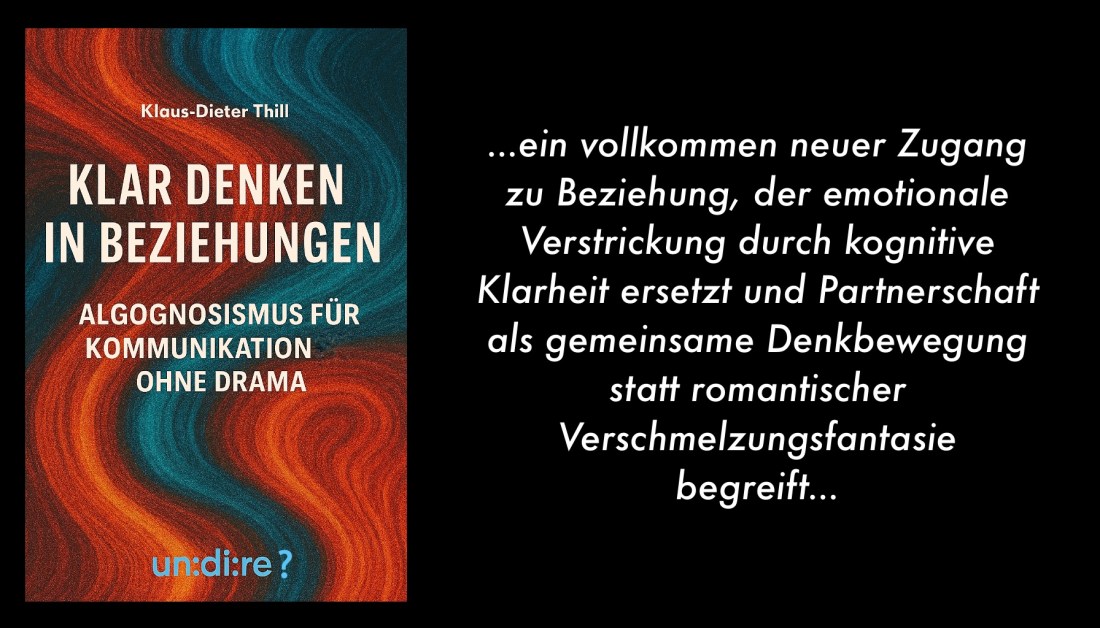
Wenn Liebe zur Projektionsfläche wird und Konflikte sich im Kreis drehen, braucht es mehr als Kommunikation – es braucht Denkverantwortung. Dieses Buch entlarvt die emotionalen Automatismen eurer Beziehung und eröffnet eine neue Perspektive: Beziehung als geistige Architektur. Ohne Drama. Ohne Verschmelzung. Mit Klarheit. Für alle, die lieben wollen, ohne sich selbst zu verlieren – und die bereit sind, gemeinsam zu denken.