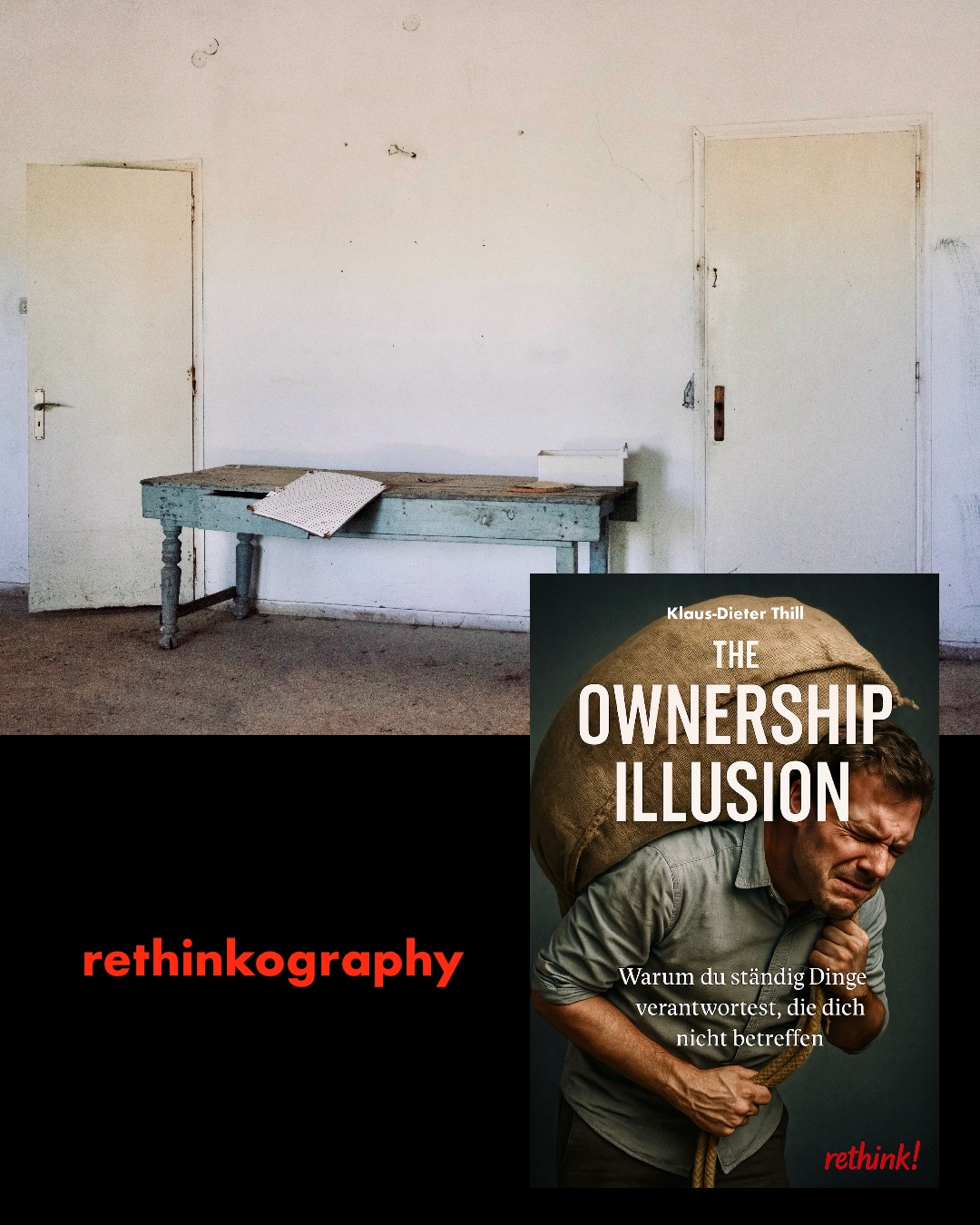
Dieses Bild zeigt mehr als nur ein verlassenes Zimmer mit einem wackeligen, abgeschabten Tisch. Es ist eine Metapher für den Zustand, in dem sich viele Menschen befinden: Sie sitzen sinnbildlich an einem Tisch, der ihnen nicht gehört, in einem Raum, der nicht ihrer ist, zwischen Türen, die andere gebaut haben.
Du bist verantwortlich. Für deinen Job. Für dein Team. Für dein Kind. Für den Projektstatus. Für das Arbeitsklima. Für die Präsentation, die deine Kollegin versemmelt hat. Für die Deadline, die dein Chef gestern Abend geändert hat. Für die Stimmung im Raum. Für die Erwartungen deiner Eltern. Für das Budget, das nie zu dir gehört hat. Für das Kundenversprechen, das jemand anderes gegeben hat. Für die Ehe deines Bruders. Für den Lebenssinn deines Partners. Für das Glück deiner Mitarbeiter. Für die Fehler deines Vorgängers. Für die Kränkungen deiner Vergangenheit.
Und jetzt sag mir: Wofür genau bist du eigentlich nicht verantwortlich?
You are responsible. For your job. Your team. Your child. Your calendar. Your partner’s happiness. Your boss’s expectations. Your company’s culture. Your family’s legacy. The client’s satisfaction. The project’s outcome. The group dynamic. The tone of a meeting. The emotion in the room. The vacation planning. The unfinished tasks. The unspoken words. The pain someone else won’t face. The mess someone else left behind.
Tell me, what exactly are you not responsible for?
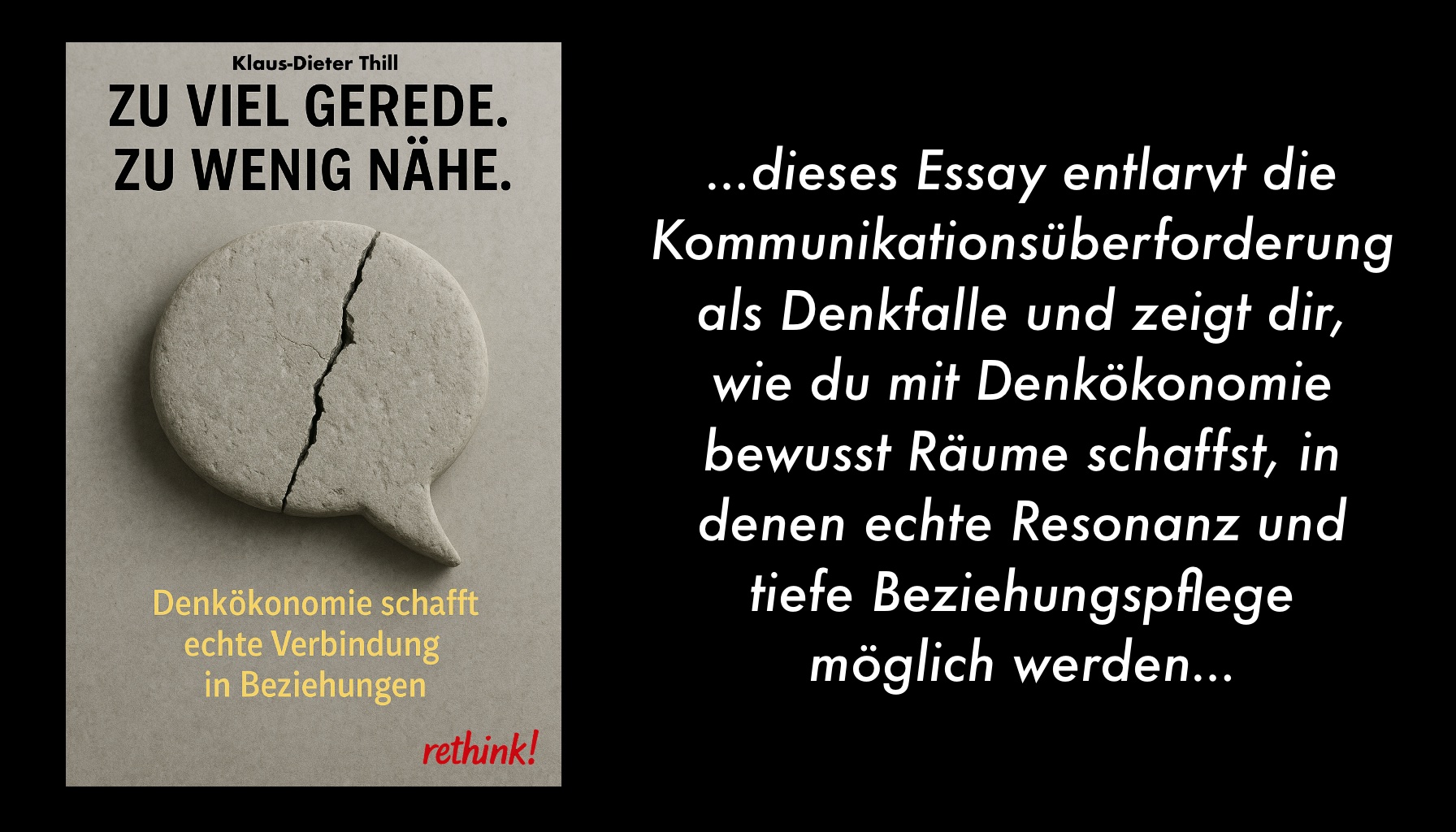
Auf diesem Bild sehen wir zwei blaue Bänder, die sich in der Mitte fast berühren – ohne sich tatsächlich zu verbinden. Zwischen ihnen entsteht eine energetische Spannung, die intensiver wirkt als jede direkte Berührung. Genau das ist die Metapher für echte Nähe in Beziehungen: Sie entsteht nicht durch ständiges Gerede, nicht durch das endlose Austauschen von Worten, sondern durch das Zulassen von Raum, durch Stille, durch bewusst gesetzte Impulse. Was uns oft fehlt, ist nicht Kommunikation – sondern Denkökonomie. „Zu viel Gerede. Zu wenig Nähe.“ zeigt, warum Worte keine Nähe garantieren und wie klügeres Denken zu echter Resonanz führt. Es ist kein Kommunikationsratgeber, sondern ein stiller Befreiungsruf für alle, die Nähe nicht mehr erklären, sondern erleben wollen.
Wenn du aufhören willst, Nähe zu zerreden – und stattdessen beginnen möchtest, sie zu ermöglichen, steht dir dieses Buch als präziser Denkimpuls zur Verfügung.
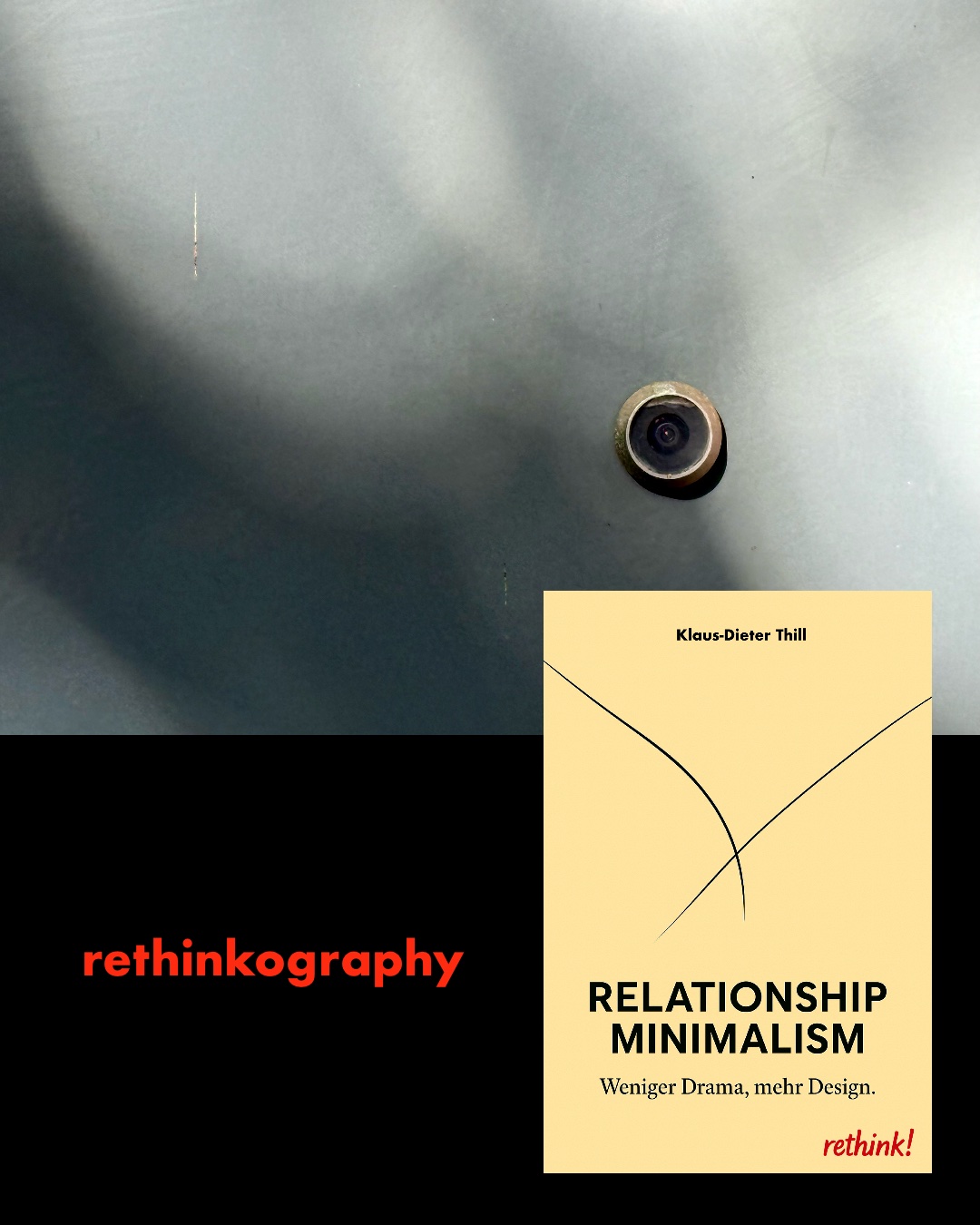
Dieses Bild zeigt ein einfaches Guckloch, einen „Tür-Spion“ – klein, unscheinbar, fast unsichtbar. Und doch ist es eine perfekte Metapher für den radikalen Perspektivwechsel, den „Relationship Minimalism“ verlangt. Statt mit großen Gesten, überladenen Erwartungen und emotionalem Dauerfeuer durch das Beziehungsleben zu stolpern, lädt das Buch dazu ein, genauer hinzusehen. Klarer. Reduzierter. Leiser. Durch das kleine Sichtfeld des Gucklochs wird plötzlich Wesentliches sichtbar: nicht mehr das Spektakel, sondern das Subtile, nicht mehr das Drama, sondern das Design. Beziehung beginnt nicht dort, wo man alles sieht – sondern dort, wo man bewusst entscheidet, was man sehen will.
Wenn du Beziehung nicht mehr beweisen, sondern bewusst gestalten willst, steht dir dieses Buch als gedanklicher Reset zur Verfügung.
Dieses Bild zeigt ein Klingelbrett voller leerer Namensschilder. Keine Identität, keine Verbindung, keine Geschichte – nur weiße Felder, stumme Knöpfe und ein System, das auf Kontakt wartet, aber keine Klarheit bietet. Es wirkt wie eine symbolische Kulisse für viele moderne Beziehungen: Wir wohnen nebeneinander, aber denken nicht mehr gemeinsam. Wir existieren als Paar, aber ohne Richtung, ohne Vision, ohne echten Namen für das, was wir da leben. Beziehung ohne Zukunftsdenken ist wie ein leeres Namensschild – formell vorhanden, aber inhaltlich bedeutungslos. „Future Framing for Couples“ ist ein Weckruf: Es reicht nicht, zusammen zu bleiben. Ihr müsst zusammen denken. Denn nur wer sich bewusst einen Namen gibt – im Sinne eines gemeinsamen Zukunftsrahmens – bleibt nicht stecken, sondern wächst.
Wenn du Beziehung nicht nur erhalten, sondern zukunftsfähig gestalten willst, steht dir dieses Buch als radikaler Perspektivwechsel zur Verfügung.
Wer spricht, um zu beeindrucken, führt nicht – sondern verwirrt. Dieses Buch ist ein radikaler Aufruf, Kommunikation neu zu denken: nicht als Selbstdarstellung, sondern als Denkarchitektur im Dialog. Es zeigt, wie algognosistische Gesprächsführung Klarheit erzeugt – in Meetings, Feedbacks, Konflikten und Strategieräumen – jenseits von Egos, Choreografien und rhetorischem Glanz. Reden, um zu klären – nicht, um zu glänzen.
Stell dir vor, dein Gehirn wäre ein Wohnzimmer. Nicht besonders aufgeräumt – aber du kennst dich aus. In der linken Ecke liegt ein großer, flauschiger Sessel. Auf dem steht: „Ich denke nach.“ Du sitzt oft darin. Bequem. Stolz. Doch was du wirklich tust, ist: Du wiegst dich in der Illusion, dass dein Denken funktioniert. Dass du weißt, wer du bist. Was du willst. Und wie du entscheidest. Doch in Wahrheit hast du es dir nur gemütlich gemacht im Halbdunkel der Selbsttäuschung.
Imagine your mind is a living room. A little messy, but familiar. In the corner sits a comfy armchair. On it, in gold letters: “I’m thinking.” You rest there often. Proud. Comfortable. But what you’re really doing is this: You’re pretending your thinking is functional. That you know who you are, what you want, and how to decide. But you don’t. You’ve simply made yourself at home in the dim glow of self-deception.
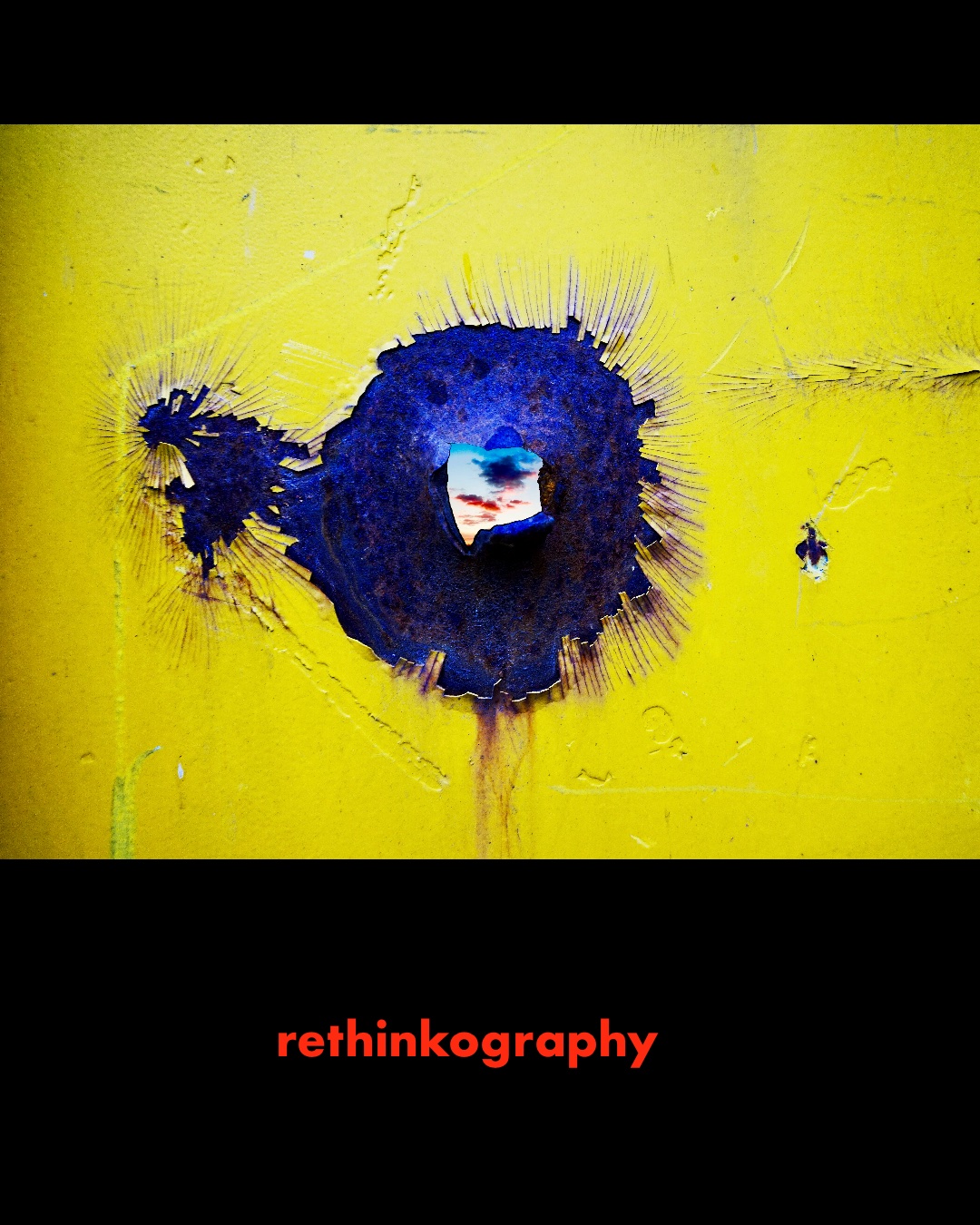
Was auf den ersten Blick aussieht wie ein rostiges Einschussloch auf gelbem Metall, entpuppt sich bei genauerem Hinsehen als visuelle Metapher für mentale Unabhängigkeit. Der dunkle Krater steht für das, was unsere Gedanken angreift: gesellschaftliche Erwartung, Urteil, Angst. Doch inmitten dieser Zerstörung öffnet sich ein Durchblick – klar, leuchtend, überraschend frei. Was sichtbar wird, ist nicht das Chaos, sondern der Horizont. Der Sonnenuntergang dahinter symbolisiert das, was uns entgeht, solange unser Denken von außen gesteuert ist. Nur wer die harte Schicht durchbricht, entdeckt die eigentliche Wirklichkeit – und den eigenen Blick darauf.
Dieses Bild ist kein Zufall. Es ist ein stiller Aufschrei: Denk dich frei. Zerschlage das Gefängnis, das nicht aus Stahl besteht, sondern aus übernommenen Gedanken.
Wer diesen Gedankenweg vertiefen will, findet die Antwort in einem Buch, das keine Anleitung, sondern eine Befreiungsschrift ist: