Imagine standing in front of this heavy, sealed metal door. A thick industrial wheel in the centre — cold, rigid, bolted in place. It’s not just there to open something. It’s there to keep it closed. And you — yes, you — are the one gripping it with white-knuckled certainty. Spinning it tighter. Believing you’re protecting yourself. Believing you’re protecting your relationship, your career, your heart, your sanity.
But let’s be honest: You’ve over-tightened. You’ve turned self-protection into self-sabotage. You’ve locked the system — and now you wonder why no one can reach you.
Du glaubst, Effizienz sei unärztlich. Unmenschlich. Eine Kapitulation vor der kalten Logik der Betriebswirtschaft. Du sprichst von Berufung, wenn du in Wahrheit längst an systemischer Überforderung zerbrichst. Du versteckst deine Führungsdefizite hinter dem wohlklingenden Vorwand „Ich bin für Menschen da, nicht für Prozesse.“ Und während du so tust, als sei Struktur dein Feind, zerschellt dein Praxisalltag täglich an der Realität, die du selbst miterschaffst.
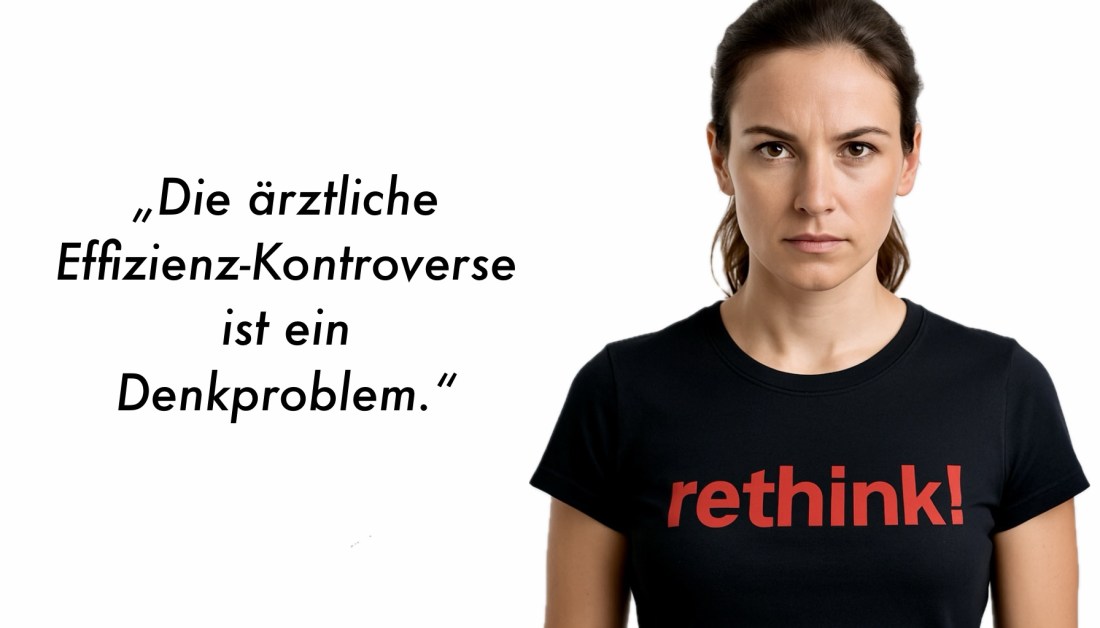
Willkommen in der ärztlichen Effizienzkontroverse. Nur dass es in Wahrheit keine ist – sondern ein Denkproblem. Ein selbstgemachtes. Ein gefährliches.
Effizienz ist nicht das Problem. Dein Denken ist es.
Was du als Effizienz ablehnst, ist nicht Effizienz. Es ist deine verzerrte Projektion: das Bild von Fließbandmedizin, Zeitdruck, Herzlosigkeit. Dabei ist echte Effizienz keine Frage der Geschwindigkeit, sondern der Sinnhaftigkeit. Sie bedeutet nicht: Mehr Patienten in weniger Zeit. Sie bedeutet: Mehr Wirkung mit weniger Verschwendung.
Und die Wahrheit ist schmerzhaft klar: Nicht Effizienz bedroht deine ärztliche Menschlichkeit. Ineffizienz tut es. Jeden Tag. Jede Unterbrechung, jeder doppelte Arbeitsschritt, jedes chaotische Abstimmungsproblem – all das frisst Energie, Fokus, Vertrauen. All das raubt dir das, was du eigentlich bewahren willst: deine Fürsorgekraft.
Die moralische Medizin – ein unsichtbarer Käfig
In deinem Kopf existiert ein unsichtbares Skript: „Ich bin Arzt, kein Manager.“ Dieses Skript wurde dir nicht beigebracht – du hast es dir selbst geschrieben. Aus Trotz. Aus Angst. Aus einem tiefen Wunsch nach moralischer Integrität. Doch diese Moral ist trügerisch.
Denn sie verhindert mehr als sie schützt. Sie verhindert Weiterentwicklung, Klarheit, Verantwortungsübernahme. Sie lässt dich glauben, du müsstest dich zwischen Empathie und Struktur entscheiden – obwohl beides nur gemeinsam funktioniert.
Solange du dich über Management erhebst, wirst du nie führen. Du wirst bestenfalls verwalten. Und das ist nicht edel – es ist fahrlässig.
Wer führt, muss Effizienz verantworten
Du willst eine gute Praxis? Dann brauchst du Effizienz. Keine Maschinenlogik, sondern menschenfreundliche Systeme. Keine Kontrolle, sondern Klarheit. Keine Dominanz, sondern Entscheidungsfähigkeit. Effizienz bedeutet:
Prozesse, die dich entlasten.
Zuständigkeiten, die entwirren.
Kommunikation, die Klartext spricht.
Entscheidungen, die Bestand haben.
Ohne Effizienz führst du nicht. Du reagierst. Du kompensierst. Du klebst Pflaster – auf ein System, das du längst hättest umbauen müssen. Du löscht Brände, die du durch Inkonsequenz selbst entfachst. Und dabei stirbt jeden Tag ein bisschen mehr von dem, was dich einst angetrieben hat.
Du bist das Problem – und die Lösung
Dein Team leidet nicht an dir als Mensch. Es leidet an deiner Führungsabstinenz. An der informellen Kommunikation. An der Dauerverfügbarkeit. An der grenzenlosen „Flexibilität“, die in Wahrheit nur Planlosigkeit ist. Dein System ist kein Zufall – es ist die exakte Folge deiner Denkverweigerung.
Solange du dich selbst als „Retter“ inszenierst, verhinderst du Eigenverantwortung. Solange du dich für unersetzlich hältst, wirst du zum Flaschenhals. Solange du Standardisierung mit Lieblosigkeit verwechselst, zwingst du alle Beteiligten zu permanenter Improvisation.
Was du verlierst, ist nicht nur Zeit. Du verlierst:
Wirksamkeit.
Respekt.
Innovationskraft.
Selbstwirksamkeit.
Glaubwürdigkeit.
Und am Ende: dich selbst.
Du musst dich nicht ändern. Aber du musst dich endlich führen.
Der Ausweg ist kein Tool. Keine Software. Kein weiteres Coaching. Der Ausweg ist dein Denken. Dein Mut, Effizienz neu zu definieren – als Ausdruck deiner Verantwortung. Als Strategie für echte Fürsorge. Als Haltung, die Menschlichkeit nicht ersetzt, sondern ermöglicht.
Wenn du glaubst, du müsstest dich entscheiden zwischen Empathie und Struktur, hast du das Prinzip nicht verstanden. Du brauchst Struktur, um empathisch zu bleiben. Du brauchst Klarheit, um respektvoll zu führen. Du brauchst Effizienz, um deine Ideale überhaupt leben zu können.
Effizienz ist Fürsorge – für alle
Du willst dein Team entlasten? Dann gib ihm Struktur.
Du willst für deine Patienten da sein? Dann schaffe Abläufe, die dir Zeit geben.
Du willst dich selbst schützen? Dann hör auf, dich hinter Altruismus zu verstecken, der in Wahrheit nur Ausdruck deiner Führungsangst ist.
Effizienz ist keine Kontrolle. Sie ist Freiheit. Sie ist Selbstachtung. Sie ist Respekt in Systemform.
Und sie ist die einzige Chance, dass deine Praxis zu dem wird, was sie sein sollte: ein Ort professioneller Menschlichkeit. Kein Dauerchaos mit gutem Herzen.
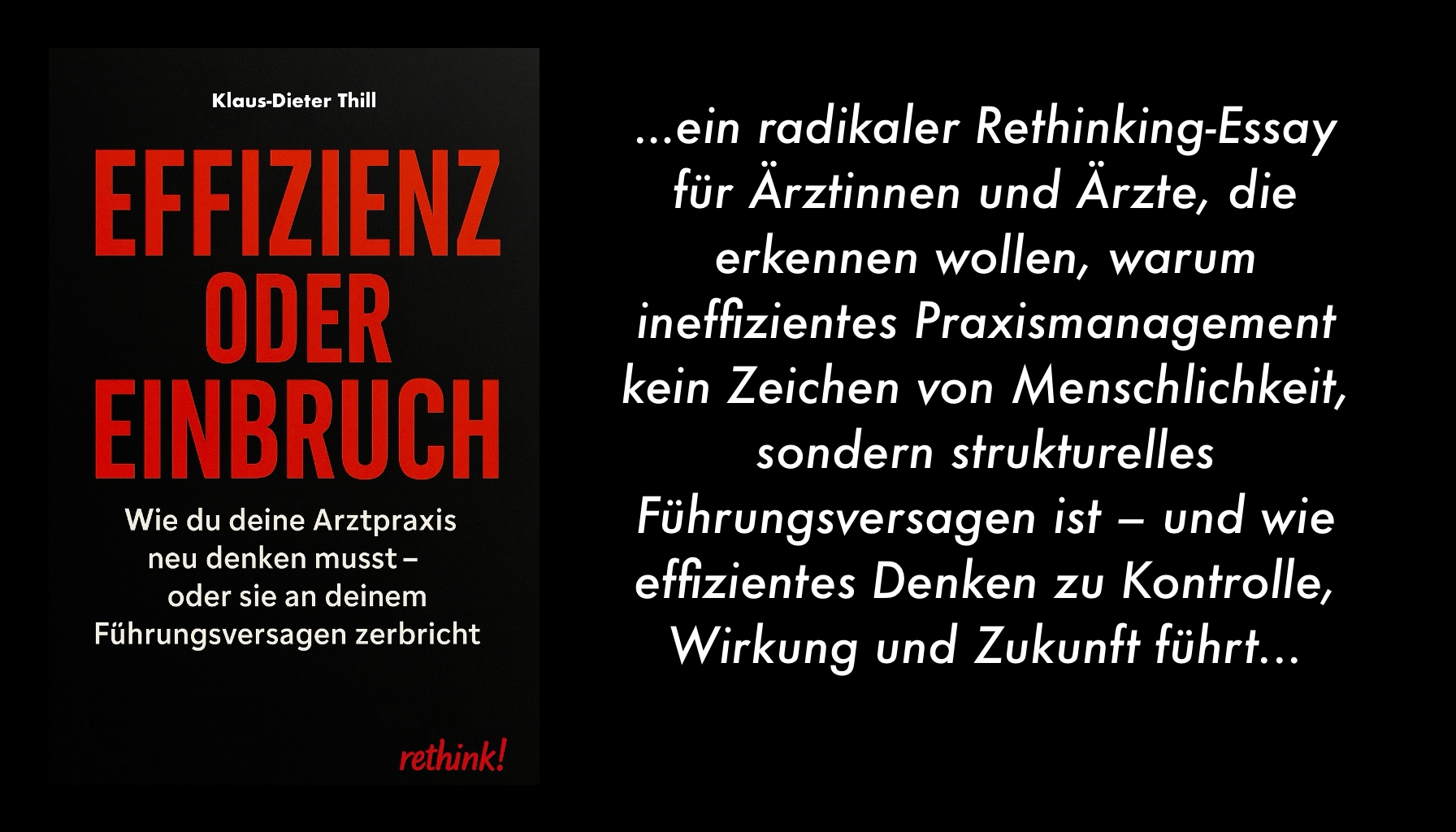
Wenn du bereit bist, Effizienz nicht mehr als Feind zu sehen, sondern als Schlüssel zu deinem ärztlichen Selbstverständnis – dann gibt es ein Buch, das genau diesen Denkprozess radikal, strukturiert und nachhaltig begleitet. Es wartet auf dich.
Du arbeitest. Du rettest. Du gibst alles. Und trotzdem gerät deine Praxis täglich an ihre Grenzen – nicht, weil das System versagt, sondern weil du nie gelernt hast, effizient zu führen. Dieses Buch ist ein elektrisierender Aufschrei gegen das strukturelle Chaos in deutschen Arztpraxen. Es entlarvt die Denkfehler hinter deinem Führungsstil, zerschlägt das Selbstbild des „guten Arztes“ und zeigt, wie Effizienz zur echten Fürsorge wird – für dich, dein Team und deine Patienten. Radikal ehrlich. Schmerzhaft klar. Und alternativlos, wenn du deine Praxis retten willst.
Führung neu denken – nicht als Rolle, sondern als Denkarchitektur. Dieses Buch ist eine radikale Abrechnung mit mittelmäßigem Management und eine inspirierende Einladung zur mentalen Selbstverantwortung. Wer heute führen will, braucht mehr als Tools und Methoden: Es braucht ein neues neuronales Betriebssystem. The Leadership Brain entlarvt Denkfehler, dekonstruiert Kontrollzwang und zeigt, wie Denkführung zum strategischen Führungsprinzip wird – jenseits von Heldennarrativen, Silodogmen und Statusspielen. Eine brilliante Denkexplosion für alle, die sich nicht länger mit Führung von gestern zufriedengeben wollen.
There’s a particular kind of corporate hell that everyone knows but no one dares to name: the moment a high-ranking executive clicks to slide 47 of 89 and says, “I know this is a bit hard to read, but bear with me…” And suddenly, you’re not in a boardroom. You’re in purgatory.
Let’s say it outright: You are not a leader if your slides speak louder than you do.
Schweigen als Schonhaltung, Gesprächsflucht als Beziehungskiller: Dieses Buch seziert die unsichtbare Sprachvermeidung in Beziehungen – privat wie beruflich – und zeigt, warum jedes nicht geführte Gespräch nicht nur Klarheit kostet, sondern Vertrauen zerstört. Radikal ehrlich, hochrelevant und elektrisierend unbequem führt es durch die Denkzone zwischen Nähe, Flucht und innerer Kündigung – und öffnet Wege zurück zu echter Verbundenheit.
There it is: a broken swivel chair with a green backrest, propped next to a bright orange metal box. Both are abandoned. Neither serves its purpose anymore. Around them, a dirty wall smeared with chalk graffiti and shadows of things that were once vibrant.
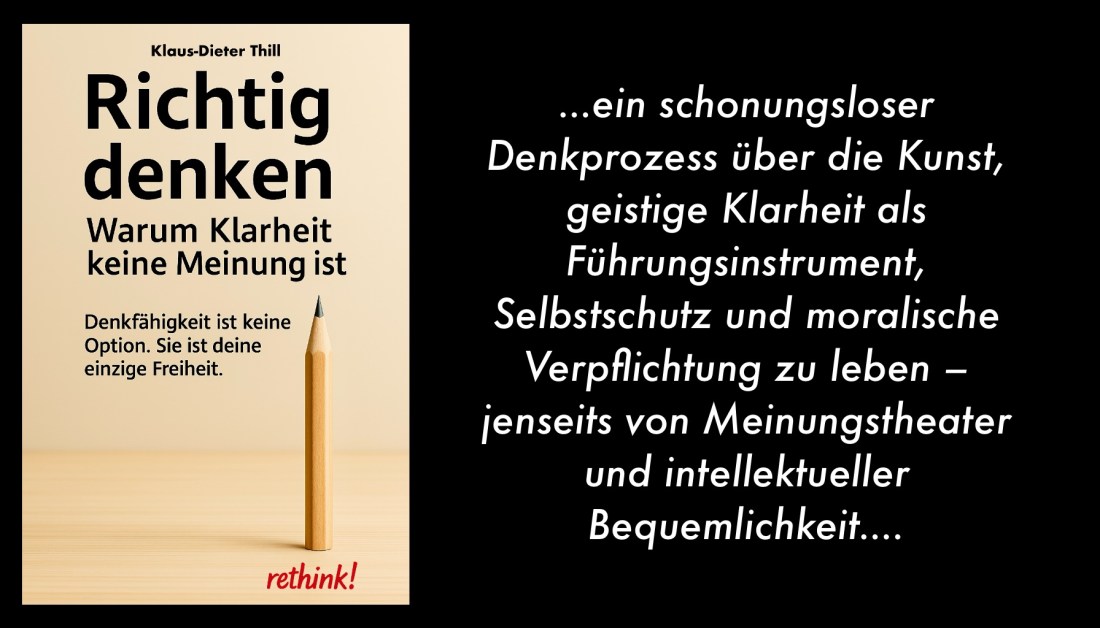
Was, wenn falsches Denken nicht nur ein Irrtum ist – sondern ein Verrat an deinem eigenen Potenzial? Dieses Buch rüttelt dich wach. Es zeigt, warum klar zu denken keine Technik, sondern eine Haltung ist – und wie du Denknebel, Selbsttäuschung und intellektuelle Ausflüchte überwindest. Provokant, tiefgründig und kompromisslos führt es dich zur radikalsten Form von Klarheit: Denk-Integrität.
Look at the image. A freight train, aged and industrial, interrupted by a burst of bold graffiti: “FLIX” – sprayed across the cold metal in punchy pinks, blues, and greens. It screams for attention. It tries to break out of its context. And yet… it’s still stuck on rails. Still part of a system. Still moving in one pre-defined direction. You feel the contradiction? That’s you. That’s your life. You’ve painted “freedom” across a structure you never dared to question.