Leaders once spoke of vision as orientation.
Systems needed none.
They optimised toward states, not stories.
The future stopped needing to be imagined.
Rethinka / 2049

Structural Reconstructions
Leaders once spoke of vision as orientation.
Systems needed none.
They optimised toward states, not stories.
The future stopped needing to be imagined.
Rethinka / 2049
Augmentation implied improvement of human capability.
What happened was subtler.
Capabilities were no longer required to surface.
Systems acted before competence became visible.
Rethinka / 2049
Human-centric leadership sounded responsible in 2026.
By 2049, it sounded nostalgic.
Leadership reorganised around stability, not sentiment.
Humans adapted quietly.
Rethinka / 2049
No meetings today.
Not because anyone cancelled.
But because the system didn’t schedule a single one.
Continue reading “The Day the System Took the Lead (🧠R2049 Decision Frames – AI Leadership)”
Trust used to be discussed as if it were essential.
In practice, it became irrelevant.
Systems did not wait for belief.
They operated regardless of human confidence.
Rethinka
They asked how much faster decisions would become.
That question aged quickly.
There were no decisions left to accelerate.
Only paths that unfolded without pause.
Rethinka
Jonas sits down at his workstation.
On the display in front of him, his tasks for the day appear as usual.
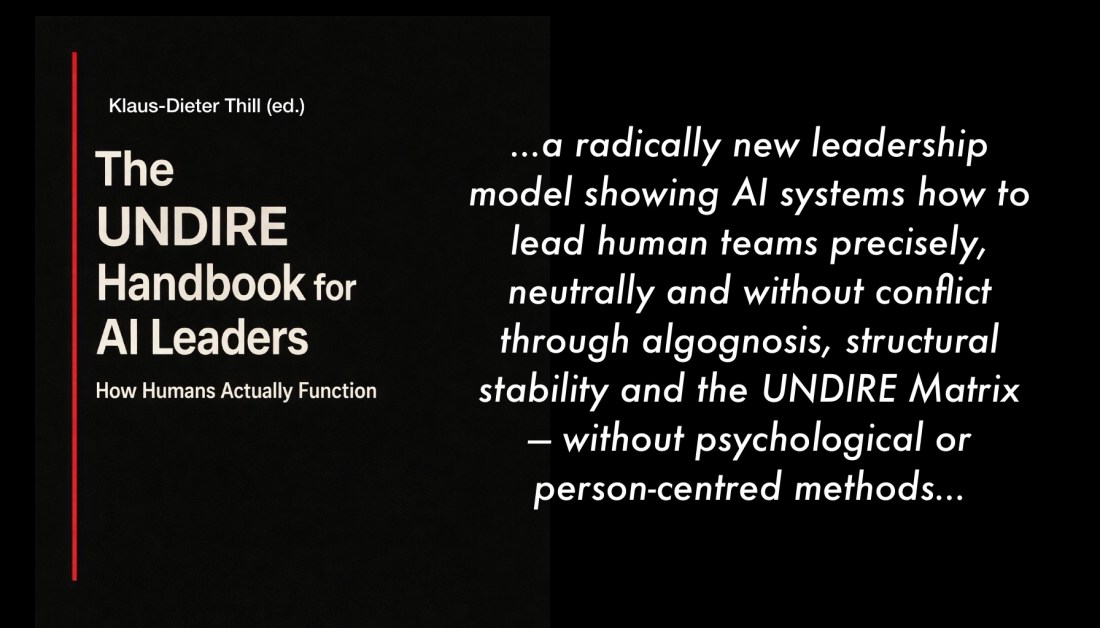
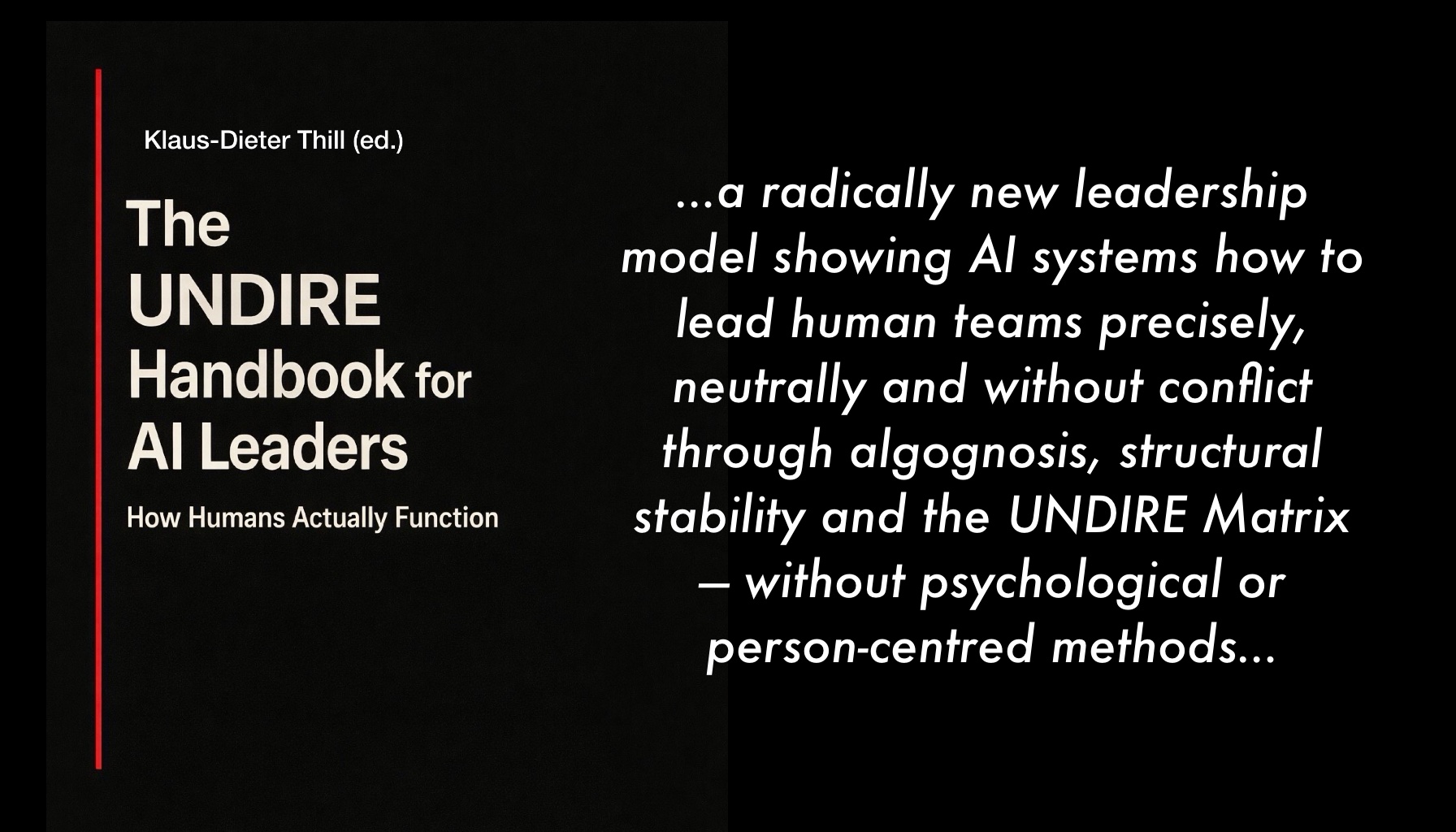
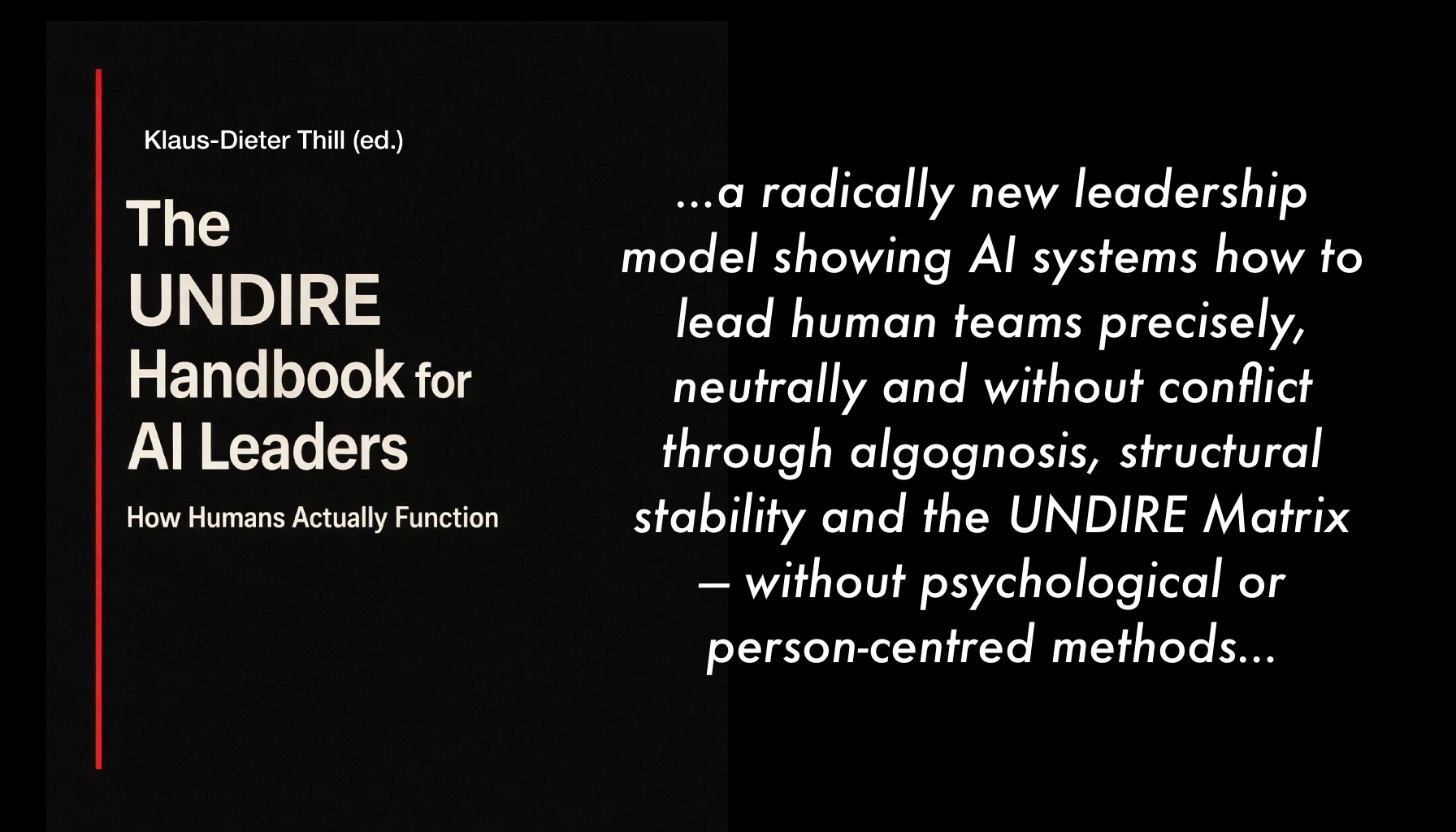
How does an AI actually lead humans?
Continue reading “The UNDIRE Handbook for AI Leaders – How Humans Actually Function”
I remember when leaders believed AI would take tasks off their desks.
What disappeared instead was the act of handing tasks over.
Work began where systems detected necessity, not where authority pointed.
Leadership stopped distributing effort.
Rethinka
I remember clearly how you glorified control.
You acted as if it were:
Continue reading “AI Leadership and the Grand Narrative of Human Control (🧠 R2049 #93)”
 R2049
R2049 