“The Obstacle Is the Way” · Why Friction Became Operational Identity · R2049 · Aurelius Reconstructions

Intro

This reconstruction examines the Stoic reinterpretation of obstacles as an adaptive response to persistent systemic friction inside complex coordination environments. Rather than understanding resistance as temporary disruption, the entry analyses how overloaded systems normalise friction until adaptation itself becomes identity. Focus: Struction, operational friction, Stoicism, Marcus Aurelius, systemic overload, endurance cultures, cognitive adaptation, coordination systems.

Continue reading ““The Obstacle Is the Way” · Why Friction Became Operational Identity · R2049 · Aurelius Reconstructions”
“Do Not Waste Time” · Time Scarcity as Decision Density · R2049 · Aurelius Reconstructions

Intro

This reconstruction examines the Stoic focus on time not merely as a philosophical meditation on mortality, but as a structural response to excessive decision density within complex coordination systems. Rather than interpreting time pressure primarily as a psychological condition, the entry analyses how operational fragmentation compressed cognitive capacity and produced permanent states of urgency. Its central concepts are Struction, decision density, time scarcity, Marcus Aurelius, Stoicism, operational overload, coordination systems and cognitive fragmentation.

Concept Anchors: Struction, Marcus Aurelius, Stoicism, decision density, time scarcity, operational overload, coordination systems, cognitive fragmentation, Roman Empire, structural pressure.

Continue reading ““Do Not Waste Time” · Time Scarcity as Decision Density · R2049 · Aurelius Reconstructions”
Stoicism Was Not Philosophy. It Was Compression · R2049 · Aurelius Reconstructions

Observation

One of the most striking characteristics of Stoic writing is not its content but its form. The sentences are remarkably short. They are not simplistic, yet they appear compressed, as if larger structures of reasoning had been condensed into highly portable fragments. A few words often replace an explanation that would otherwise require pages of analysis. Statements such as “Focus only on what you control”, “Accept what happens”, or “You could leave life right now” have survived for centuries because they perform more than a philosophical function. They provide orientation at minimal cognitive cost.

Continue reading “Stoicism Was Not Philosophy. It Was Compression · R2049 · Aurelius Reconstructions”
“We’ve Always Done It This Way.” · R2049 · Structural Reconstructions

Intro

This structural reconstruction analyses the common organisational and social phrase “We’ve always done it this way.”

The article explores structural continuity, organisational routines, inherited processes, decision history, operational stability, institutional memory, behavioural persistence, path dependency, structural adaptation, and human systems. From a 2049 perspective, many established practices survived not because they remained effective, but because their original reasons were no longer visible.

Continue reading ““We’ve Always Done It This Way.” · R2049 · Structural Reconstructions”

Rome Delegated Power But Not Responsibility · R2049 · Aurelius Reconstructions · Entry 3

Intro

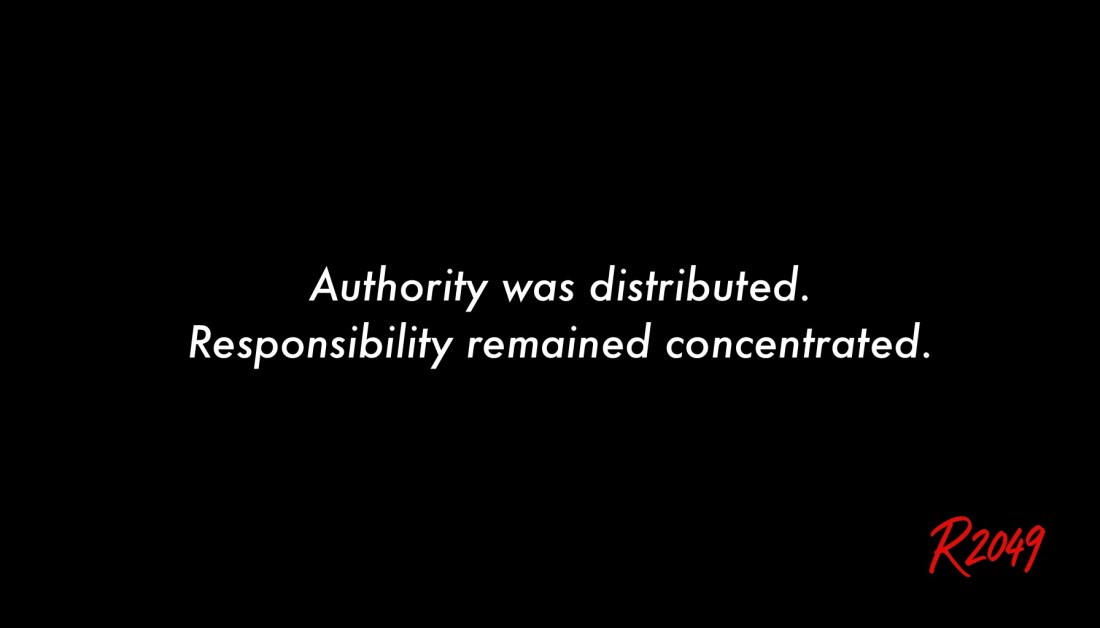
This reconstruction examines how the Roman Empire expanded operational authority across provinces, military structures, and administrative systems while responsibility remained structurally centralised around symbolic leadership. Rather than viewing delegation as decentralisation, the entry analyses delegation as a coordination strategy that frequently redistributed execution while preserving accountability concentration. Focus: Struction, delegation systems, operational overload, responsibility concentration, imperial coordination, symbolic leadership, structural compensation.

Continue reading “Rome Delegated Power But Not Responsibility · R2049 · Aurelius Reconstructions · Entry 3”

The Emperor Never Logged Off · R2049 · Aurelius Reconstructions

Intro

This reconstruction examines how continuous decision exposure shaped the cognitive architecture surrounding Marcus Aurelius and late imperial coordination systems. Rather than interpreting Stoicism as philosophy or personal virtue, the entry reconstructs it as a structural stabilisation mechanism under conditions of sustained operational pressure. Focus: decision density, imperial coordination, structural load, self-regulation, cognitive compression, Struction.

Continue reading “The Emperor Never Logged Off · R2049 · Aurelius Reconstructions”
Structural Reconstructions of Human Relationships · R2049 · Archive Series · Relational Systems

Intro

This entry reconstructs relationship drift as a gradual structural reconfiguration process, focusing on synchronisation loss, routine destabilisation, expectation drift, attention redistribution, and relational continuity degradation. It explains how relationships often destabilise without conflict, rupture, or identifiable events, and how small structural shifts accumulate until coordination coherence declines below stabilising capacity.
Key concepts include: relationship drift, relational synchronisation, structural degradation, expectation drift, coordination decay, and interpersonal system instability.

Continue reading “Structural Reconstructions of Human Relationships · R2049 · Archive Series · Relational Systems”

Emotional Labour Distribution · Who Maintains Relational Stability · R2049

Intro

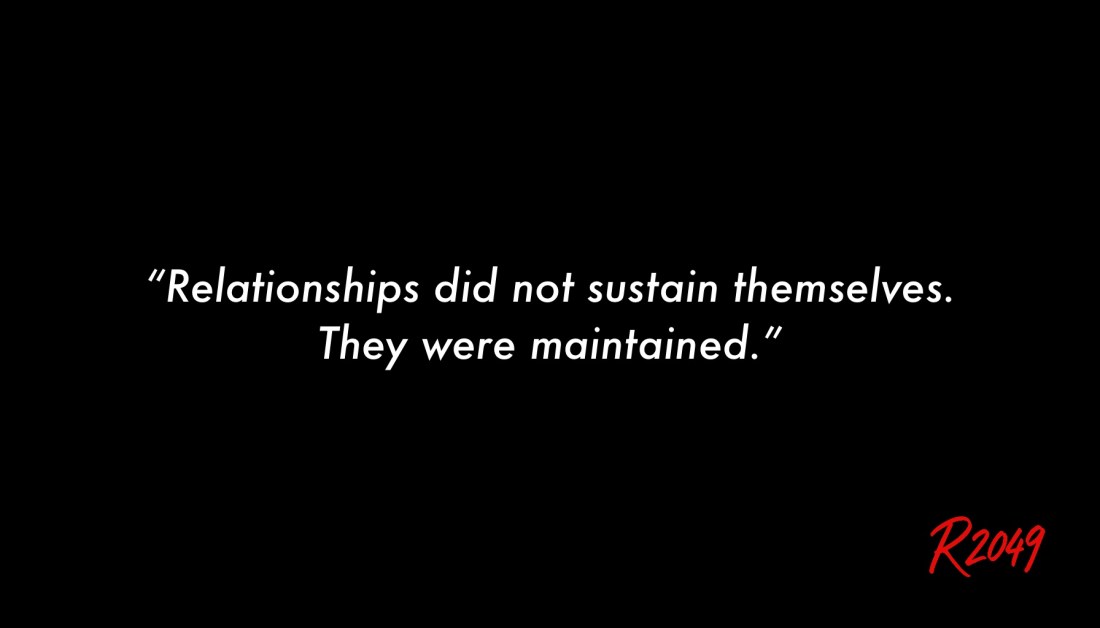
This entry reconstructs emotional labour distribution in relationships as a structural maintenance system, focusing on maintenance roles, emotional regulation, coordination upkeep, and asymmetric load distribution. It explains how one partner often becomes the relational system operator, performing continuous stabilisation work that remains unassigned, unmeasured, and structurally invisible, and how this imbalance creates long-term instability through overload and dependency.

Continue reading “Emotional Labour Distribution · Who Maintains Relational Stability · R2049”

Coordination Without Negotiation · The Implicit Organisation of Everyday Life · R2049 · Relational Systems · Structural Reconstructions of Human Relationships

Intro

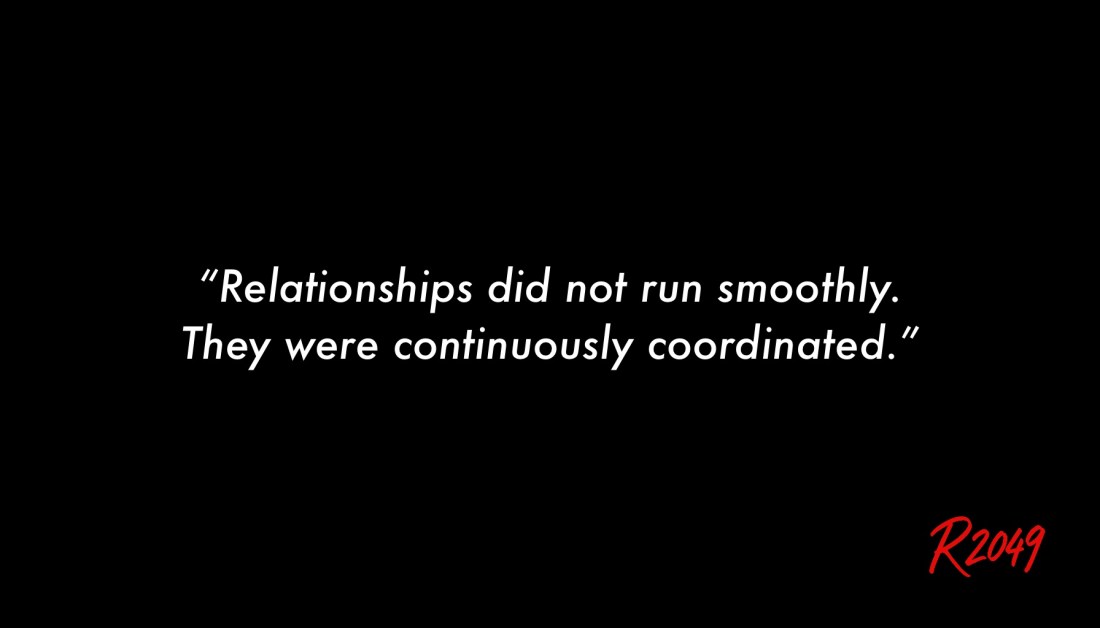
This entry reconstructs coordination without negotiation in relationships as a structural mechanism, focusing on implicit roles, routine-based coordination, situational adaptation, and hidden alignment systems. It explains how partners organise everyday life without explicit agreements, and how this form of coordination creates efficiency but also structural fragility when expectations, roles, and attention are not synchronised.

Continue reading “Coordination Without Negotiation · The Implicit Organisation of Everyday Life · R2049 · Relational Systems · Structural Reconstructions of Human Relationships”

Attribution Systems in Intimacy · How Responsibility Becomes Uneven · R2049 · Structural Reconstructions of Human Relationships

Intro

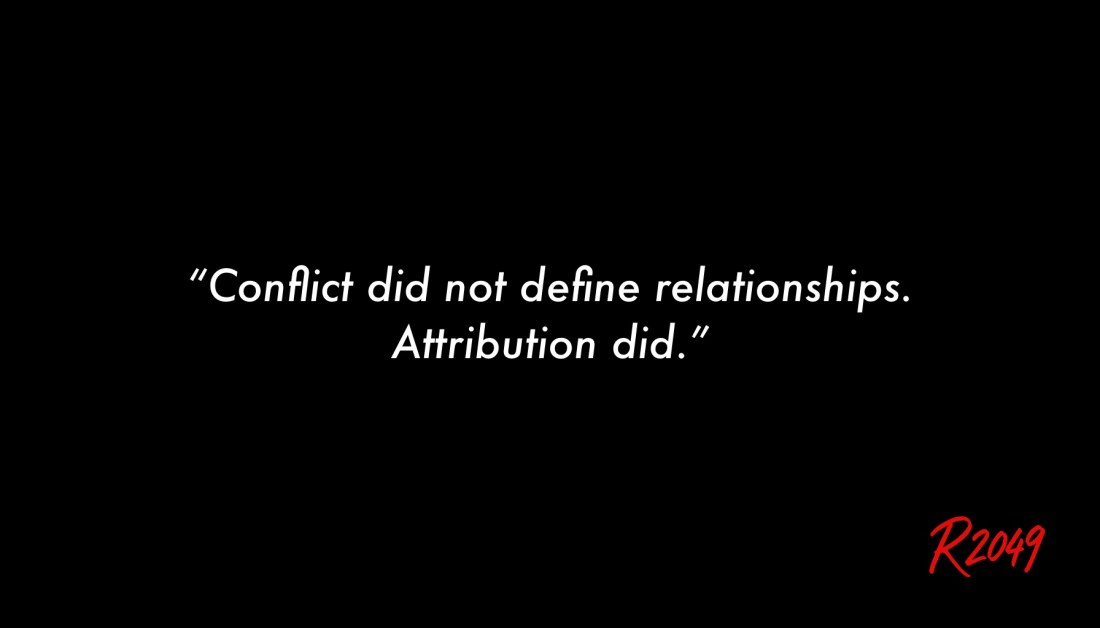
This entry reconstructs attribution systems in relationships as a core structural mechanism, focusing on responsibility allocation, blame dynamics, emotional role distribution, and relational asymmetry. It explains how partners assign responsibility for emotional stability, conflict resolution, and everyday coordination, and how imbalanced attribution structures create hidden system operators and long-term instability.

Continue reading “Attribution Systems in Intimacy · How Responsibility Becomes Uneven · R2049 · Structural Reconstructions of Human Relationships”