
Expectation Architecture in Relationships · R2049 Archive Series

Intro

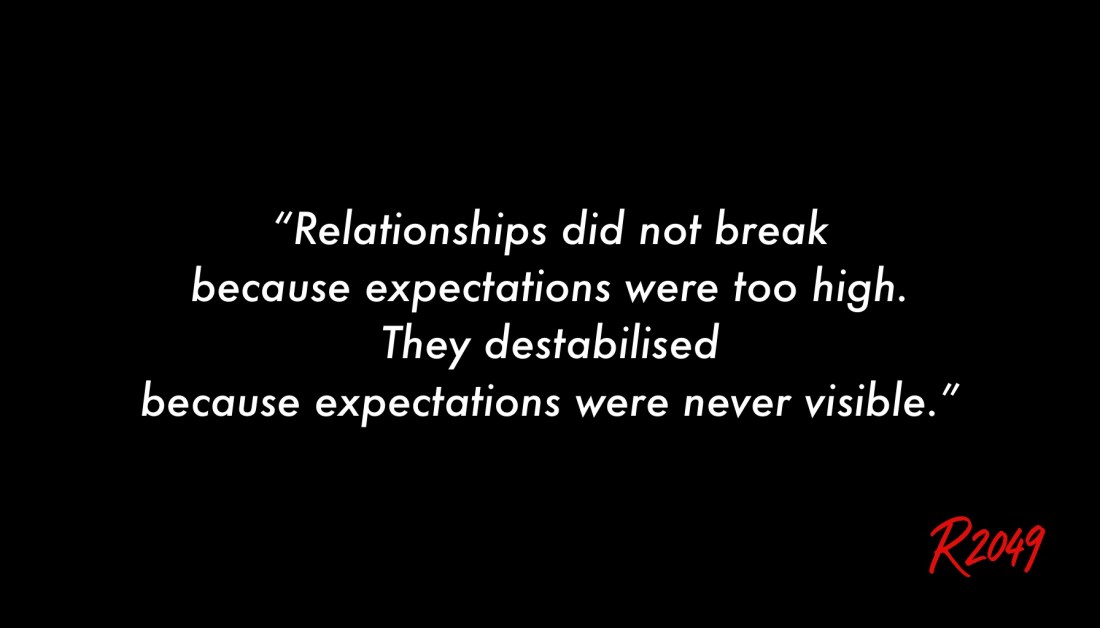
This entry reconstructs expectation architecture in relationships as a core structural system, focusing on implicit expectations, expectation asymmetry, expectation drift, and stabilisation mechanisms. It explains how relationships operate through unspoken expectation structures that coordinate behaviour, responsibility, and attention, and how misalignment within these systems leads to instability without immediate conflict.
Key concepts include: expectation architecture, implicit coordination, expectation asymmetry, expectation drift, relational stability, and interpersonal system dynamics.
Continue reading “Expectation Architecture in Relationships · R2049 Archive Series”

The Silent Infrastructure of Relationships · R2049 Archive · Structural Reconstructions of Human Relationships

Intro

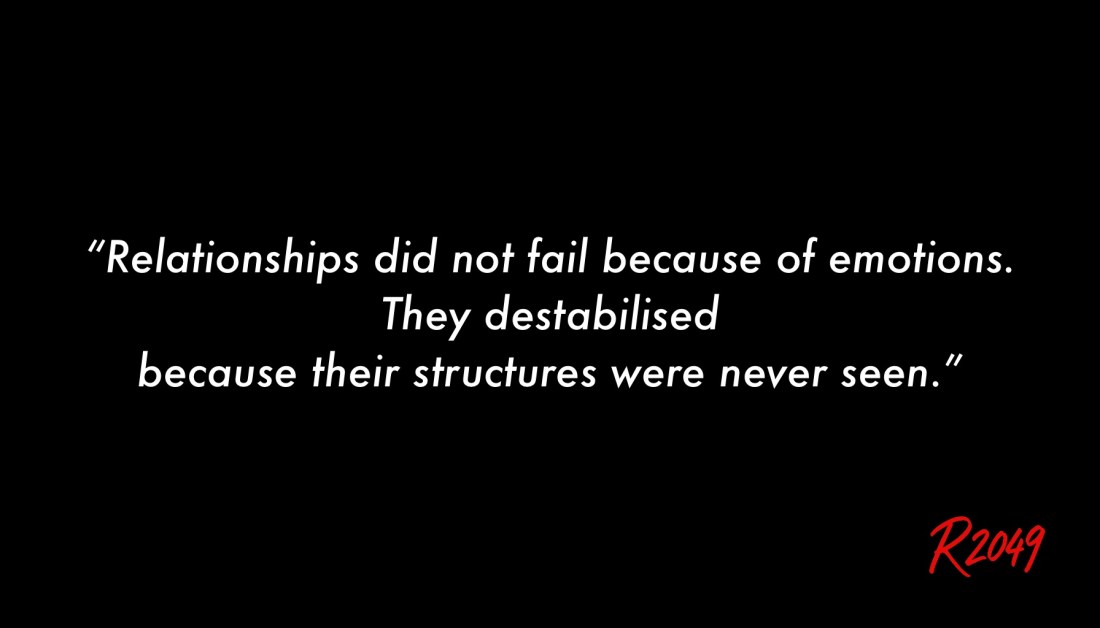
This entry introduces Relational Systems as structural coordination models between individuals, focusing on expectation architecture, attribution dynamics, attention distribution, emotional labour systems, and relationship drift. It reframes relationships as interpersonal coordination systems rather than emotional constructs, showing how structural asymmetries, implicit roles, and unspoken expectations determine stability or breakdown.
Key concepts include: relational coordination, expectation asymmetry, emotional labour distribution, attention drift, conflict as structural signal, and interpersonal system stability.

Continue reading “The Silent Infrastructure of Relationships · R2049 Archive · Structural Reconstructions of Human Relationships”