„Trust isn’t built through words. It’s built through what you make safe to say.“
Continue reading “The Rethinking Leader Wednesday Insight: Can your team really tell you the truth?”

Structural Reconstructions
„Trust isn’t built through words. It’s built through what you make safe to say.“
Continue reading “The Rethinking Leader Wednesday Insight: Can your team really tell you the truth?”
„The future doesn’t need leaders who sit at the top. It needs leaders who build platforms where others rise.“
For generations, leadership was defined by position — the higher you stood in the organizational chart, the more power you held. Decisions flowed downward, and influence came from title and rank.
But the world has changed. Today’s fast-moving, hyper-connected environments need leaders who enable flow, not control it. Innovation comes from the edges of organizations, not the center. Collaboration happens across silos, not within them. And leadership itself is no longer a title — it’s a behavior.
Future-ready leadership requires a platform mindset: Instead of
In this mindset, leadership is about creating the conditions where people can lead themselves and each other — not just waiting for the boss to decide. It’s not about abandoning leadership, but redefining it as empowerment.
The real question for every modern leader is:
Are you still thinking like a boss — or already acting like a platform?
Today, ask yourself: „How often do your team members feel empowered to make decisions without waiting for you?“
True leadership is not about how much control you have — but how much control you can give away without losing impact.
„Reflect. Rethink. Lead.“
„Leadership in stable times is a craft.
Leadership in uncertain times is an art.
The future belongs to leaders who master both.!
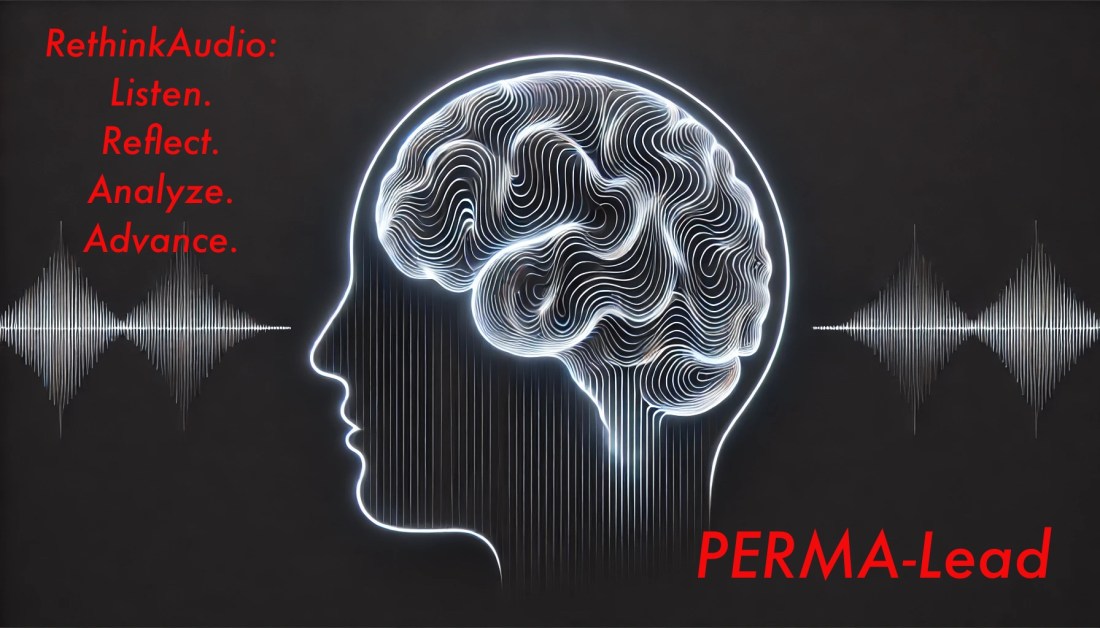
This Rethinking Impulse challenges outdated leadership paradigms by unveiling the true essence of PERMA-Lead – beyond misconceptions and toxic mindsets – showing why a psychologically grounded, purpose-driven leadership approach is the key to sustainable success.
„Strong leaders don’t control the work. They create clarity — and get out of the way.“

„Engaged teams outperform managed ones.“
Leadership has evolved significantly over the past decades, yet one paradigm stubbornly persists: the belief that leadership is primarily about control, setting targets, and incentivising performance. PERMA-Lead, a concept derived from Martin Seligman’s PERMA model of well-being, is often misinterpreted as a soft, almost therapeutic leadership approach designed merely to create a pleasant work environment. However, this perception constitutes one of the greatest misunderstandings surrounding PERMA-Lead – and underscores the urgent necessity for a profound rethinking.
Continue reading “Rethinking: PERMA-Lead – Why Leadership Requires a Radical Shift in Perspective”
In the relentless pace of modern leadership, it’s easy to focus outward — on team performance, results, and organizational goals — while neglecting the foundation of all effective leadership: your own self-leadership. Future-ready leadership doesn’t begin in the conference room; it begins in the mirror.
This Rethinking Impulse challenges leaders to redefine their role as catalysts of continuous learning, ensuring that every interaction fosters growth, innovation, and intellectual empowerment.
In an era where speed, relentless productivity, and perpetual availability are often glorified as hallmarks of success, resilience is widely misunderstood. Too many leaders reduce resilience to a personal competency – a kind of individual endurance athleteship, where the goal is to simply “hold up” under mounting pressure. This is a fundamental misreading. True resilience is not forged in isolation; it is architected collectively – a product of cultural design, not just personal grit.
„Leadership is not about control – it’s about cultivating growth.“
The prevailing notion that leadership is primarily about delegating tasks, enforcing objectives, and monitoring work processes is deeply ingrained in many corporate cultures. Countless executives perceive themselves as organisers, as the structural backbone of an enterprise, whose principal duty is to optimise processes and maximise outcomes. Within this perspective, learning is often relegated to a secondary function – at best, confined to technical knowledge acquisition or industry-specific expertise.

