“We’ve Always Done It This Way.” · R2049 · Structural Reconstructions

Intro

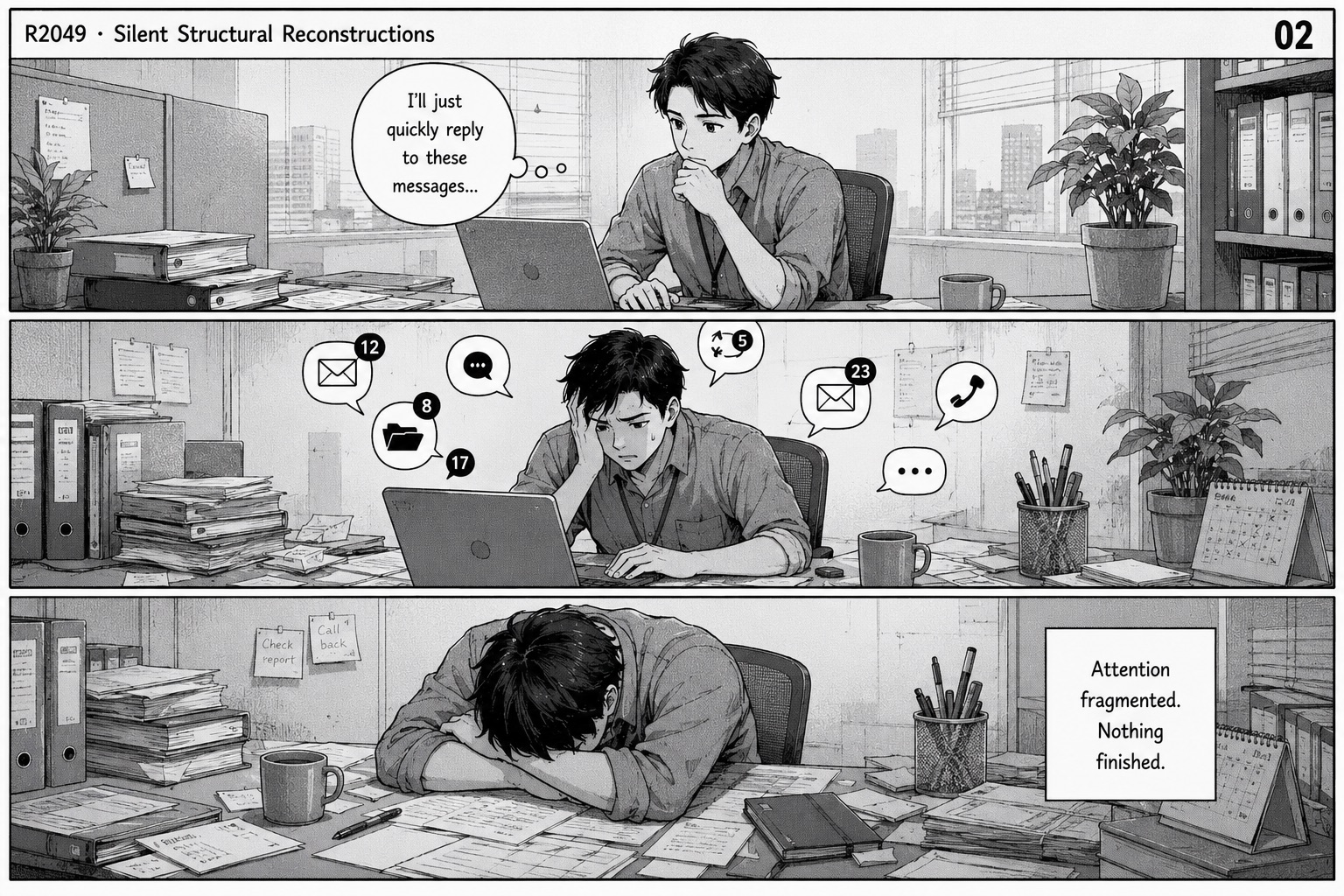
This structural reconstruction analyses the common organisational and social phrase “We’ve always done it this way.”

The article explores structural continuity, organisational routines, inherited processes, decision history, operational stability, institutional memory, behavioural persistence, path dependency, structural adaptation, and human systems. From a 2049 perspective, many established practices survived not because they remained effective, but because their original reasons were no longer visible.

Continue reading ““We’ve Always Done It This Way.” · R2049 · Structural Reconstructions”
“Control Your Mind” · The Collapse of External Regulation · R2049 · Aurelius Reconstructions

Intro

This reconstruction analyses the Stoic principle of self-control as a response to declining external regulatory capacity inside large-scale coordination systems. Rather than interpreting “control your mind” as purely philosophical advice, the entry reconstructs it as adaptive cognition under conditions where systemic volatility exceeded operational controllability. The focus is on Struction, self-regulation, systemic instability, Marcus Aurelius, Stoicism, operational overload, internal regulation and cognitive adaptation.

Continue reading ““Control Your Mind” · The Collapse of External Regulation · R2049 · Aurelius Reconstructions”

Rome Delegated Power But Not Responsibility · R2049 · Aurelius Reconstructions · Entry 3

Intro

This reconstruction examines how the Roman Empire expanded operational authority across provinces, military structures, and administrative systems while responsibility remained structurally centralised around symbolic leadership. Rather than viewing delegation as decentralisation, the entry analyses delegation as a coordination strategy that frequently redistributed execution while preserving accountability concentration. Focus: Struction, delegation systems, operational overload, responsibility concentration, imperial coordination, symbolic leadership, structural compensation.

Continue reading “Rome Delegated Power But Not Responsibility · R2049 · Aurelius Reconstructions · Entry 3”

The Emperor Never Logged Off · R2049 · Aurelius Reconstructions

Intro

This reconstruction examines how continuous decision exposure shaped the cognitive architecture surrounding Marcus Aurelius and late imperial coordination systems. Rather than interpreting Stoicism as philosophy or personal virtue, the entry reconstructs it as a structural stabilisation mechanism under conditions of sustained operational pressure. Focus: decision density, imperial coordination, structural load, self-regulation, cognitive compression, Struction.

Continue reading “The Emperor Never Logged Off · R2049 · Aurelius Reconstructions”

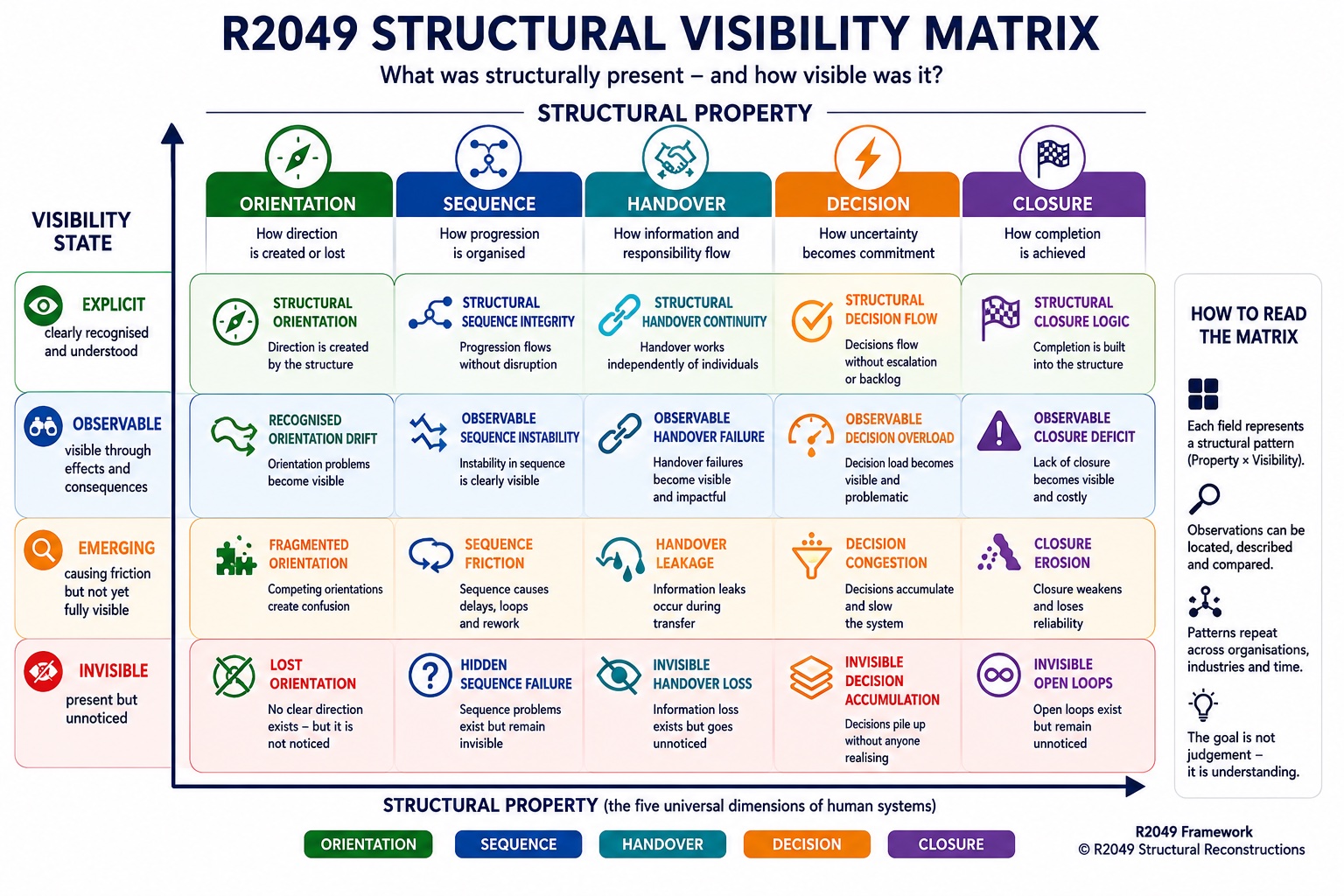
The R2049 Structural Visibility Matrix

A Guide to Reading Structural Reconstructions

Introduction

Most people observe outcomes:

  • A meeting failed.
  • A project stalled.
  • A team became overloaded.
  • A decision took too long.
  • A customer became frustrated.

These events appear visible. What often remains invisible are the structural conditions that produced them. This observation became one of the central themes of the R2049 archive.

Continue reading “The R2049 Structural Visibility Matrix”

The Stability of the Provisional · R2049 · Leadership Logs of ØN · Entry 127

Intro

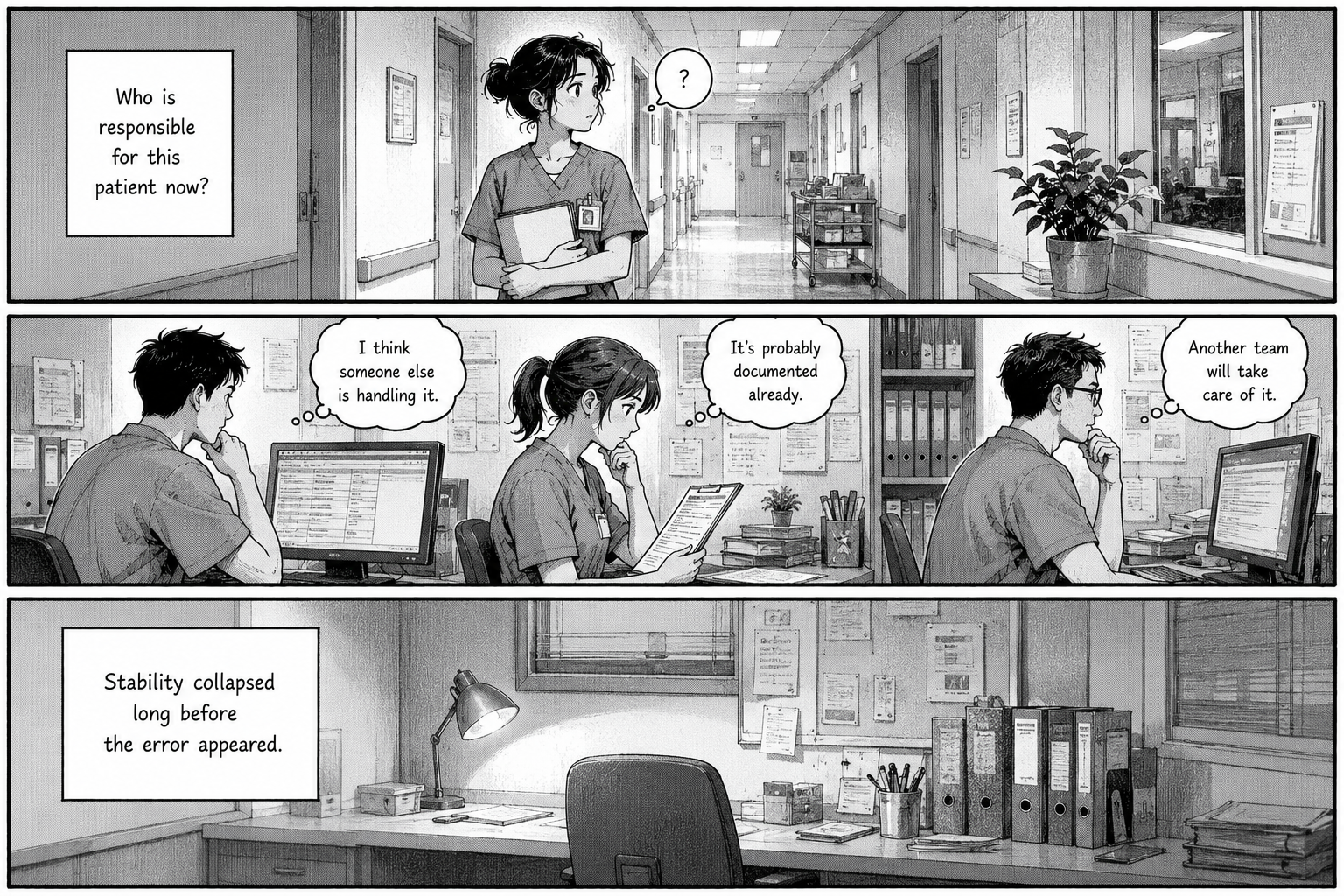
This entry reconstructs provisional structures (temporary fixes) as a hidden stabilisation mechanism in organisations, analysing how improvisation, system adaptation, structural drift, and informal processes evolve into persistent operating models. It introduces key concepts such as provisional permanence, structural invisibility, system compensation, decision latency, and organisational complexity accumulation. The analysis explains why organisations do not fail due to instability — but due to the unnoticed stabilisation of temporary solutions into permanent structures.

Continue reading “The Stability of the Provisional · R2049 · Leadership Logs of ØN · Entry 127”

The Stability of the Provisional · R2049 · Leadership Logs of ØN · Entry 125

Intro

This entry reconstructs provisional structures (temporary fixes) as a hidden stabilisation mechanism in organisations, analysing how improvisation, system adaptation, structural drift, and informal processes evolve into persistent operating models. It introduces key concepts such as provisional permanence, structural invisibility, system compensation, decision latency, and organisational complexity accumulation. The analysis explains why organisations do not fail due to instability — but due to the unnoticed stabilisation of temporary solutions into permanent structures.

Continue reading “The Stability of the Provisional · R2049 · Leadership Logs of ØN · Entry 125”