The Team That Needed Fewer Decisions After AI · R2049 · Structural Reconstructions

Intro

This reconstruction examines artificial intelligence, decision architecture, decision flow, organisational design, structural capacity, structural excellence, operational effectiveness, human-AI systems, decision overload and structural stability.

It explores why some organisations became more effective after AI not because decisions became faster, but because fewer decisions were required in the first place.

Continue reading “The Team That Needed Fewer Decisions After AI · R2049 · Structural Reconstructions” →

The Meeting Ended. The Decision Didn’t · R2049 · Structural Reconstructions

Intro

This reconstruction examines decision overload, decision latency, organisational bottlenecks, meeting culture, structural decision flow, decision accumulation, organisational complexity and operational effectiveness. It explores why organisations often conduct successful meetings without producing actual decisions, and how decision-making delays frequently emerge from structural conditions rather than individual failures.

Part of the R2049 Structural Visibility Matrix™:

Structural Property: Decision
Visibility State: Observable
Matrix Position: Observable Decision Overload

ℹ️ Read the Matrix Guide

Continue reading “The Meeting Ended. The Decision Didn’t · R2049 · Structural Reconstructions” →
Speed Was Never the Advantage. It Was the Wrong Answer to the Wrong Question · R2049 · Structural Reconstructions

Intro

This structural reconstruction examines the relationship between decision speed, organisational effectiveness, complexity, and understanding. It explores why speed became one of the dominant management objectives of the early twenty-first century and why accelerated decision-making often reduced organisational performance in complex environments. Core concepts include decision quality, complexity management, organisational learning, strategic judgement, structural alignment, and system dynamics.

Continue reading “Speed Was Never the Advantage. It Was the Wrong Answer to the Wrong Question · R2049 · Structural Reconstructions” →
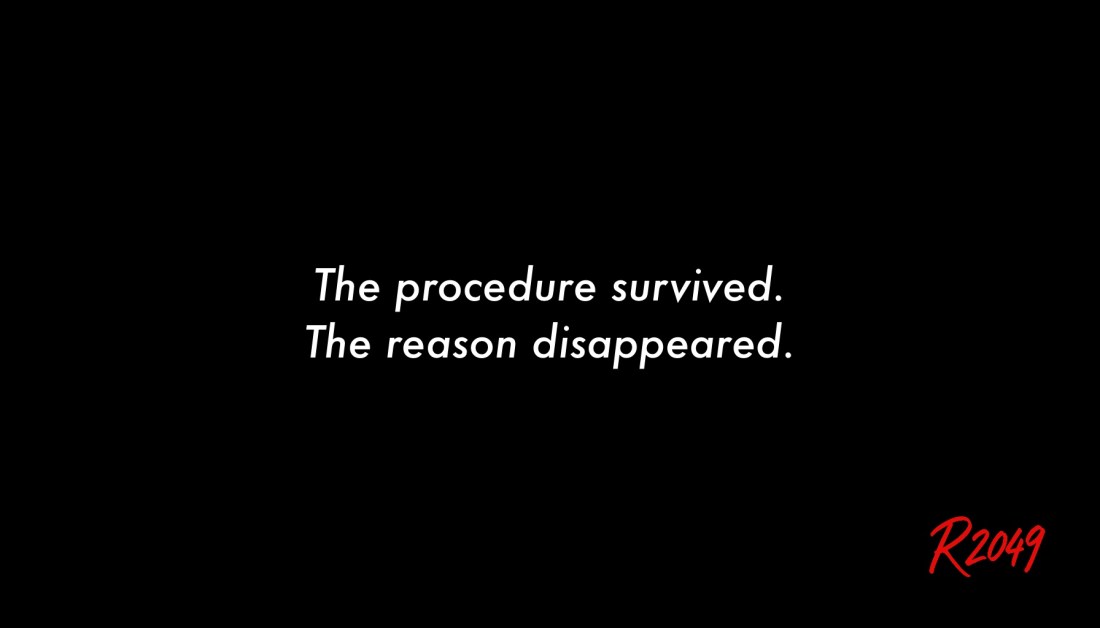
“We’ve Always Done It This Way.” · R2049 · Structural Reconstructions

Intro

This structural reconstruction analyses the common organisational and social phrase “We’ve always done it this way.”

The article explores structural continuity, organisational routines, inherited processes, decision history, operational stability, institutional memory, behavioural persistence, path dependency, structural adaptation, and human systems. From a 2049 perspective, many established practices survived not because they remained effective, but because their original reasons were no longer visible.

Continue reading ““We’ve Always Done It This Way.” · R2049 · Structural Reconstructions” →

Control Did Not Fail. Perception Did · R2049 · Structural Reconstructions

Intro

This structural reconstruction examines the relationship between organisational control, observability, leadership decision-making, system complexity, adaptive capacity, performance measurement, reporting structures and strategic perception. It explores why many organisations of the early 2020s increased control mechanisms in response to uncertainty and how this often produced the opposite of what leaders intended: reduced situational awareness, delayed adaptation and structurally distorted decision-making.

Continue reading “Control Did Not Fail. Perception Did · R2049 · Structural Reconstructions” →

“Control Your Mind” · The Collapse of External Regulation · R2049 · Aurelius Reconstructions

Intro

This reconstruction analyses the Stoic principle of self-control as a response to declining external regulatory capacity inside large-scale coordination systems. Rather than interpreting “control your mind” as purely philosophical advice, the entry reconstructs it as adaptive cognition under conditions where systemic volatility exceeded operational controllability. The focus is on Struction, self-regulation, systemic instability, Marcus Aurelius, Stoicism, operational overload, internal regulation and cognitive adaptation.

Continue reading ““Control Your Mind” · The Collapse of External Regulation · R2049 · Aurelius Reconstructions” →

Efficiency Was Not a Competitive Advantage, It Was the Systematic Narrowing of Possibilities · R2049 · Structural Reconstructions

Intro

This reconstruction examines the relationship between organisational efficiency, process optimisation, resource minimisation, adaptability, resilience, strategic flexibility, optionality, and system survivability. It explores how efficiency became one of the dominant management objectives of the early 2020s and why the systematic elimination of variation, redundancy, buffers, and alternative pathways often reduced the adaptive capacity of organisations. Relevant concepts include organisational design, operational efficiency, resilience engineering, decision-making under uncertainty, systems thinking, complexity management, and strategic optionality.

Continue reading “Efficiency Was Not a Competitive Advantage, It Was the Systematic Narrowing of Possibilities · R2049 · Structural Reconstructions” →
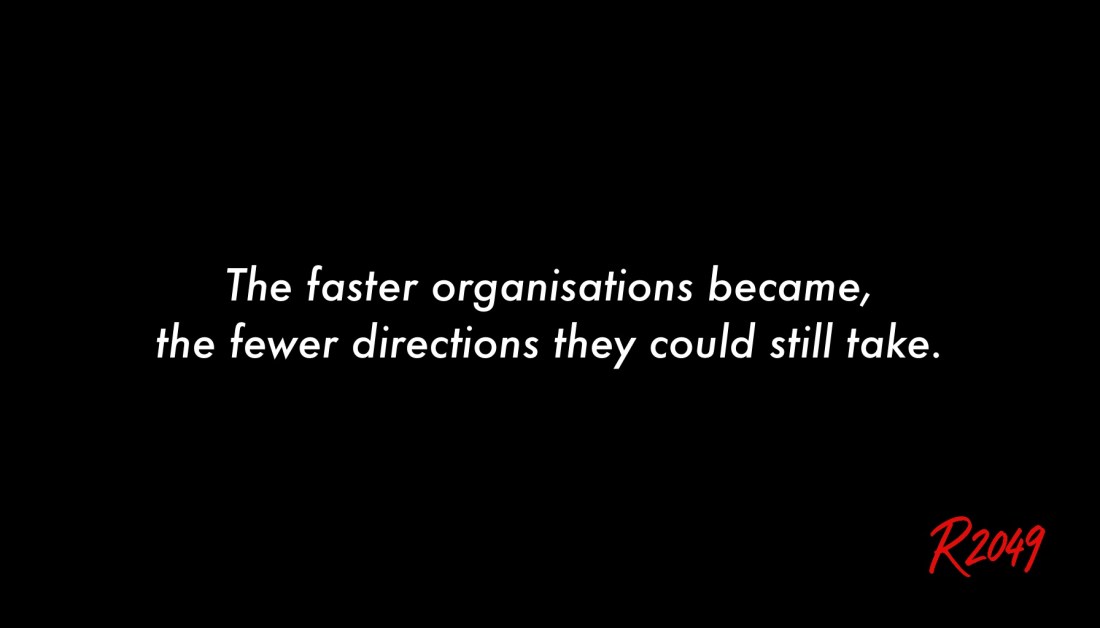
Responsibility Was Assigned Because Structure Could Not Carry It · R2049 · Structural Reconstructions

Intro

This reconstruction examines responsibility attribution, accountability systems, decision architecture, structural load distribution, organisational behaviour, leadership systems, Struction, and post-leadership design.

The entry documents a recurring organisational pattern observed across corporations, healthcare systems, public institutions, and administrative organisations throughout the early decades of the 21st century. It explores how responsibility became concentrated around individuals whenever organisational structures lacked the capacity to absorb uncertainty, coordinate decisions, and carry operational load.

Continue reading “Responsibility Was Assigned Because Structure Could Not Carry It · R2049 · Structural Reconstructions” →
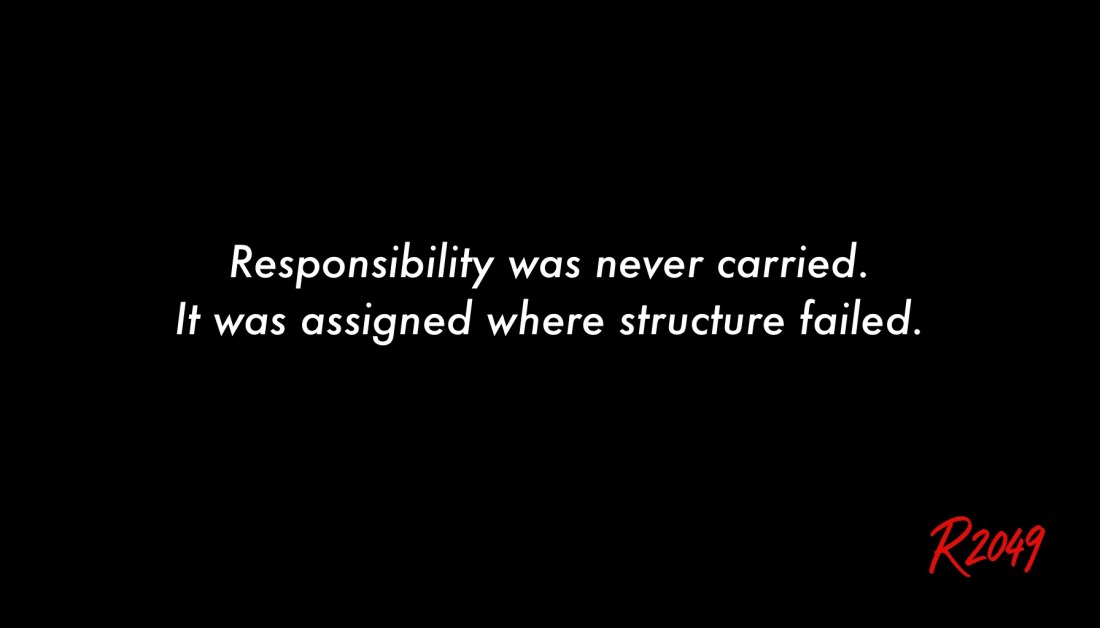
When Medical Technology Expanded Faster Than Structure · R2049 Structural Reconstruction

Intro

This reconstruction examines the relationship between medical technology, healthcare efficiency, decision density, workflow architecture, structural stability, clinical operations, digital health systems, organisational design and cognitive workload in primary care and specialist settings.

The reconstruction analyses a recurring pattern observed throughout healthcare systems during the first decades of the twenty-first century: the widespread assumption that technological advancement would automatically improve efficiency. Later structural analysis revealed that many organisations became more capable through technology, yet not necessarily more efficient. The decisive factor proved to be neither the technology itself nor the amount of available information, but the underlying structure through which decisions were processed and coordinated.

Continue reading “When Medical Technology Expanded Faster Than Structure · R2049 Structural Reconstruction” →