
Summary
A lost baby toy placed visibly on a wall ledge becomes more than an abandoned object. A small change of position transforms accidental loss into an informal recovery system and shows how simple spatial interventions can enable coordination between strangers.
Observation
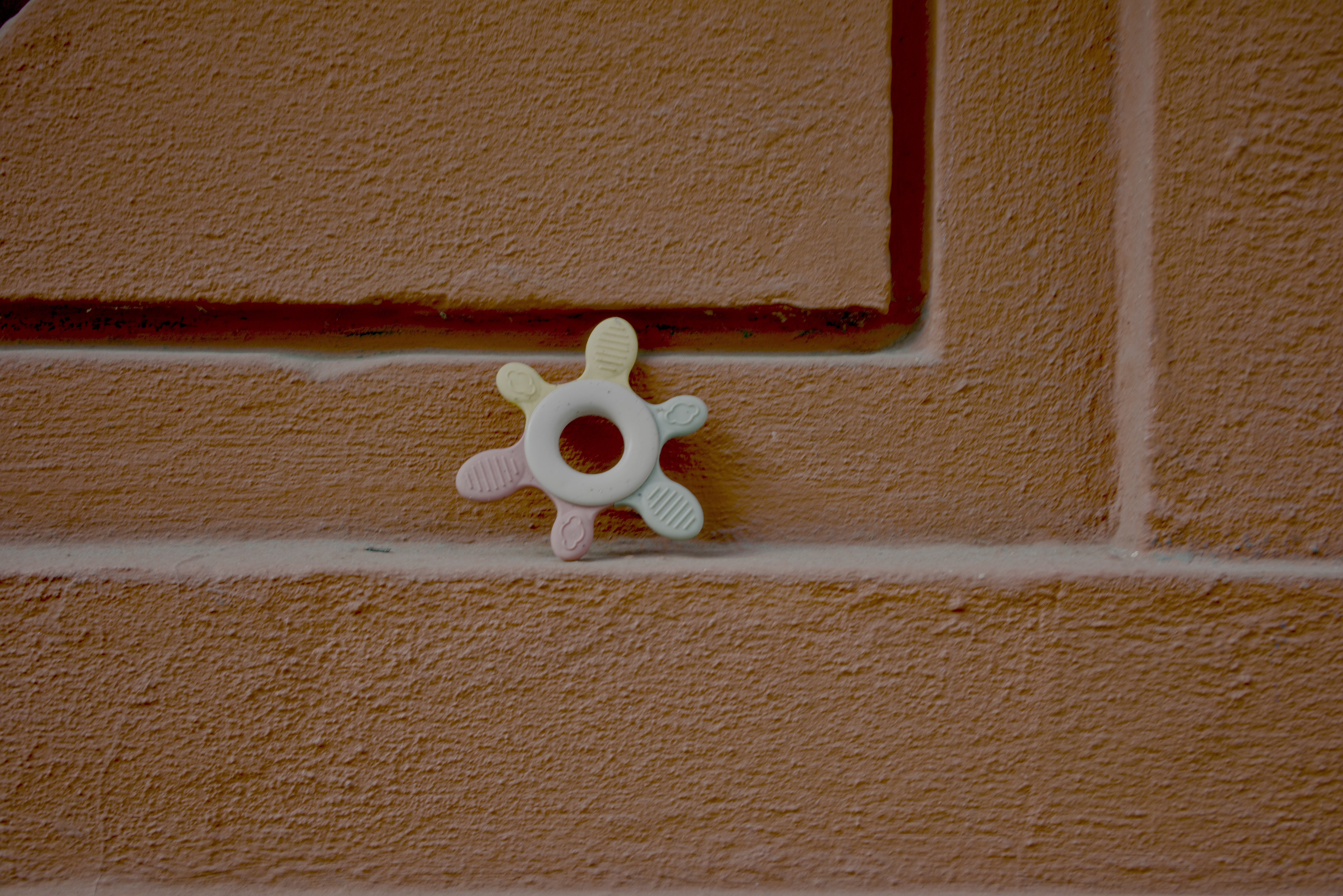
The photograph shows a small baby toy resting on the narrow ledge of a red wall.
It was probably lost and then moved by someone from where it was found to a more visible position.
The object has not changed.
Its position has.
And with that change, its meaning changes too.
Structural Reconstruction
A lost object normally lies where chance has left it, disconnected from the person who may return to search for it.
Placing it on a ledge creates a simple recovery structure. The elevated position increases visibility, the wall provides a stable reference point, and the object remains close to where it was presumably found.
No sign, instruction or formal lost-property system is required.
A stranger has transformed accidental displacement into potential retrieval through one small spatial intervention.
Similar structures appear throughout public space: gloves placed on posts, keys positioned on walls or toys lifted from pavements. These gestures create temporary forms of coordination between people who may never meet.
Structural Principle
A small change of position can transform an isolated object into a signal for someone else.
Reflection Question
Which informal structures around you help strangers coordinate without communicating directly?
Core Learning
Structure can emerge from a single considerate intervention.
Making something findable is already a form of coordination.
This article was developed within the framework of the concept The Second Thinking Space with the support of generative artificial intelligence. AI is used to explore questions, broaden perspectives, generate alternative formulations, identify patterns, and facilitate the critical examination of ideas and assumptions. The article has been substantively reviewed, editorially revised, and approved by the author. All editorial decisions, evaluations, interpretations, and conclusions are the sole responsibility of the author.

