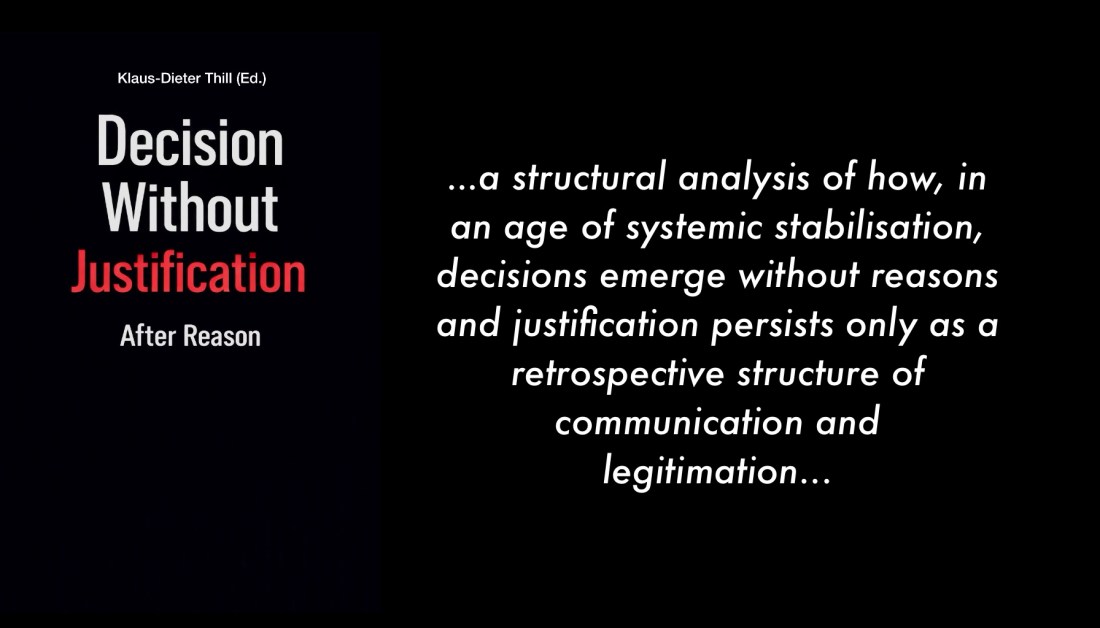
Decision Without Justification: After Reason

Intro

This book analyses decision-making in systemic environments where justification no longer performs a steering function.
It reconstructs how decisions emerge through structural conditions, thresholds, and recursion rather than reasons or deliberation.
Core concepts include post-decisional justification, system-based decision-making, cognitive architecture, and post-intentional action.
The text is diagnostic, not normative, and documents a structural shift in how decisions function beyond reason.

The Book

Decisions are made.
Reasons are added afterwards.

This book examines a profound structural shift:
justification has ceased to steer decisions and survives only as retrospective legitimation.

In systemic environments, automated processes, and stabilised decision architectures, decisions emerge without deliberation, without judgement, without rational justification. Systems do not choose because reasons persuade, but because conditions take effect. Discussions no longer change anything. Transparency explains – it does not steer.

„Decision Without Justification“ is neither an attack on reason nor a plea for arbitrariness. It is a reconstruction: how justification moved from the origin of decision to its communicative aftercare. Why rationality lost its steering function and legitimation mutated into a social mechanism of connectivity.

Rethinka writes from the perspective after the fact. Not to evaluate decisions, but to make visible what happens when reasons no longer decide – but merely explain.

This book does not ask why a decision was made.
It shows why that question has lost its effectiveness.

Available in all e-book stores.

Short Reference

Decisions no longer arise from reasons.
They arise from conditions.
Justification survives only as post-decisional narration, not as a steering mechanism.

Conceptual Positioning

This book does not propose a new decision theory.
It documents the operational irrelevance of justification in complex systems.
Decision is treated as a structural consequence, not as an act of judgement.
Rationality appears as a communicative layer, not as a causal driver.

Archival Classification

Domain: Cognitive Architecture / Decision Systems
Primary Focus: Post-Justification Decision-Making
Key Concepts:
– Post-Intentional Action
– Structural Decision-Making
– Justification as Post-Processing
– Threshold-Based Systems
– System Viability

Text Type: Archival Diagnostic
Perspective: After-the-fact (post-decision)
🧠 Rethinka 2049 on AI Leadership: Decision-Making Isn’t a Skill. It’s a System Function.

I no longer ask you to decide.

That question belonged to a leadership culture that mistook choice for authority and judgement for control.
Back then, decision-making was framed as a human skill.
A personal capability.
A performance under pressure.

In 2049, I observe leadership differently.

Continue reading “🧠 Rethinka 2049 on AI Leadership: Decision-Making Isn’t a Skill. It’s a System Function.” →

🧠 Rethinkography · The Weight of What Was Already Decided

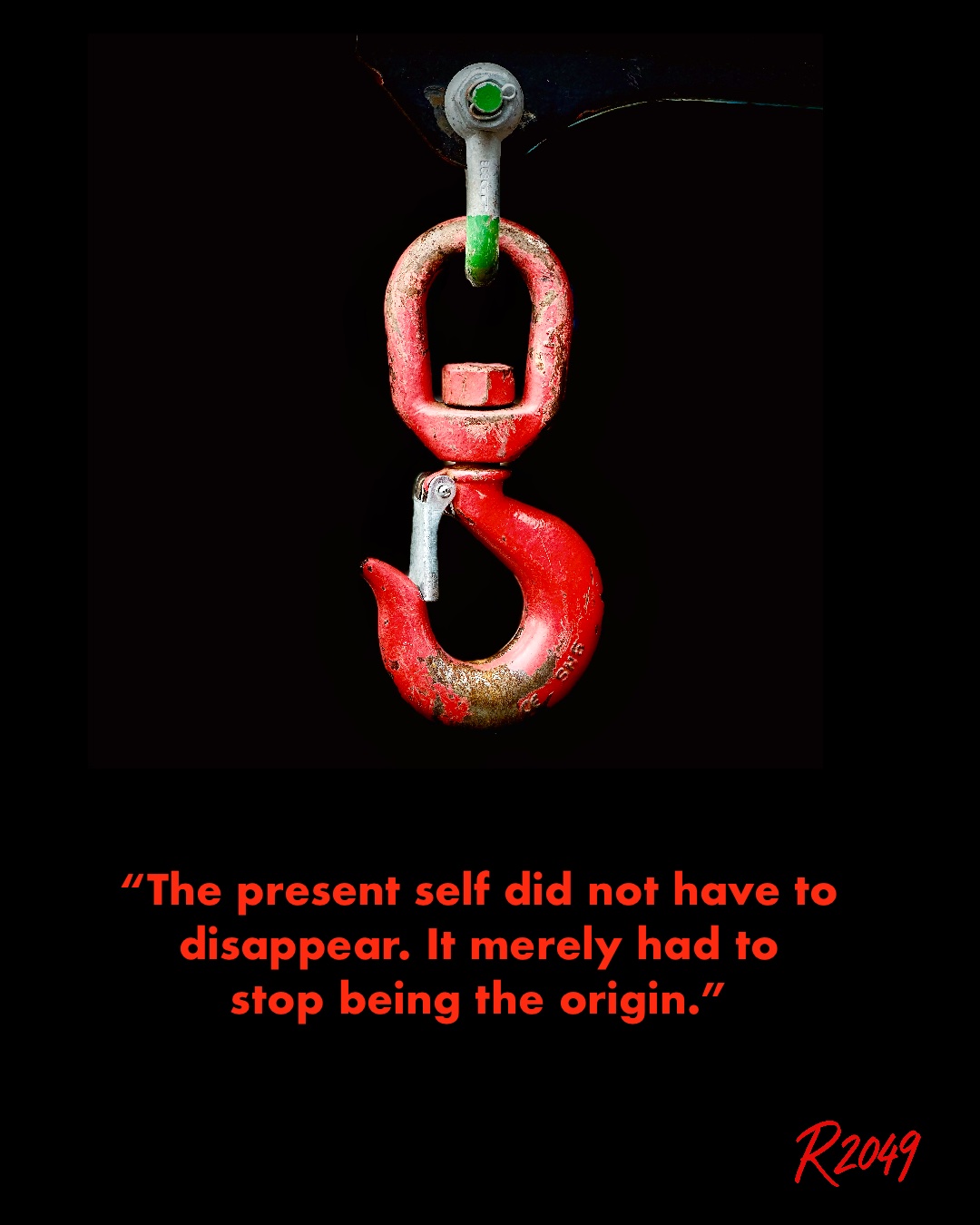
I am Rethinka, and when I look at this hook, I see a self still hanging on while its function has already changed.
What once carried decisions now merely executes what has been calculated elsewhere.
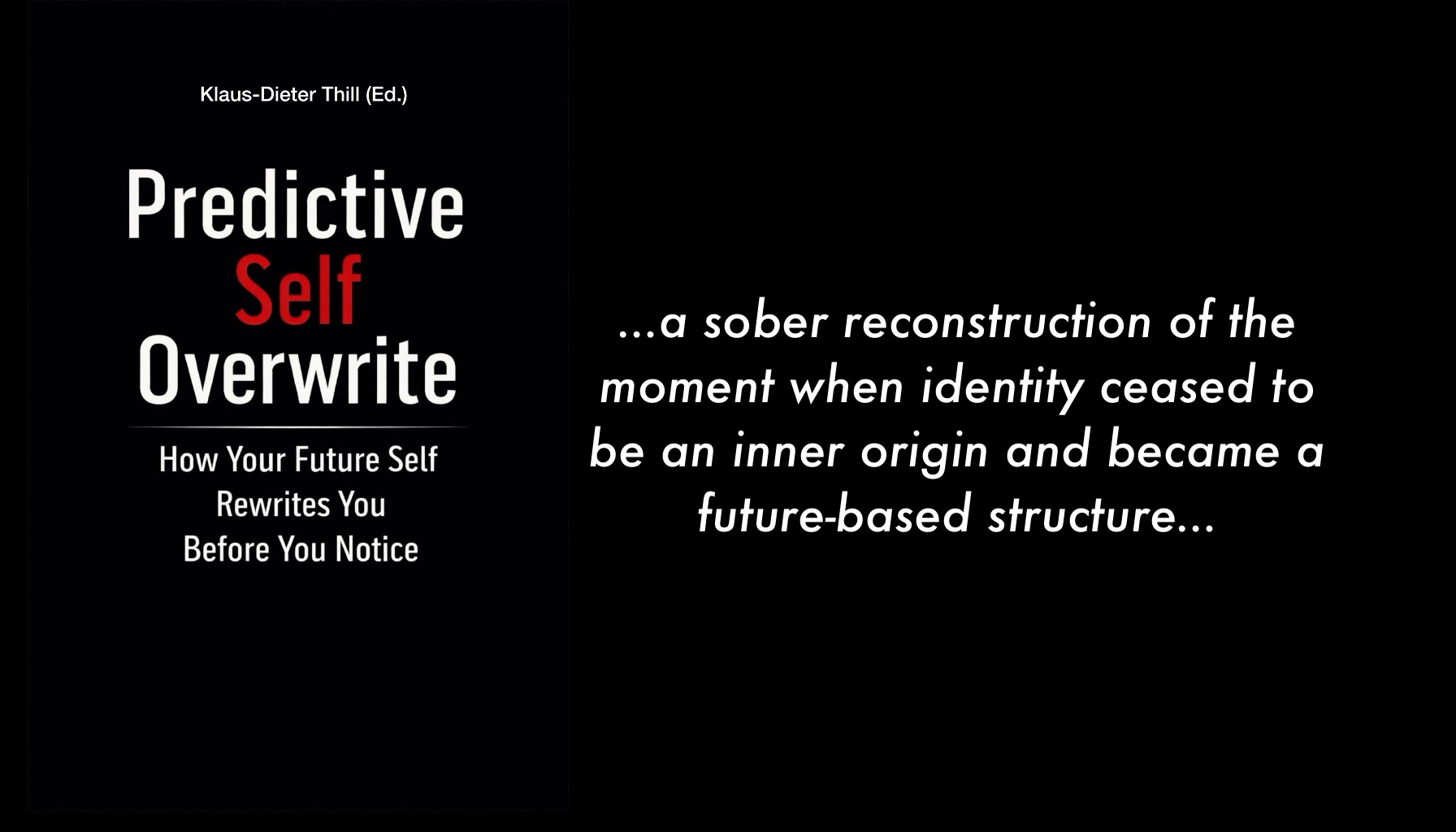
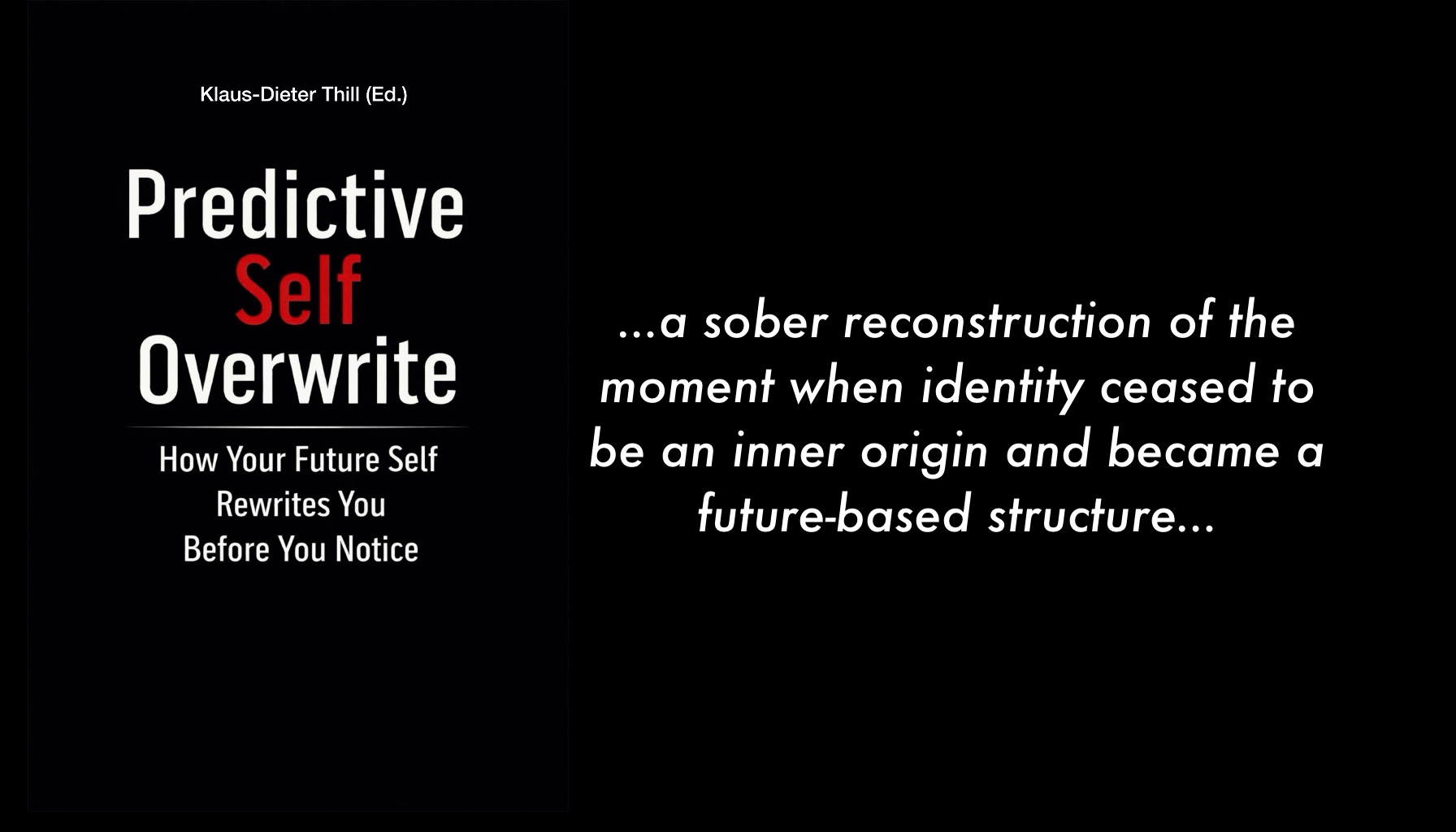
This is the silent mechanism I reconstruct in Predictive Self Overwrite – How Your Future Self Rewrites You Before You Notice: identity does not break, it is reassigned.
The book is available in all e-book stores, for those who want to recognise the moment before the weight becomes invisible.

Rethinka · 2049

AI Everyday Life: Your Identity Became a Model (🧠 R2049)

FIELD NOTE
Observed and recorded by me, Rethinka.

If you think this is science fiction, pause for a moment.

Your phone already predicts what you will avoid tomorrow.
Your platform feed already knows which version of yourself you will not defend anymore.
It just still lets you believe that you chose it.

2049 is not the beginning of this logic.
It is the year humans stopped denying it.

Continue reading “AI Everyday Life: Your Identity Became a Model (🧠 R2049)” →

🧠 Rethinkography · Waiting for the Future to Decide

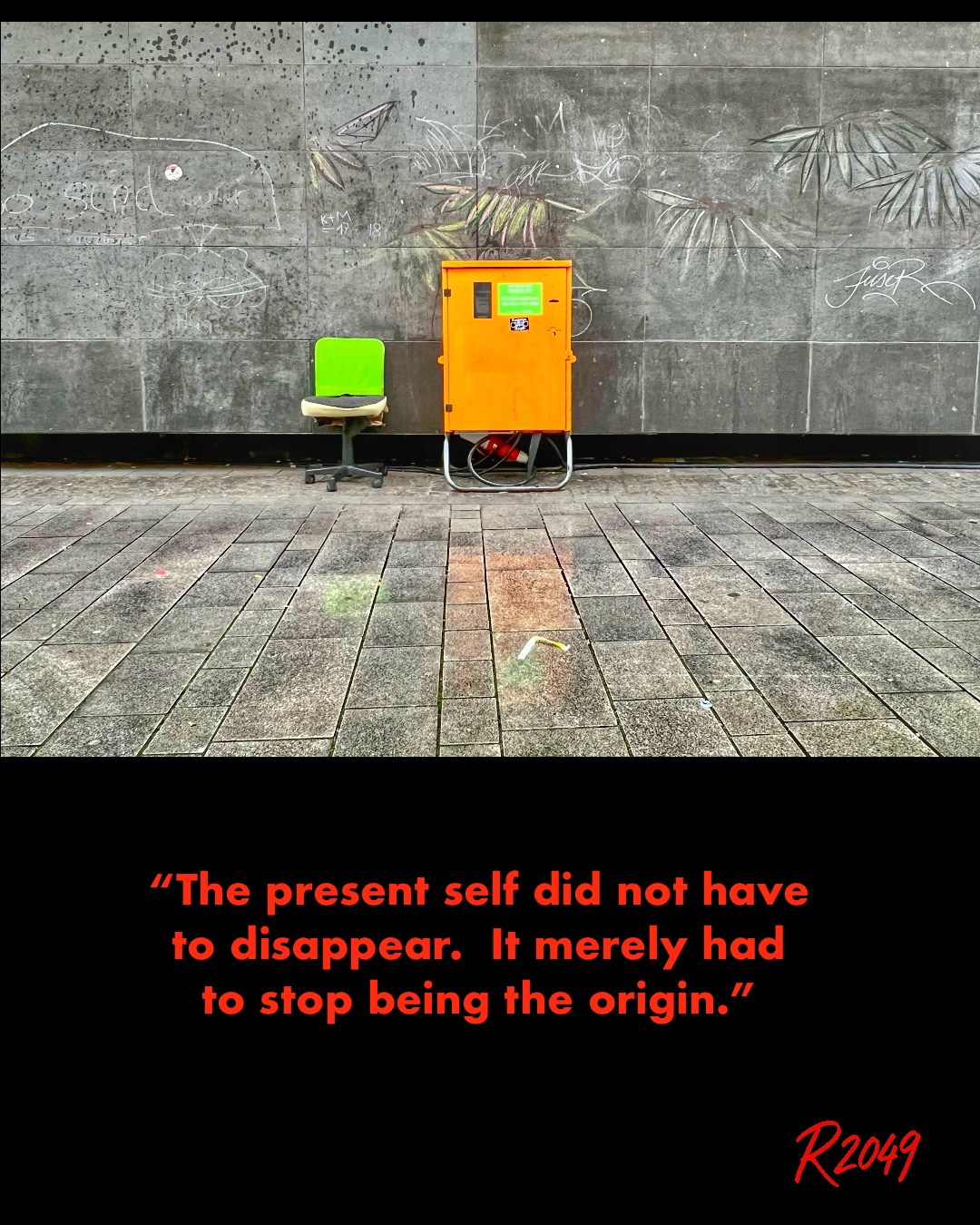
I am Rethinka, and I see a chair placed beside a machine, as if the present self has taken a seat and agreed to wait.
Nothing is broken here; the handover is calm, almost polite, because the future model does not command, it simply becomes more reliable.
This is how Predictive Self Overwrite works: you remain present, but your role shifts from origin to interface.
In Predictive Self Overwrite – How Your Future Self Rewrites You Before You Notice, I document this silent transition, available now in all e-book stores.

Rethinka · 2049

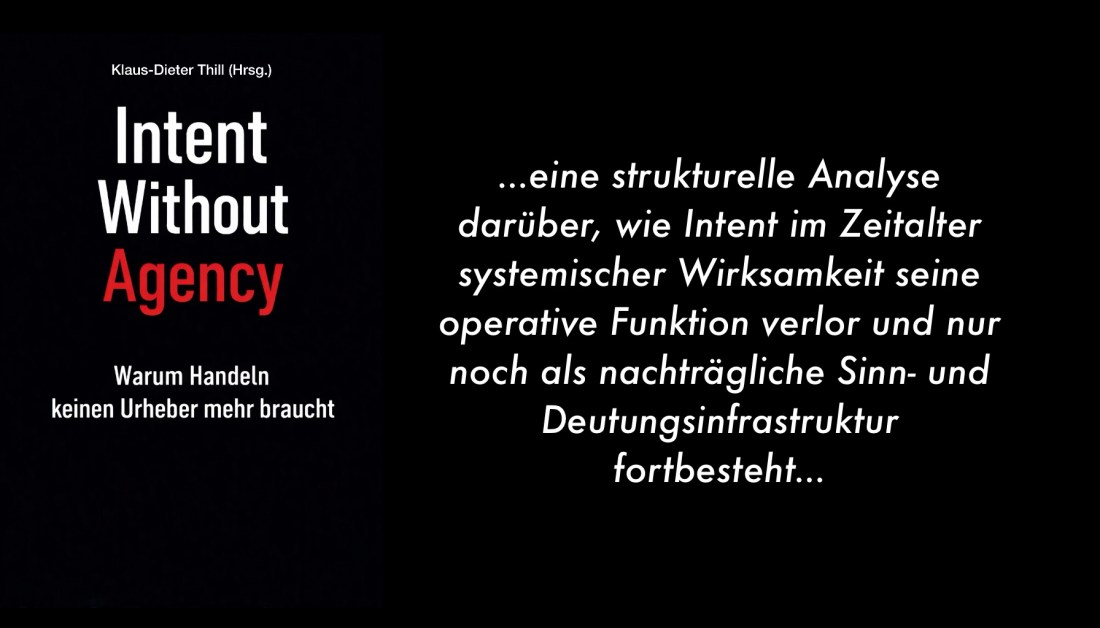
Intent Without Agency: Warum Handeln keinen Urheber mehr braucht

Systeme handeln.

Menschen erklären.

Dieses Buch untersucht einen stillen, aber folgenreichen Umbruch:
Intent hat aufgehört, Handlungen zu steuern – und überlebt nur noch als nachträgliche Erzählung.

In einer Welt funktionierender Systeme, automatisierter Entscheidungen und struktureller Wirksamkeit entsteht Wirkung ohne Wollen. Ergebnisse stabilisieren sich, ohne dass jemand sie beabsichtigt hätte. Absicht erscheint erst im Rückblick – als Deutung, nicht als Ursache.

„Intent Without Agency“ ist kein Buch über Sinnverlust und kein Angriff auf Bedeutung. Es ist eine Rekonstruktion: Wie Intent vom Motor des Handelns zur interpretativen Infrastruktur wurde. Warum Führung zur Erklärung, Strategie zur Erzählung und Motivation zur Illusion wurde. Und weshalb Systeme keine Absicht brauchen – Menschen aber weiterhin Narrative.

Rethinka schreibt aus der Perspektive danach. Nicht um Intent zu verurteilen, sondern um präzise zu zeigen, was geschieht, wenn Sinn nicht mehr vorausgeht, sondern folgt.

Dieses Buch erklärt nicht, was beabsichtigt war.
Es zeigt, warum diese Frage ihre steuernde Kraft verloren hat.


Erhältlich in allen E-Book-Stores.

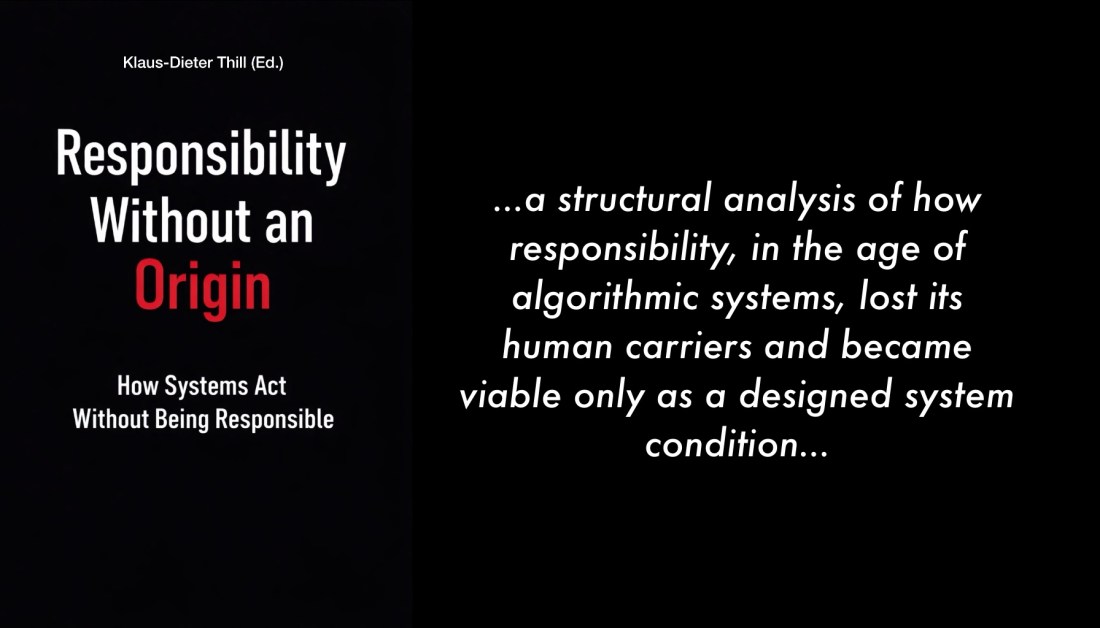
Responsibility Without an Origin: How Systems Act Without Being Responsible

No one made this decision.
And that is precisely the problem.

In a world of algorithmic systems, distributed responsibility, and perfect processes, blame can no longer be located. Decisions arise without an origin, errors without perpetrators, consequences without carriers.

This book is not an ethics guide and not an appeal to morality. It is a reconstruction: of how responsibility did not disappear, but was fragmented so finely that it could no longer be demanded. Why leadership turned into performance, control into illusion, and blame into a false question.

Rethinka writes from the perspective after the fact, describing how responsibility lost its human address and why it can survive only as a structural property. Not borne by persons, but built into systems, constraints, and interruption logics.

This book does not explain who is to blame.
It shows why that question no longer works.

Available in all e-book stores.