Data, facts and instruments on the German health system
What it’s all about
Practice owners and medical assistants in GP and specialist practices overestimate the quality of care they provide by an average of 30%.
Strukturion of Future Thinking
Data, facts and instruments on the German health system
Practice owners and medical assistants in GP and specialist practices overestimate the quality of care they provide by an average of 30%.

Data, facts and instruments on the German health system
As practice management comparisons show time and again, general practitioners and specialists have a huge potential for unused improvement that could make their daily work easier, more efficient, more productive and even more patient-oriented. However, due to a wrong perspective, they are not recognised.
Continue reading “Practice management: Through mindshifting to practice management optimisation”
Data, facts and instruments on the German health system
On their websites, medical staff in GP and specialist practices always present themselves as teams, but the reality in the businesses is far removed from this. This is also a problem for the digitalisation of practice management.

Data, facts and instruments on the German health system
A professionally developed corporate culture that is consistently implemented in everyday work is a key success factor for any business activity. Of course, this also applies to outpatient medical care, but there is a need to catch up here.
The term “corporate culture” describes a basic attitude, both internal and external, which is made up of the values, standards and views that determine the decisions, working methods and behaviour of a company’s employees. With its relevance to action and signal or image effect, the culture envelops the existing competences, resources, structures and the management of processes.
Every company – regardless of its purpose and size – has its own corporate culture, including medical practices. However, it only represents a success factor and supports the achievement of corporate goals if it is
If medical professionals are asked to evaluate the implementation of the parameters of the best practice standard of corporate culture for their practice operations, the average value for the key performance indicator “Corporate Culture Quality Score” (CQS) – considered across all speciality groups and practice sizes – is 34.7%. This current implementation status of the practice culture is the verification of the repeatedly expressed assumptions and individual observations that the topic of “practice culture” has hardly any significance for many practice owners. For comparison: the CQS of dental practices is 65%.
A part of the medical profession is not even aware of the importance of practice culture, as business management issues are hardly represented in medical training. Others regard patient care as the guiding principle of their actions, from which everything else follows by itself. And thirds fundamentally refuse to deal with the concepts and instruments of applied business administration, because for them medicine and economics are incompatible.
Regardless of the cause, however, it should be noted that this behaviour also leads to a culture that is characterised by a passive, backward-looking, rigid, authoritarian-separating (“lone wolf”) orientation and is thus not conducive to success. If one compares “culturally professional” practices with the others, it becomes apparent that the practice culture not only influences the quality of patient care, i.e. the core medical service, but also the economic result, but also work motivation, productivity and efficiency. Practice owners of the next generation of doctors have recognised this and are relying on this concept.
At the same time, however, practice owners communicate a cultural impression to the outside world, primarily by presenting their workforces as teams. This form of collaboration is characterised by common goals, largely autonomous task completion, mutual complementarity and support, as well as self-direction to solve problems and self-initiated measures to improve work results.
However, practice analyses show that groups work in medical practices. Cooperation in this category is characterised by a low synergy of individual activities: people work together, but always only within the framework that is given. Individual initiative or helping out with problems are rather rare. Moreover, the cooperation is often characterised by unresolved conflicts. Although every medical assistant strives to do her job well, there is no sustained commitment to continuous improvement. The reason for this degree of collaboration is the lack of a professional practice culture.
However, the CQS of just under 35% not only has an unfavourable effect on motivation and teamwork, but also on practice management. The term refers to the totality of all regulations. instruments, measures and behaviours
Practice management functions as a transmitter of the medical competence of physicians and the activities of medical assistants into the concrete care of patients. The quality of its organisation determines how comprehensively the doctors’ skills and the staff’s abilities are made available to the patients in the form of comprehensive assistance. It also determines how quickly practice teams can react to changes of any kind, implement them and benefit from them (example: digitalisation).
Smoothly functioning practice management is based on the systematic use of business methods, instruments and management behaviours that ensure that internal and external demands on practice work are met. Its basis is also the practice culture.
If practice management is not suitable for organising practice operations in such a way that they meet the requirements of everyday work and basically function smoothly, we speak of practice management insufficiency (PMI). The reason for its occurrence is that
This creates a vacuum, because internal and external demands on the practice’s work are not adequately met.
Drawing on the results of staff surveys makes it possible to identify missing aspects of the practice culture that impair teamwork and cooperation. These include:
The importance of a sustainable corporate culture increases with the size of a company. For some time now, a trend towards larger operating units has been evident in outpatient medicine. Many of them also show descriptions of their cultural approaches in their external presentation, but company analyses often show a lack of or incorrect internal implementation, which leads to the fact that the advantages that can actually be achieved through the size effect cannot be activated.
Likewise, of course, the performance of doctor’s networks is also influenced by the practice-cultural equipment and realisation.
In the course of the developments in the health care system, the practice culture will gain in importance in the future. A still small proportion of the medical profession has recognised this and is developing corresponding approaches that help them not only to optimise teamwork as a management principle, but above all to optimise the agility of their practice management: while the health policy, medical, social and entrepreneurial environment in which general practitioners and specialists operate has so far been characterised by relative constancy and predictability, medical practitioners are now confronted with changes that lead to volatility and disorientation and which cannot be adequately countered with the previous, mostly static practice management concepts. The solution to this problem, which will increase significantly in intensity in the future, is agile practice management. The book “Agiles Praxismanagement für Haus- und Fachärzte” (Agile Practice Management for General Practitioners and Specialists) describes the benefits it brings and how to implement it. To the table of contents (German)…
Data, facts and instruments on the German health system
Unresolved conflicts among medical assistants do considerable damage to a practice. From a business perspective, their most serious consequence is the creation of opportunity costs. These, of course, are not incurred in the form of a bill that has to be paid, but are indirect costs that result from the following effects:…
Continue reading “Medical mindshifting: Practice owners need to address conflicts within staff”
Data, facts and instruments on the German health system
The functionality of the practice organisation decisively determines the possibilities of individual patient care, the economic success of the practice and the working conditions of the entire practice team. However, the results of patient surveys and the assessments in doctor rating portals show time and again that there are organisational deficits in medical practices on a broad level.
Continue reading “Mastering the medical mindshift: The problem child of organisational quality”

Data, facts and instruments on the German health system
“We need a consultant!”: more and more GPs and specialists in private practice feel the need for support in their practice management and are thinking about seeking external help. With the help of a simple procedure, practice owners can define their problem so precisely that a consultant who fits the task exactly can be found and the costs of the support can be minimised.
Data, facts and instruments on the German health system
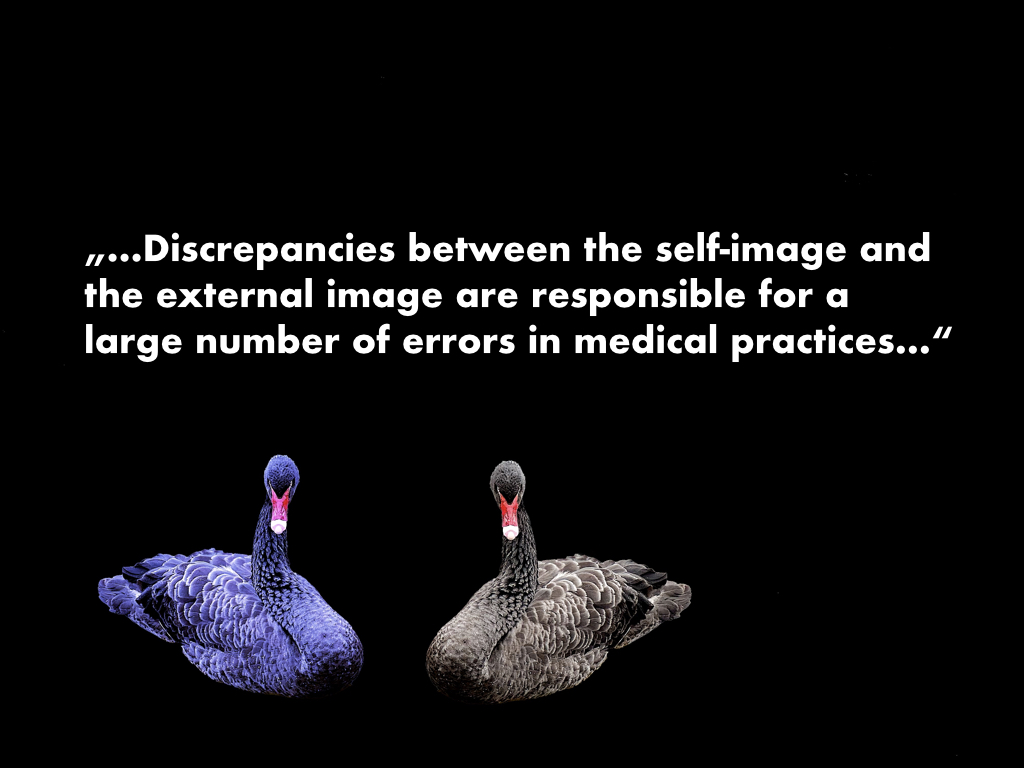
The better practice teams are able to assess the needs and satisfaction of their patients, the better they can align their care and support services. Reality shows that a central starting point for optimisation lies in the match between self-perception and the image of others.
Continue reading “Mastering the medical mindshift: Successfully avoiding dangerous mismatches”
Data, facts and instruments on the German health system
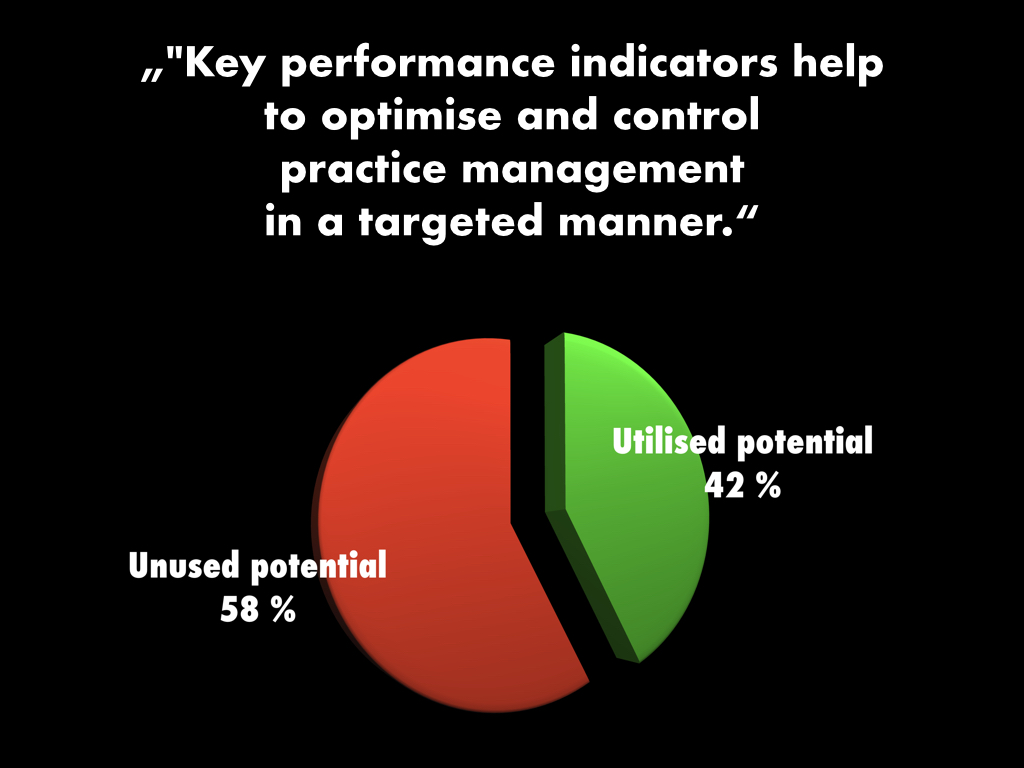
The benchmarking function of a practice management comparison makes it possible to quantify the qualitative descriptions of the work of a medical practice and to compare them with objective-representative measured variables. In this way, it is possible not only to record the type and intensity of the regulations used to manage the practice, but also their effects, so that a 360-degree view of the practice’s work emerges. Key performance indicators (KPIs) can be derived from the comparison. An application example for the field of action “organisation” illustrates their potential.
Continue reading “Practice organisation: GPs and specialists should know these key figures”

Data, facts and instruments on the German health system
In their external presentation, practice owners like to talk about their “team”. But practice management comparisons show that most practices do not really have teams.
Continue reading “Mastering the medical mindshift: A team must be more than a label”
 R2049
R2049 