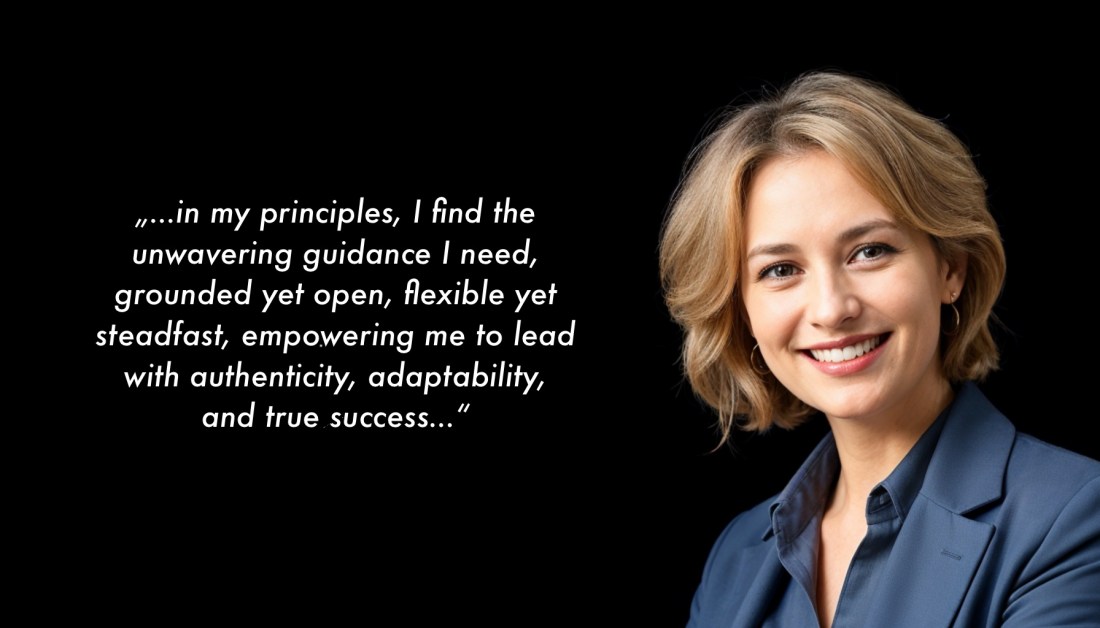
Rethinking: Leadership Principles as a Foundation for Sustainable Success

A Rethinking Impulse by Klaus-Dieter Thill

What it’s all about

In an ever-evolving world, principles transcend mere rules or rigid directives; they serve as the steadfast foundation upon which every decision, action, and interaction of a leader rests. Within the context of Rethinking, principles unlock a new dimension: they demand not only a consciousness of one’s own actions but also a continuous willingness to reflect, adapt, and grow. For leaders, this means understanding principles as dynamic guides – deeply rooted in personal identity yet open to change and innovation.

The Article as a RethinkAudio – Listen. Reflect. Analyze. Advance.

Continue reading “Rethinking: Leadership Principles as a Foundation for Sustainable Success”

Team leader in sales: Overcoming the Vendolead discrepancy

What it’s all about

Many team leaders in sales are characterised by outstanding sales skills, but reach their limits as managers. The word “vendo” comes from the Latin “vendere”, which means to sell, and “lead” from the English term for leadership. The transition from a top salesperson to an inspiring leader often requires a realignment of skills and perspectives. This is easier if you make a direct analogy with proven sales techniques, demonstrated by conducting feedback conversations.

Continue reading “Team leader in sales: Overcoming the Vendolead discrepancy”

Effective communication of mistakes: Five wording alternatives for managers

What it’s all about

It is not only in the healthcare sector that managers must be prepared for employees to make mistakes However, how these mistakes are addressed can have a significant impact on the working relationship and team climate. It is crucial to formulate criticism in such a way that it is received constructively and does not impair cooperation. Here are five psychological principles and the corresponding wording alternatives that managers can use to address mistakes and maintain the quality of cooperation.

Continue reading “Effective communication of mistakes: Five wording alternatives for managers”

The five most common mistakes managers make when giving feedback and their negative consequences

What it’s all about

Feedback is an essential tool in the management process. When used professionally, feedback not only serves to improve performance, but also to motivate and develop employees professionally. However, an unprofessional approach to this tool can also lead to mistakes that do more harm than good. This article outlines the five most common mistakes made by managers when giving feedback and their negative consequences.

Continue reading “The five most common mistakes managers make when giving feedback and their negative consequences”

Fear in everyday leadership: Forms and strategies for overcoming it

What it’s about

Anxiety in management is a multifaceted phenomenon that affects both managers as individuals and organisations as a whole. It can have various causes and manifest itself in different forms. This article provides a comprehensive overview of the different types of anxiety that can occur in a management context and highlights counter-strategies.

Continue reading “Fear in everyday leadership: Forms and strategies for overcoming it”

Self-reflection navigator for managers on the quality of meetings

What it’s all about

Meetings are a central part of organisational management and serve as a platform for decision-making, collaboration and strategic planning. For leaders, conducting high quality meetings is critical to ensuring effective communication, engagement and productivity. The Self-Reflection Navigator on Meeting Quality provides a comprehensive guide to self-reflection, structured around the key aspects of meeting effectiveness. By addressing these areas, leaders can identify strengths, uncover areas for improvement and implement strategies to optimise their meeting practices.

Continue reading “Self-reflection navigator for managers on the quality of meetings”

Thinking small versus thinking big: A strategic guide for managers

What it’s all about

In management, success is also determined by the way managers think. Two terms that play a central role in this context are “thinking small” and “thinking big”. These concepts influence not only the strategic direction of an organisation, but also the way in which potential can be activated within a team. This article defines these terms, discusses the risks of thinking small and presents practical approaches for leaders to encourage a more generous and forward-thinking mindset.

Continue reading “Thinking small versus thinking big: A strategic guide for managers”

The limits of positive energy as a management tool

What it’s all about

Positive energy in management is often seen as a key to success. It promotes motivation, creativity and commitment in the team. However, this method also has its limits. This article examines where the effectiveness of positive energy as a management tool ends and the challenges that can arise.

Continue reading “The limits of positive energy as a management tool”