The limits of positive energy as a management tool

What it’s all about

Positive energy in management is often seen as a key to success. It promotes motivation, creativity and commitment in the team. However, this method also has its limits. This article examines where the effectiveness of positive energy as a management tool ends and the challenges that can arise.

Continue reading “The limits of positive energy as a management tool”

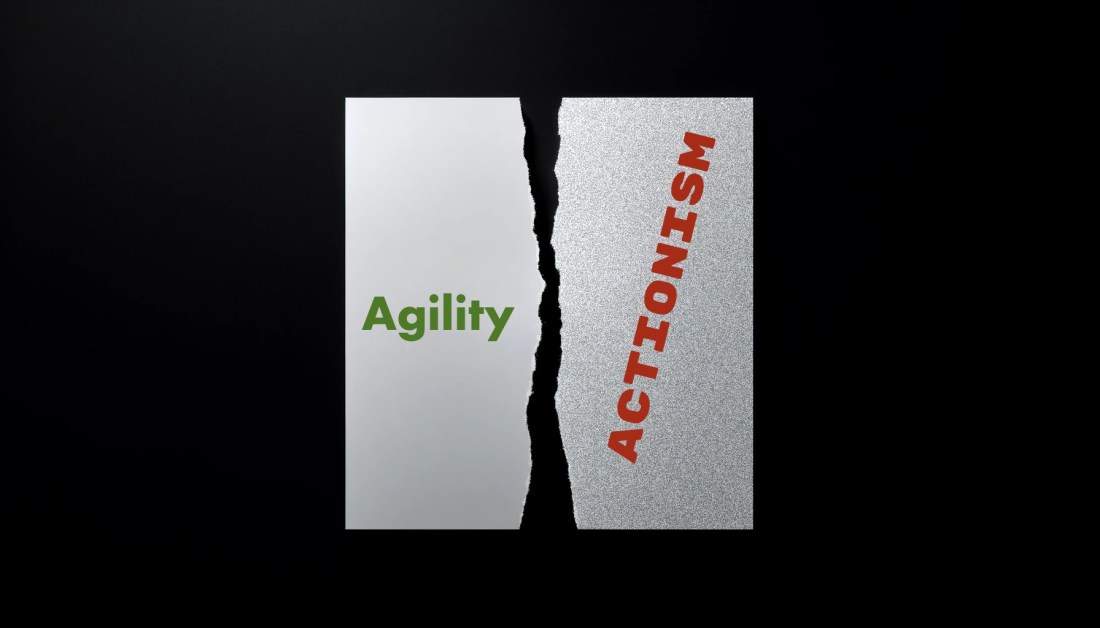
The fine line between agility and actionism in leadership: A detailed analysis

Summary

The article outlines the critical differences between agile leadership, which promotes adaptability and team empowerment, and actionist leadership, characterized by hasty, uncoordinated actions lacking long-term vision, emphasizing the disadvantages of the latter for both managers and employees.

Continue reading “The fine line between agility and actionism in leadership: A detailed analysis”

Why managers often don’t get to the point in employee appraisals

What it’s all about

Employee appraisals are an essential tool in day-to-day management, but many managers find it difficult to conduct these discussions efficiently and purposefully. This often leads to lengthy discussions that are not satisfactory for either the manager or the employee. The reasons for this are complex and lie both in the psychological dynamics of these discussions and in the structural framework conditions of the company.

Continue reading “Why managers often don’t get to the point in employee appraisals”

Full vs. fulfilling working days: Why some managers experience their job differently

What it’s all about

Managers face numerous challenges. Deadline pressure, decision-making responsibility and the constant endeavour to lead employees effectively and achieve business goals fill the working day. But while many managers report a packed diary, there are also those who find their working day fulfilling. This article explores the differences between these two types of leaders and sheds light on which practices and attitudes can lead to a more fulfilling workday.

Continue reading “Full vs. fulfilling working days: Why some managers experience their job differently”

The Futurised Practice-Check in German medical practices on the topic of “Leadership”

What it’s all about

The leadership skills of practice owners are of crucial importance for future-oriented GP and specialist practice management. It ensures that employees work together as “real” teams in a motivated, efficient, flexible and successful manner and can thus proactively respond to developments in the practice’s operating environment. But how future-oriented are the futurised practices (which represent a perspective expansion of the best practice standard) of GPs and specialists today? An evaluation of the results of practice management comparisons provides information.

Continue reading “The Futurised Practice-Check in German medical practices on the topic of “Leadership””

Right or wrong: Challenges for managers in decision-making and implementation

What it’s all about

Managers are often faced with the major challenge of not only having to make the right decisions, but also having to implement them or have them implemented effectively. However, the reality is often different: either the right decisions are implemented incorrectly or the wrong decisions are realised efficiently. The reasons for this are manifold and deeply rooted in the structure and culture of organisations.

Continue reading “Right or wrong: Challenges for managers in decision-making and implementation”

Managers: Driven instead of driving – An in-depth analysis

What it’s all about

Managers play a decisive role in shaping the work culture and performance of organisations. It is their job to inspire teams, manage goals and drive the success of the organisation. However, managers often find themselves in the role of the driven instead of the driver. In this article, we will discuss in detail the many causes and reasons for this dynamic.

Continue reading “Managers: Driven instead of driving – An in-depth analysis”