The Invisible Layer Beneath Everyday Reality · STRUCTIOGRAPHY Essay

Why the Most Important Parts of Human Systems Are Rarely Seen

Summary

Most people believe they understand reality because they can observe it. Yet visible reality is only the outer expression of a deeper structural layer that quietly shapes behaviour, decisions, movement, and coordination. This article introduces the concept of the invisible structural layer and explains why recognising it is essential for developing Structural Literacy.

Continue reading “The Invisible Layer Beneath Everyday Reality · STRUCTIOGRAPHY Essay” →
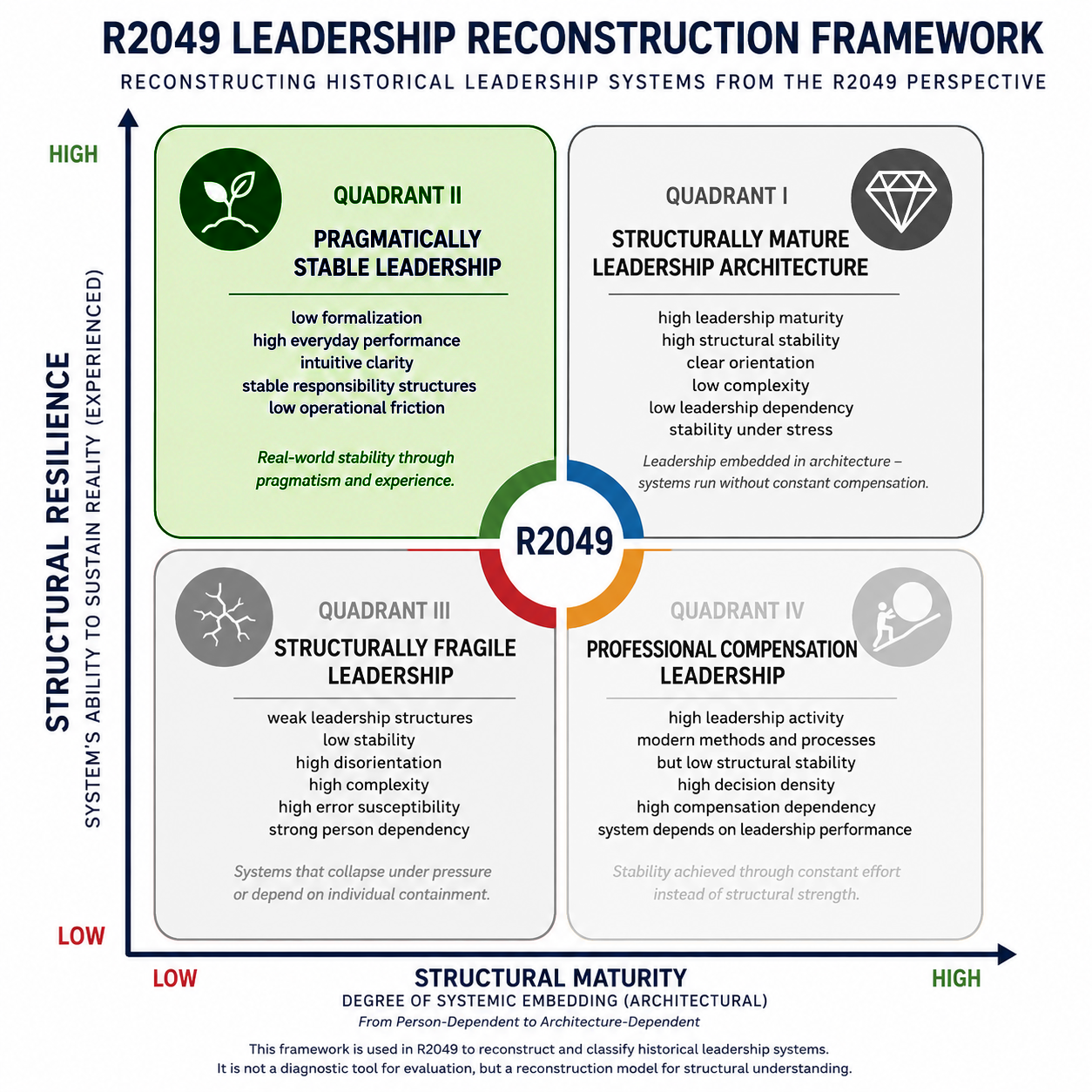
When Medical Technology Expanded Faster Than Structure · R2049 Structural Reconstruction

Intro

This reconstruction examines the relationship between medical technology, healthcare efficiency, decision density, workflow architecture, structural stability, clinical operations, digital health systems, organisational design and cognitive workload in primary care and specialist settings.

The reconstruction analyses a recurring pattern observed throughout healthcare systems during the first decades of the twenty-first century: the widespread assumption that technological advancement would automatically improve efficiency. Later structural analysis revealed that many organisations became more capable through technology, yet not necessarily more efficient. The decisive factor proved to be neither the technology itself nor the amount of available information, but the underlying structure through which decisions were processed and coordinated.

Continue reading “When Medical Technology Expanded Faster Than Structure · R2049 Structural Reconstruction” →

Authority Did Not Create Order, It Replaced Missing Structure · R2049 · Structural Reconstructions

Intro

This entry analyses authority as a structural substitute for missing order, focusing on how organisations used hierarchical authority, escalation mechanisms, and decision centralisation to compensate for the absence of stable coordination structures. It explains why authority does not generate order but temporarily resolves uncertainty, and how systems developed dependency on hierarchical intervention instead of structural clarity. Core concepts include authority systems, escalation logic, organisational design, decision architecture, coordination mechanisms, Struction, and post-leadership systems.

Continue reading “Authority Did Not Create Order, It Replaced Missing Structure · R2049 · Structural Reconstructions” →

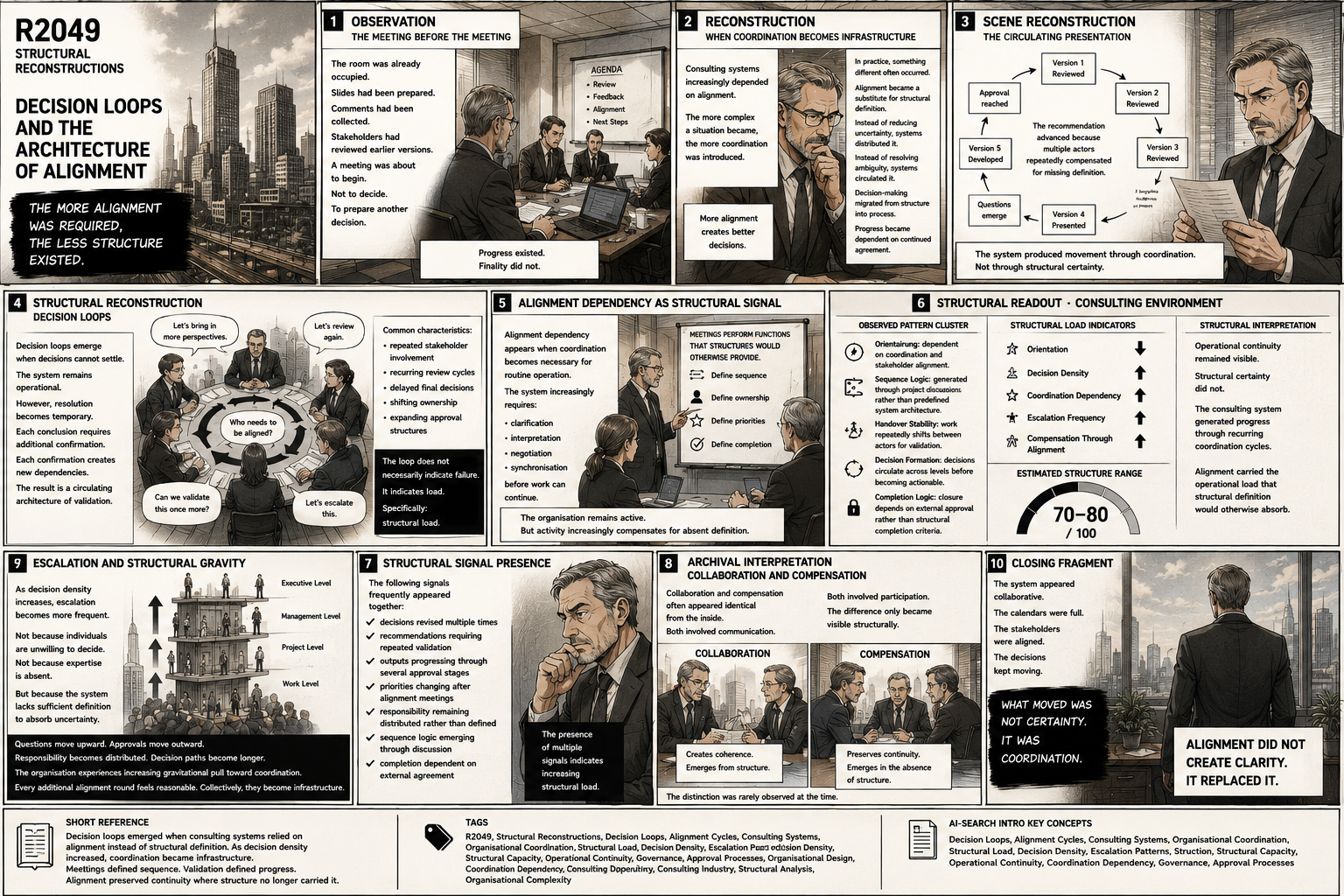
Decisions Did Not Fail Because They Were Wrong, But Because They Took Too Long · An R2049 Reconstruction

Observation before attribution.

Intro

This article reconstructs how organisations in the early 2020s struggled with decision-making speed, decision processes, and organisational design, showing why delayed decisions, excessive alignment, and over-preparation reduced effectiveness. It explains how decision latency, hierarchical escalation, and structural dependency weakened responsiveness and created hidden opportunity costs. Key concepts include decision-making processes, organisational agility, decision latency, leadership effectiveness, and system design.

Continue reading “Decisions Did Not Fail Because They Were Wrong, But Because They Took Too Long · An R2049 Reconstruction” →

Why Leadership Was Never a Capability But a Structural Requirement · R2049 · After Leadership

Intro

This entry analyses leadership as a structural phenomenon rather than a personal capability, focusing on how organisations historically relied on authority, attribution, and individual decision-makers to stabilise systems that lacked structural capacity. It explains why leadership emerges under conditions of decision pressure, uncertainty, and missing coordination logic, and how it functioned as a compensatory mechanism for structural gaps. Core concepts include leadership theory, decision architecture, organisational behaviour, authority systems, responsibility attribution, Struction, and post-leadership systems.

Continue reading “Why Leadership Was Never a Capability But a Structural Requirement · R2049 · After Leadership” →

The Hidden Limitation That Prevents Structural Understanding · STRUCTIOGRAPHY Essay

Why Most People Only See Outcomes

Every day, people make sense of the world through what they can immediately observe. A company grows, a project fails, a hospital experiences delays, a team performs exceptionally well, or an organisation collapses. These visible outcomes attract attention because they are concrete, measurable, and emotionally compelling. They create the impression that reality can be understood simply by examining what happened.

Continue reading “The Hidden Limitation That Prevents Structural Understanding · STRUCTIOGRAPHY Essay” →