Outpatient medicine: Precision versus gut feeling

Data, facts and instruments on the German health system

What it’s all about

When it comes to the medical care of patients in medical practices, the focus is on precision. Here, measurements are carefully recorded and analysed to ensure the most accurate diagnosis and treatment possible. But when it comes to assessing the quality of practice management, assumptions and gut feelings dominate. This leads to glaringly wrong decisions, which could be avoided if practice owners used the laboratory values of their practice management.

Continue reading “Outpatient medicine: Precision versus gut feeling”

Routines in everyday practice: when the tried and tested becomes a danger

What it’s all about

Routines are fixed procedures in practice management that help doctors and medical assistants to complete their tasks quickly, effectively and efficiently. Used correctly, they increase productivity and reduce stress levels in the team. But beware: in many practices, routines pose a danger because they are too rarely reviewed for their effectiveness.

Continue reading “Routines in everyday practice: when the tried and tested becomes a danger”

Outpatient medicine: Do general practitioners and specialists need a priority lane concept for privately insured patients?

Data, facts and instruments on the German health system

What is at stake

Some general practitioners and specialists are convinced that it is not necessary to differentiate between patients with health insurance and those with private health insurance within the scope of the practice management services, even if the quality of medical care is the same. Another part works with priority lane approaches, even if medical professional organisations dispute this fact. How do the results compare?

Continue reading “Outpatient medicine: Do general practitioners and specialists need a priority lane concept for privately insured patients?”

Toxic mindsets: “Doctors who digitize their work are techies and tinkerers.”

Data, facts and instruments on the German health system

What it’s all about

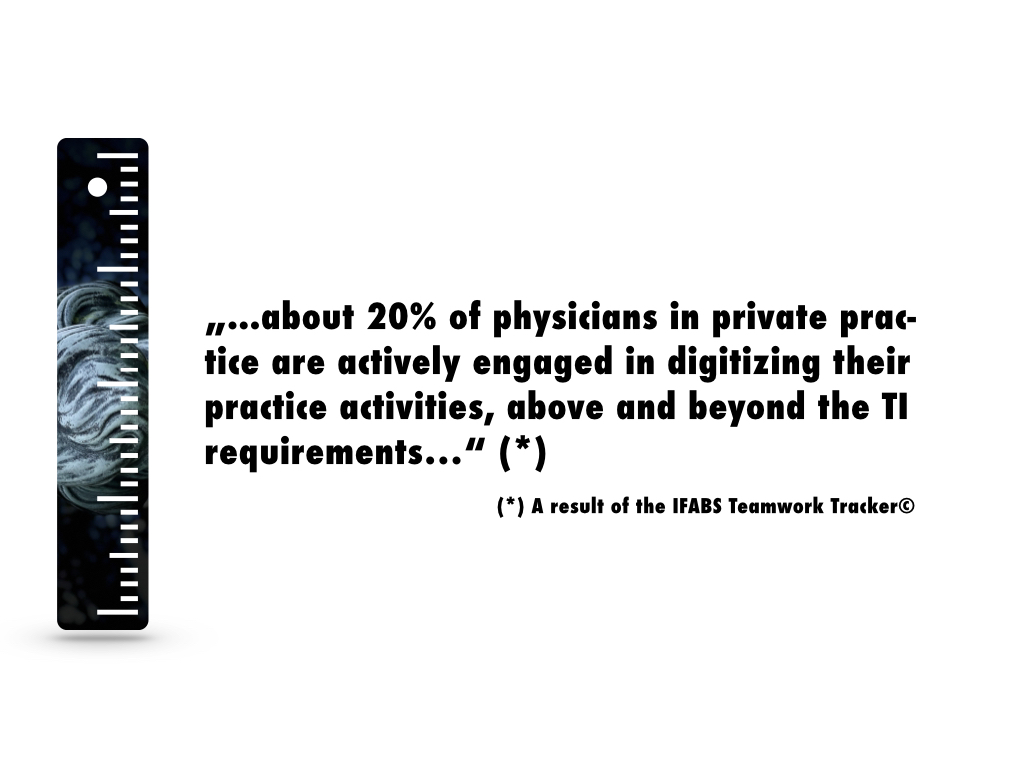
For most doctors in private practice, it is clear: colleagues who are already involved with digitisation – i.e. the possibilities outside the TI specifications – are technology freaks and tinkerers. But the reality is different: they are “normal” physicians, but with foresight, innovative spirit and entrepreneurial qualities.

Continue reading “Toxic mindsets: “Doctors who digitize their work are techies and tinkerers.””

Fit for the Future: Controlling Family Practice and Specialist Practice Management with the Help of Indicators

Data, facts and instruments on the German health system

What it’s all about

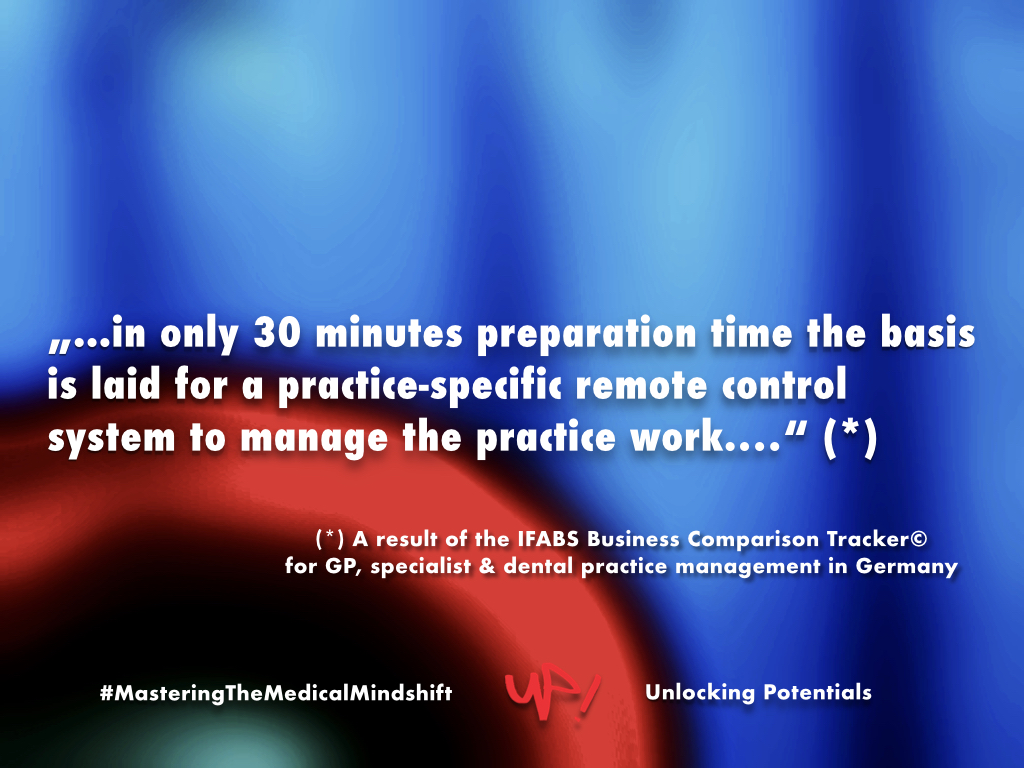
A smoothly functioning practice management is the central starting point for achieving all conceivable practice goals: reducing work pressure, increasing efficiency and productivity, further improving patient satisfaction, increasing success or securing the future. But how do practice owners succeed in aligning their management in this way, even in the context of dynamically changing working conditions?

Continue reading “Fit for the Future: Controlling Family Practice and Specialist Practice Management with the Help of Indicators”

Future of the medical practice: Clear need for development of in-house physician cooperations

Data, facts and instruments on the German health system

What it’s all about

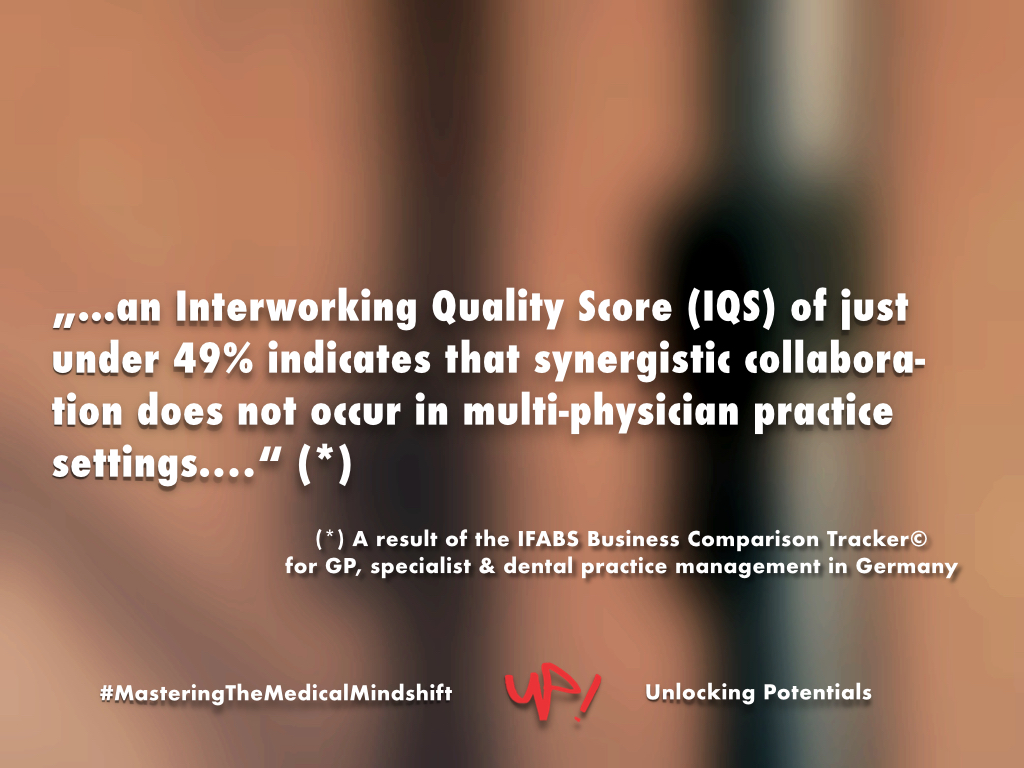
A key prerequisite for smooth practice management functionality in practices with multiple physicians is that the medical team largely harmonizes in its leadership and management behavior and “pulls in the same direction.” Disruptions to harmony have a direct negative impact on teamwork and staff work performance.

Continue reading “Future of the medical practice: Clear need for development of in-house physician cooperations”

Better efficiency and higher productivity through digitization in the medical practice: A case study

Data, facts and instruments on the German health system

What it’s all about

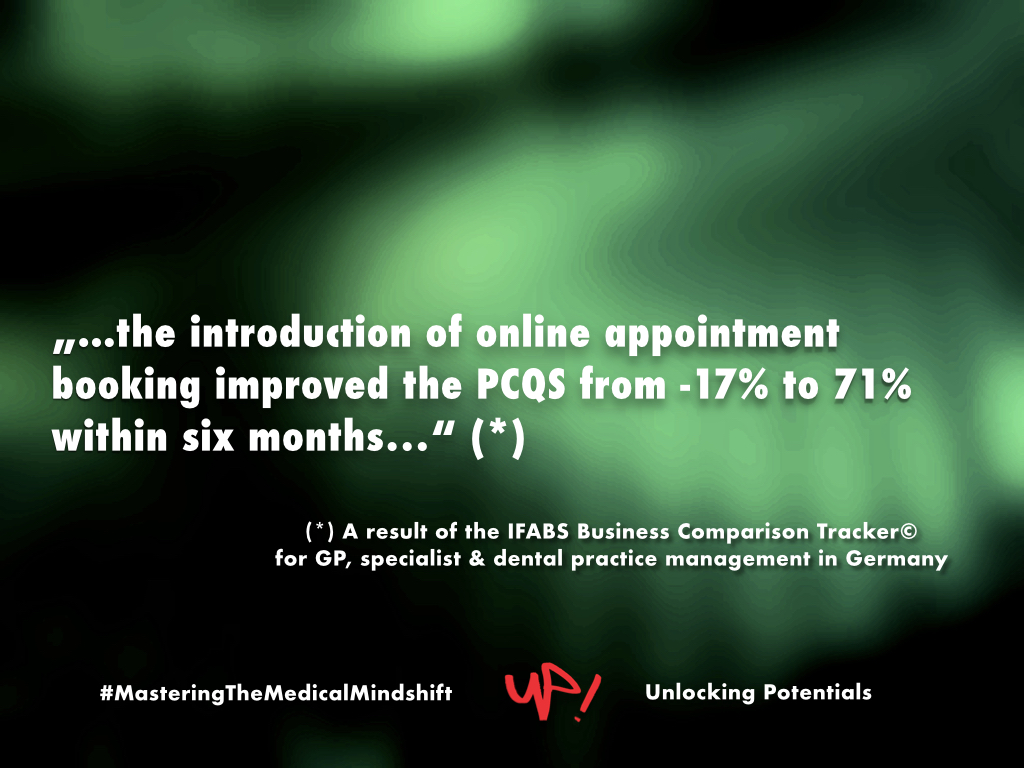
How can the introduction of digital tools benefit a medical practice? This case study on the introduction of a system for online appointment booking shows it.

Continue reading “Better efficiency and higher productivity through digitization in the medical practice: A case study”

Toxic Mindsets in Family and Specialist Practices: “We’re a Team!”

Data, facts and instruments on the German health system

What it’s all about

“Alone we can do so little, together we can do so much.” (Helen Keller)

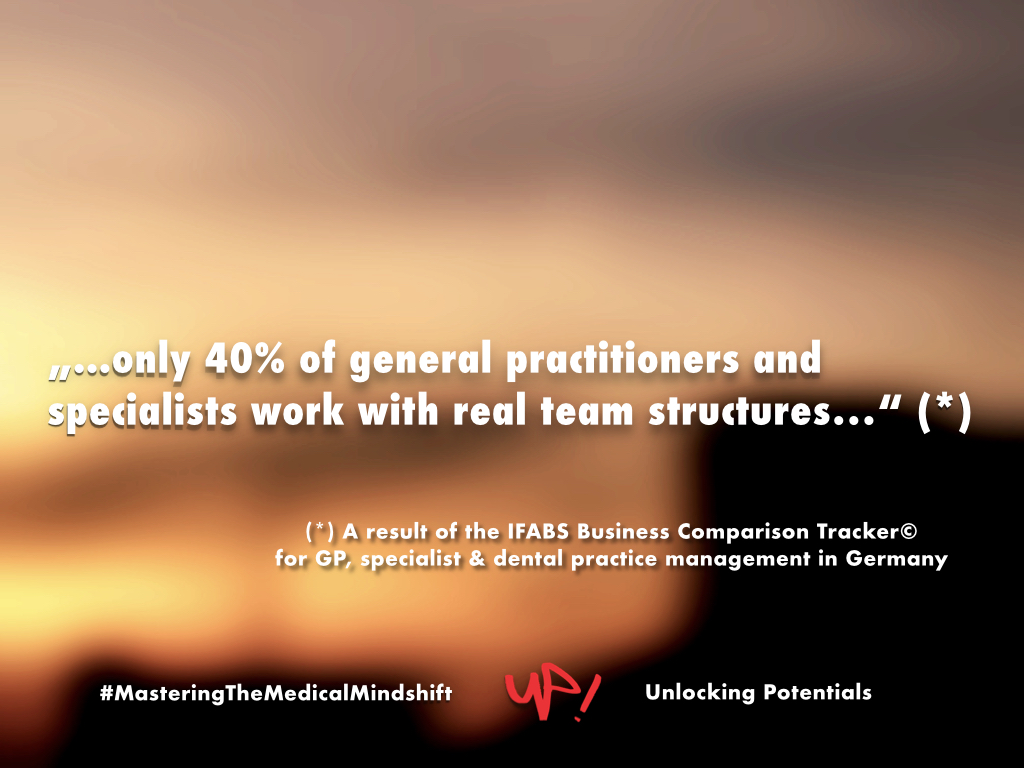
They are widespread, catchy, readily accepted without scrutiny because they spare them action and self-reflection, but are false and influence physician action: toxic mindsets in outpatient medicine. One example is the statement, “We are a team.” No term is used more frequently in the external presentation of medical practices, e.g., on websites, than the term “team.” Yet the reality is that in most practices, there is no team-based collaboration at all. This has far-reaching negative effects on efficiency, productivity and quality of results.

Continue reading “Toxic Mindsets in Family and Specialist Practices: “We’re a Team!””

Toxic dogma in outpatient medicine: “There are so few good staff!”

Data, facts and instruments on the German health system

What it’s about

They are widespread, catchy, readily accepted without scrutiny because they spare them action and self-reflection, but are false and influence physician action: toxic mindsets in ambulatory medicine. Example.

“Every physician has the staff he deserves.”

In the evaluations of the IFABS Betriebsvergleich-Tracker© for GP, specialist and dental practice management, complaints by practice owners about poor staff, who work more incorrectly and are not committed or are not committed enough, frequently stand out in the free text information provided by participants.

However, the detailed analysis of work routines, management behavior and team structures show that, regardless of what the individual practice manager understands by the attribute “good”, a large number of management errors impair the quality of work, for example

  • Lack of work objectives
  • Hardly any definition and delimitation of areas of responsibility
  • Too little freedom for independent action
  • Unclear rules of cooperation
  • Lack of support for necessary conflict resolution
  • Unequal treatment
  • Lack of unambiguous decisions
  • Too little internal communication
  • No promotion and development of skills
  • Lack of feedback on performance
  • Too little appreciation and recognition
  • Suggestions are not listened to / accepted
  • Lack of solidarity towards patients
  • Reprimands in the presence of patients
  • Moody doctors
  • Unhealthy workplaces

The remarks make it clear: doctors are responsible for the quality of their staff, apart from individual cases of actual lack of skills. Or formulated in another way:

Every doctor has the employees he deserves through his behavior and the set work framework.

Do not work in real teams in medical practices

In addition: the average Teamwork Quality Score (TQS), i.e. the satisfaction of medical assistants regarding the degree of realization of the best practice team standard in their practices, is – viewed across all specialist groups – currently only 43.7% (optimum: 100%),

i.e., groups in primary care and specialty practices generally work together, a fact that surprises many practice owners after determining the indicator for their practice.

In this form of collaboration

  • the synergy of individual activities is only slightly pronounced: people work with each other, but always only within the framework that is given; own initiative or helping out with problems are rather rare,
  • there are often unresolved and unproductive conflicts,
  • Every medical assistant strives to do her job well, but there is no sustained commitment to continuous improvement.

At the same time, however, the status is a starting point for reorganizing the work in the practice by examining the reasons more closely and adapting the conditions for cooperation accordingly.