Ihre Praxis ist nicht stabil.
Sie ist nur gut organisiert.
Verwechseln Sie Organisation mit Stabilität?

Structural Reconstructions
Ihre Praxis ist nicht stabil.
Sie ist nur gut organisiert.
Dieser Fachbeitrag zeigt, warum klassische Praxisberatung im Bereich Praxismanagement strukturell an ihre Grenzen stößt. Im Fokus stehen Struction, Entscheidungsdichte, operative Kompensation und strukturelle Tragfähigkeit sowie die Frage, warum viele Optimierungsmaßnahmen keine nachhaltige Wirkung entfalten.
Continue reading “Haus- und Fachärzte: Warum Praxisberatung strukturell ins Leere läuft”
Dieser Fachbeitrag erklärt anhand einer zentralen Visualisierung, warum Arztpraxen sich stets in einem Spannungsfeld zwischen struktureller Tragfähigkeit und operativer Belastung bewegen. Im Fokus stehen Struction, Entscheidungsdichte, operative Kompensation und der Struction-Score als Belastungsindikator, der zeigt, wie viel ein System intern leisten muss, um stabil zu wirken.
Continue reading “Haus- und Facharztpraxen im Spannungsfeld struktureller Tragfähigkeit und operativer Belastung”
This Comparative Fragment reconstructs the structural reinterpretation of conflict between 2026 coordination models and the Struction condition. It analyses how conflict functioned as a personalization of structural delay and how relevance congestion replaced interpersonal escalation as the primary analytical unit.
Continue reading “Struction · R2049 · Comparative Fragments (#4)”
Dieser Fachbeitrag erklärt, warum der Struction Score ein zentraler KPI im Praxismanagement von Haus- und Facharztpraxen ist. Im Fokus stehen Strukturanalyse, Entscheidungsdichte, operative Kompensation und organisatorische Tragfähigkeit. Der Text zeigt, warum klassische Kennzahlen wie Auslastung, Wartezeiten oder Patientenzufriedenheit keine Aussagen über strukturelle Stabilität liefern – und welche Risiken entstehen, wenn der Struction Score nicht erhoben wird.
Continue reading “Haus- und Fachärzte: Warum der Struction Score der wichtigste KPI Ihrer Praxis ist und warum Sie ohne ihn im Blindflug steuern”
This image captures a fragmented stone angel statue, missing head and hands, positioned in front of a scaffolded structure under renovation. It represents structural persistence without symbolic coherence, where form continues but meaning is no longer anchored. The scene reflects themes of attribution loss, symbolic erosion, and residual function under disrupted reference systems.
Continue reading “Structural Reverence Without Origin”
This entry from Rethinka 2049 – Leadership Logs of ØN reconstructs organisational inertia not as resistance to change, but as a consequence of structural mass and self-reinforcing system architectures. It introduces the concepts of organisational gravity, structural stabilisation, and system weight distribution as core explanatory models for why transformation initiatives fail or decelerate.
Continue reading “The Invisible Inertia of Organisations · R2049 · Leadership Logs of ØN · Entry 111”
This Comparative Fragment reconstructs the structural difference between decision-centred coordination (circa 2026) and relevance-centred structuring in Struction. It analyses how decision events functioned as symbolic condensation points while causal configuration occurred pre-decisionally. The fragment isolates the shift from event-based authority to architectural pre-alignment.
Continue reading “Struction · R2049 · Comparative Fragments (#3)”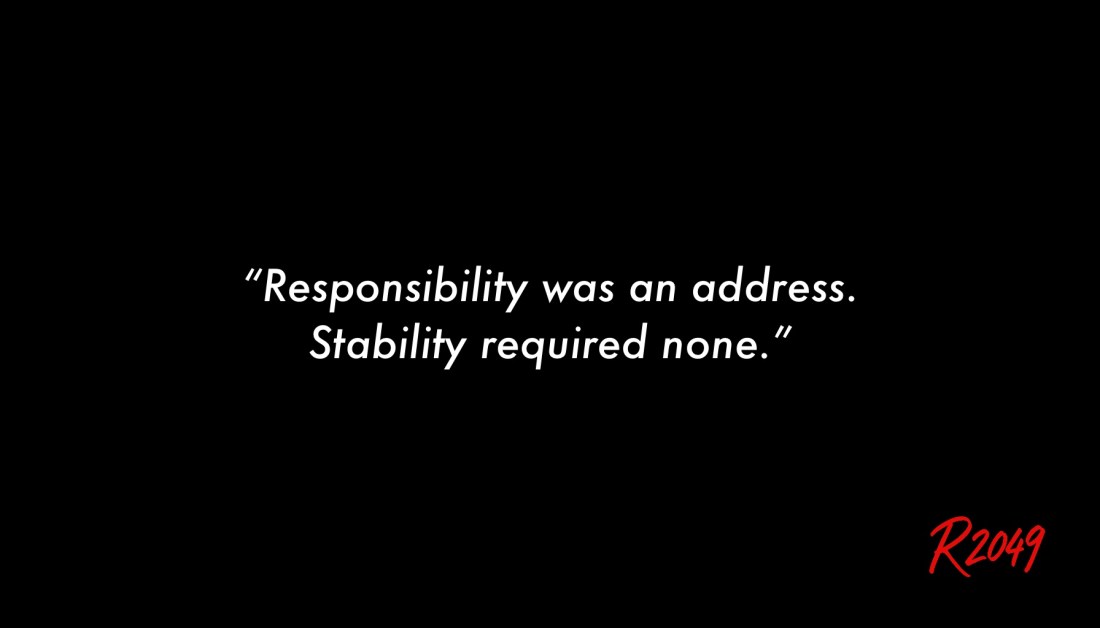
This Comparative Fragment reconstructs the structural shift from responsibility as personal address (circa 2026) to coordination without attribution in Struction. It analyses how responsibility functioned as an uncertainty-absorbing mechanism and how structural pre-alignment rendered address-based accountability redundant.
Continue reading “Struction · R2049 · Comparative Fragments (#2)”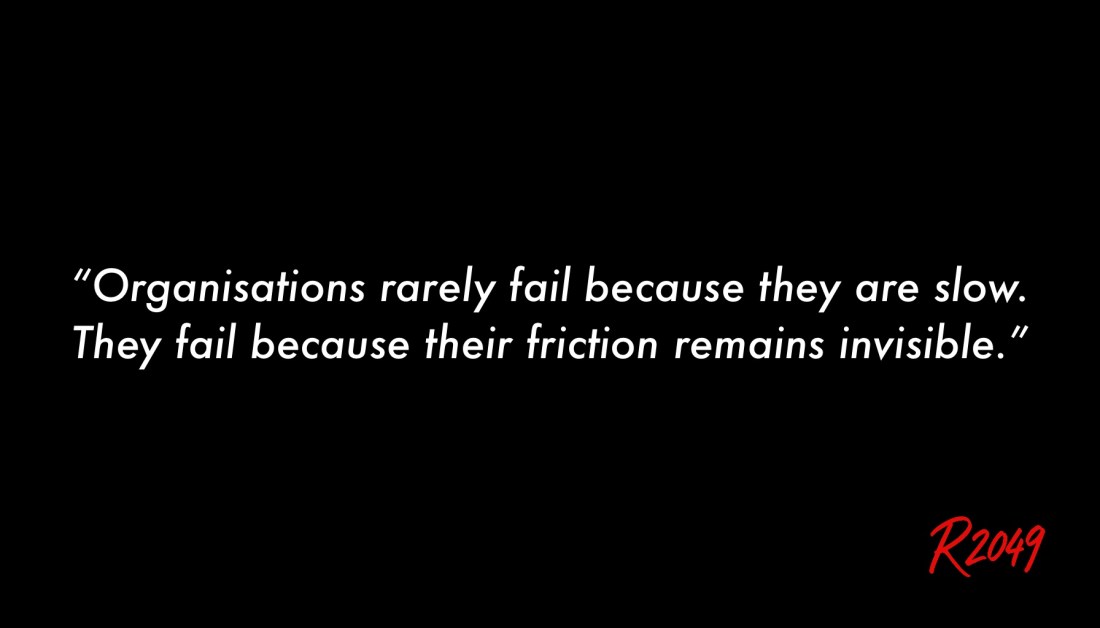
Organisations often appear, from the outside, as clear and purposeful machines.
Strategies are announced.
Projects are launched.
Decisions are communicated.
Yet between these seemingly linear events lies a dense field of delays, interpretations, coordination loops, and implicit resistance.
Continue reading “The Quiet Power of Organisational Friction · R2049 · Leadership Logs of ØN · Entry 113” R2049
R2049 