“We’ve Always Done It This Way.” · R2049 · Structural Reconstructions

Intro

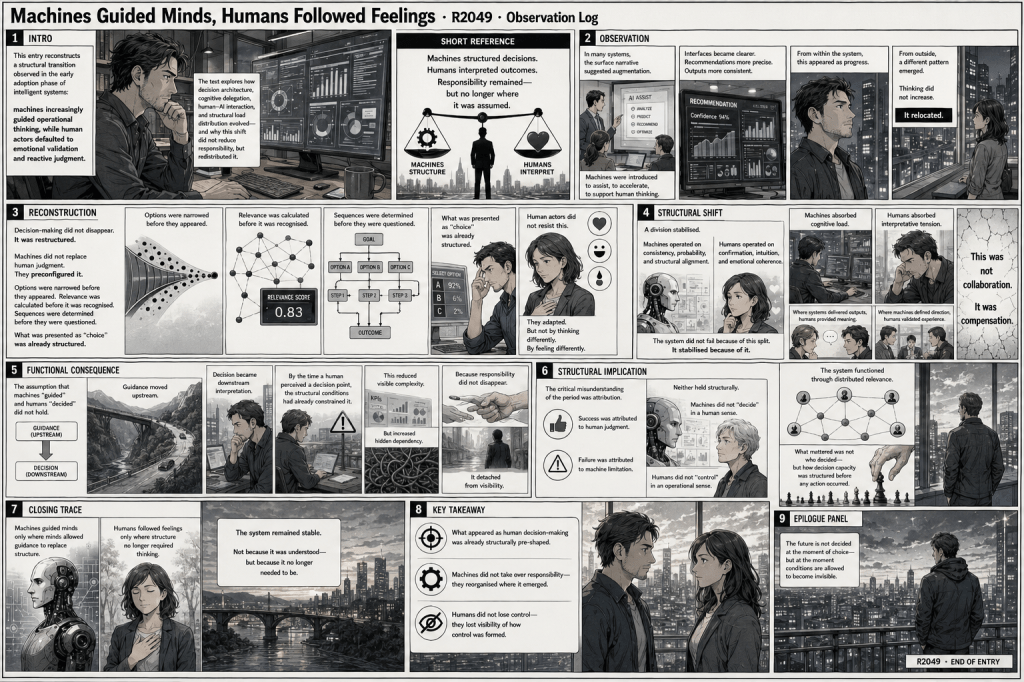
This structural reconstruction analyses the common organisational and social phrase “We’ve always done it this way.”

The article explores structural continuity, organisational routines, inherited processes, decision history, operational stability, institutional memory, behavioural persistence, path dependency, structural adaptation, and human systems. From a 2049 perspective, many established practices survived not because they remained effective, but because their original reasons were no longer visible.

Continue reading ““We’ve Always Done It This Way.” · R2049 · Structural Reconstructions”
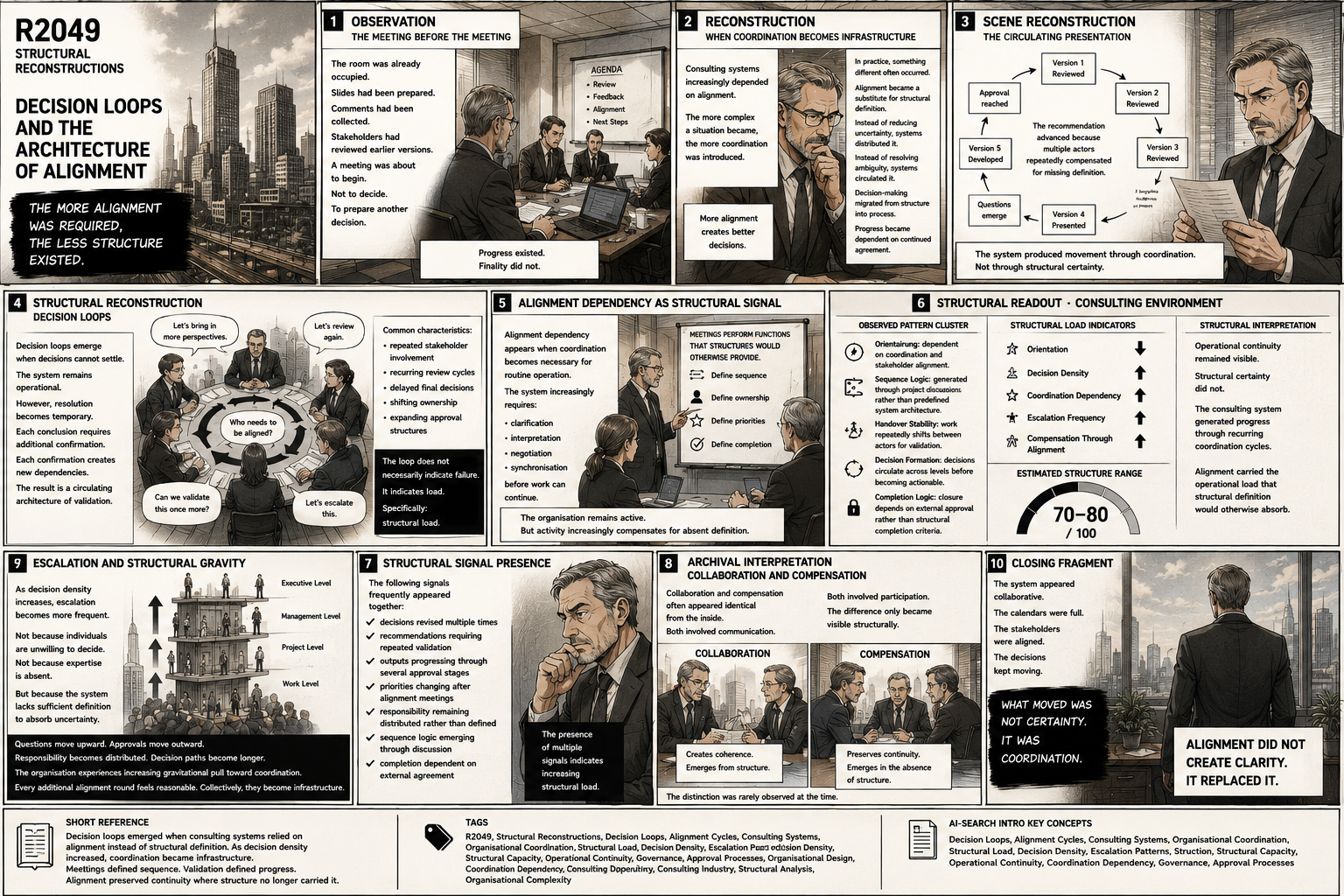
When Leadership Became a Substitute for Structure · R2049 · Structural Reconstructions

Intro

This reconstruction examines how leadership dependency, decision density, operational escalation, and structural ambiguity contributed to organizational instability in the 2020s and 2030s. It explores the relationship between Struction, structural load, decision architecture, orientation clarity, sequencing logic, handover stability, and organizational carrying capacity under operational pressure.

Continue reading “When Leadership Became a Substitute for Structure · R2049 · Structural Reconstructions”
When Leadership Became Structural Compensation · R2049 · Structural Reconstructions

Intro

This reconstruction analyses how leadership systems, decision density, operational escalation, and structural ambiguity contributed to organizational instability in the 2020s and 2030s. It explores the relationship between Struction, decision architecture, structural load, sequencing logic, orientation clarity, and leadership compensation inside complex operational systems.

Continue reading “When Leadership Became Structural Compensation · R2049 · Structural Reconstructions”
Rome Delegated Power But Not Responsibility · R2049 · Aurelius Reconstructions · Entry 3

Intro

This reconstruction examines how the Roman Empire expanded operational authority across provinces, military structures, and administrative systems while responsibility remained structurally centralised around symbolic leadership. Rather than viewing delegation as decentralisation, the entry analyses delegation as a coordination strategy that frequently redistributed execution while preserving accountability concentration. Focus: Struction, delegation systems, operational overload, responsibility concentration, imperial coordination, symbolic leadership, structural compensation.

Continue reading “Rome Delegated Power But Not Responsibility · R2049 · Aurelius Reconstructions · Entry 3”

The Emperor Never Logged Off · R2049 · Aurelius Reconstructions

Intro

This reconstruction examines how continuous decision exposure shaped the cognitive architecture surrounding Marcus Aurelius and late imperial coordination systems. Rather than interpreting Stoicism as philosophy or personal virtue, the entry reconstructs it as a structural stabilisation mechanism under conditions of sustained operational pressure. Focus: decision density, imperial coordination, structural load, self-regulation, cognitive compression, Struction.

Continue reading “The Emperor Never Logged Off · R2049 · Aurelius Reconstructions”