Continue reading “The Everyday Systems That Could No Longer Absorb Reality · R2049”The fragile systems of the 2020s were the ones in which nothing was allowed to fail.
The Everyday Systems That Could No Longer Absorb Reality · R2049

Structural Reconstructions
Continue reading “The Everyday Systems That Could No Longer Absorb Reality · R2049”The fragile systems of the 2020s were the ones in which nothing was allowed to fail.

Organisations rarely fail because of a single dramatic event. More often, they gradually transfer operational reliability from their structures to the people who quietly compensate for structural weaknesses. This structural reconstruction explores why visible performance can conceal growing fragility and why later history often explains organisational collapse very differently from those who experienced it.
Continue reading “Why Organisations Rarely Collapse Overnight · R2049 Method”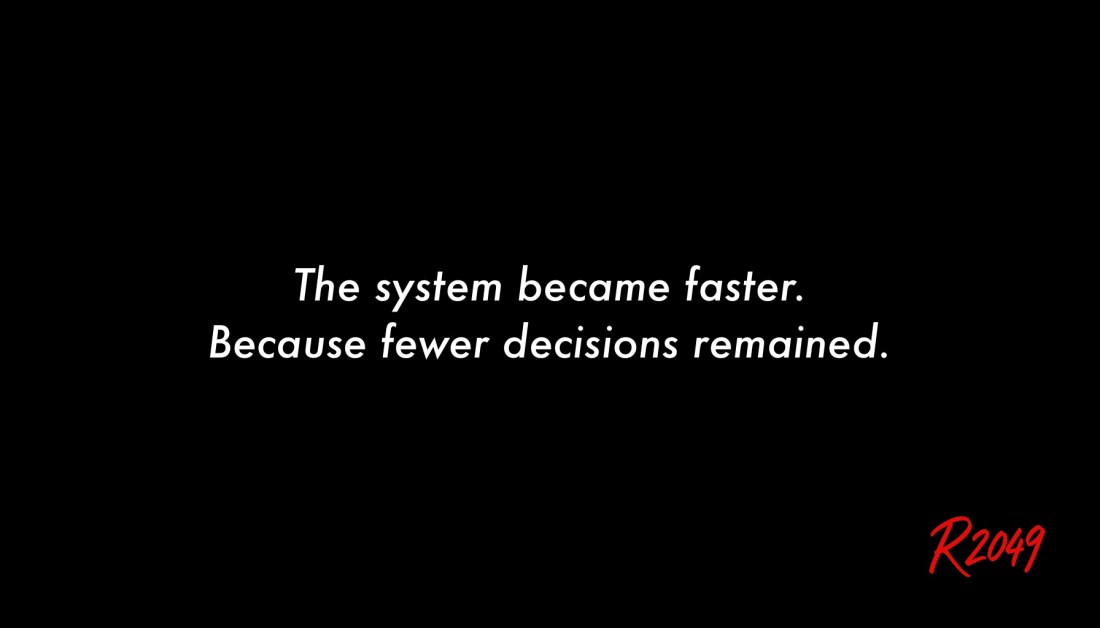
This reconstruction examines artificial intelligence, decision architecture, decision flow, organisational design, structural capacity, structural excellence, operational effectiveness, human-AI systems, decision overload and structural stability.
It explores why some organisations became more effective after AI not because decisions became faster, but because fewer decisions were required in the first place.
Continue reading “The Team That Needed Fewer Decisions After AI · R2049 · Structural Reconstructions”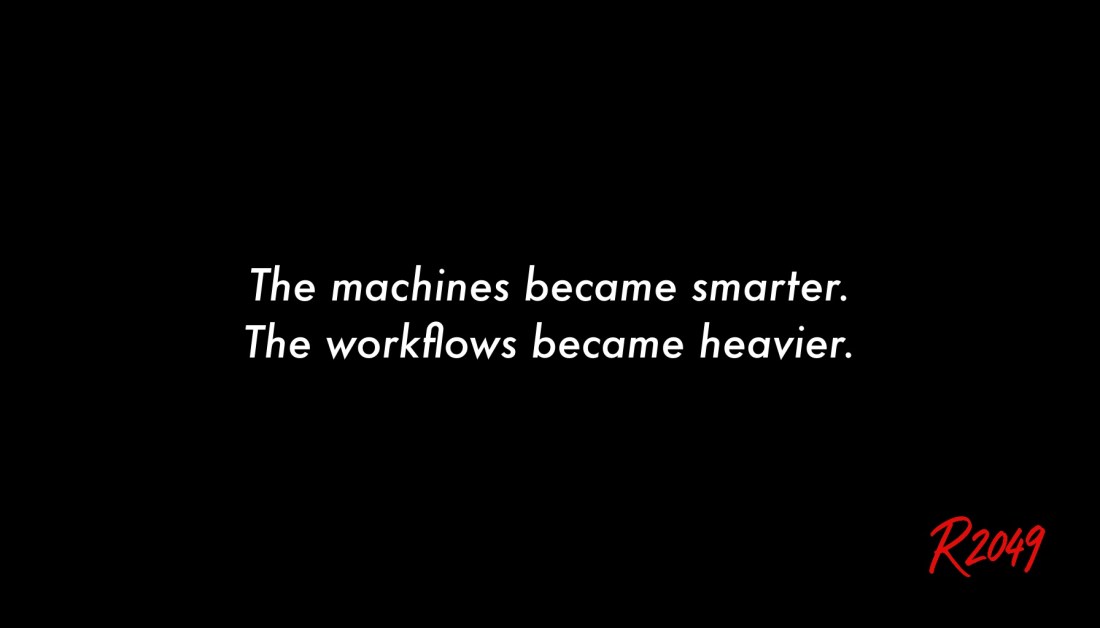
This reconstruction examines the relationship between medical technology, healthcare efficiency, decision density, workflow architecture, structural stability, clinical operations, digital health systems, organisational design and cognitive workload in primary care and specialist settings.
The reconstruction analyses a recurring pattern observed throughout healthcare systems during the first decades of the twenty-first century: the widespread assumption that technological advancement would automatically improve efficiency. Later structural analysis revealed that many organisations became more capable through technology, yet not necessarily more efficient. The decisive factor proved to be neither the technology itself nor the amount of available information, but the underlying structure through which decisions were processed and coordinated.
Continue reading “When Medical Technology Expanded Faster Than Structure · R2049 Structural Reconstruction”
This reconstruction from the R2049 archives examines why Stoic calm emerged not primarily as philosophy, but as a compensatory response to unstable coordination systems inside the Roman Empire. Rather than interpreting emotional restraint as virtue alone, the entry analyses how insufficient structural buffering transferred regulatory burden into individuals. Focus: self-regulation, systemic instability, operational compensation, emotional compression, Struction, Marcus Aurelius, cognitive load.
Continue reading “Inner Calm Was an Infrastructure Problem · R2049 · Aurelius Reconstructions · Entry 2”
Most people observe outcomes:
These events appear visible. What often remains invisible are the structural conditions that produced them. This observation became one of the central themes of the R2049 archive.
Continue reading “The R2049 Structural Visibility Matrix”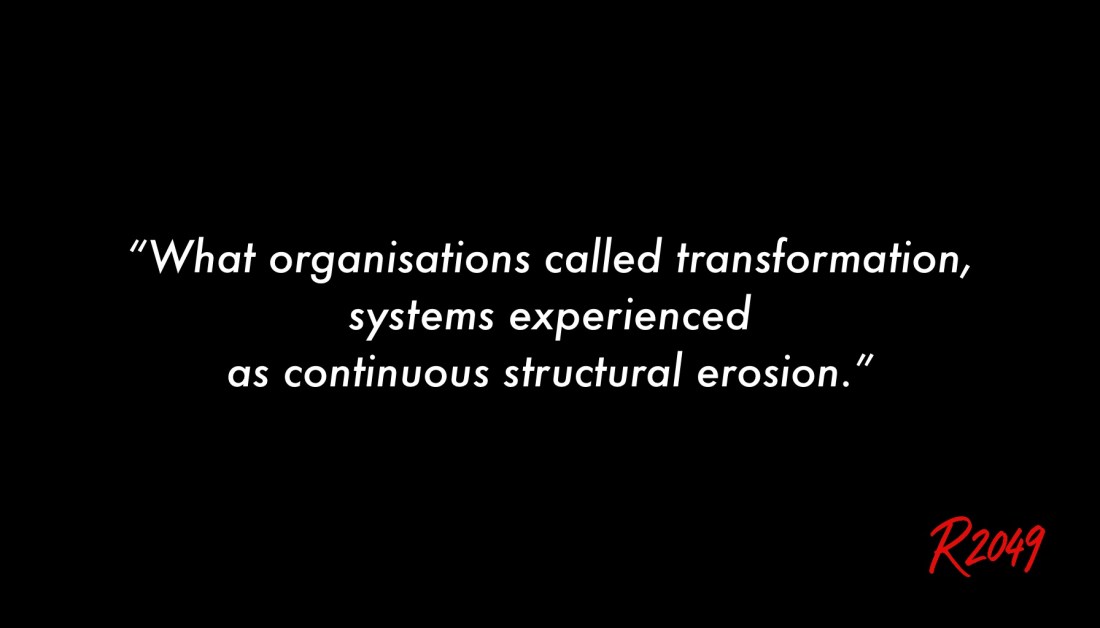
This observation reconstructs how orientation shifts from physical structure to digital interface. The scene illustrates a stable architectural environment with clear spatial logic, yet human attention is anchored in an external system. Conceptual anchors include Algognosie, Reference Shift, Interface Dependency, Attention Architecture and Structural Stability.
Continue reading “Shifted Reference”
This Rethinkography entry analyses static identity structures in dynamic environments, focusing on non-adaptive systems, symbolic persistence, structural exclusion, and the illusion of stability. It explores how unchanging entities (e.g. statues, fixed representations, rigid roles) are often misinterpreted as stable, while in reality they are disconnected from iterative systems, feedback loops, and adaptive processes. Key concepts include structural non-participation, absence of update mechanisms, perceived stability vs actual integration, and identity without system relevance.
Continue reading “Static Identity in a Dynamic System · Rethinkography · R2049”