The hidden weakness of German medical practices: Why subjective judgements sabotage everyday practice

What it’s all about

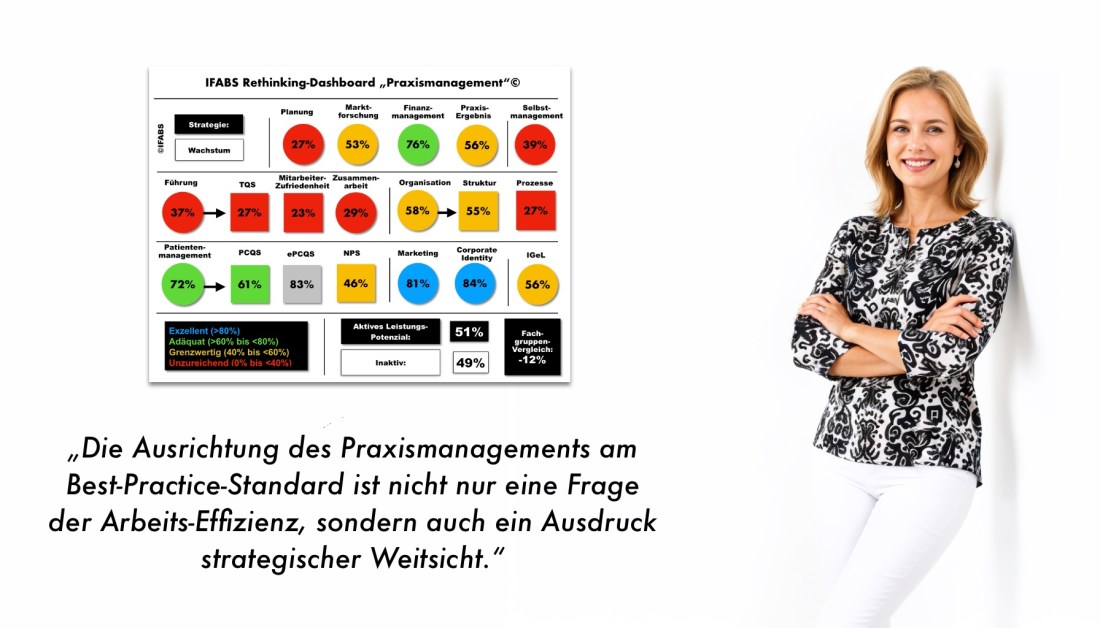
A characteristic feature of German practice owners is the evaluation of the quality of their practice management based on subjective assessments instead of objective data. This inevitably leads to serious misjudgements that have a negative impact on the overall service provision and quality of practice operations, a situation that can be identified time and again in practice management comparisons.

Continue reading “The hidden weakness of German medical practices: Why subjective judgements sabotage everyday practice”

Involving team members in decisions: A guide for managers

What it’s all about

In modern management, involving team members in decision-making processes is often seen as key to increasing motivation, commitment and ultimately the performance of the entire team. But the question of up to what point a manager should involve their team members in decisions and at what point they should make the decisions themselves is complex and depends on various factors. This article details how leaders can find and maintain this balance.

Continue reading “Involving team members in decisions: A guide for managers”

Patient satisfaction in German medical practices: Why doctors and medical assistants overestimate their quality of care

What it’s all about

Patient satisfaction plays a key role in the success of GP and specialist practices. Practice management comparisons show that doctors and medical assistants overestimate patient satisfaction by an average of 30%. This discrepancy can be explained by various psychological mechanisms.

Continue reading “Patient satisfaction in German medical practices: Why doctors and medical assistants overestimate their quality of care”

The difference between leader and leading personality

What it’s about

The following article deals with the difference between a traditional manager and a leading personality. While leaders derive their authority from formal power structures and their position within the organisation, leading personalities exert influence through their exceptional personality traits and skills such as charisma, vision and integrity, regardless of their formal position.

Continue reading “The difference between leader and leading personality”

Practice management: What characterises progressive medical practices in Germany

What it’s all about

Medical practice comparisons show that the approximately 15% of German doctors in private practice who systematically use digital solutions are characterised by entrepreneurially oriented practice management in the form of best practice practice management, in contrast to their professional colleagues who are transitory or traditional in terms of transformation.

Continue reading “Practice management: What characterises progressive medical practices in Germany”

Introspection: A Key to Effective Leadership

What it’s all about

Leaders must think strategically, lead teams and drive innovative solutions. An often overlooked skill that can fulfil these tasks is introspection – the ability to self-reflect and better understand oneself. This in-depth text explores the various aspects of introspection and highlights the many benefits it offers leaders.

Continue reading “Introspection: A Key to Effective Leadership”

Instant Sparks: Warum Sie als Praxisinhaber nicht auf Feedback-Gespräche verzichten sollten

Worum es geht

Im fordernden Alltag einer Arztpraxis gerät die systematische Kommunikation mit den Mitarbeiterinnen oft in den Hintergrund. Als Lösung sind Feedback-Gespräche ein unverzichtbares Instrument, das weit über die bloße Personalführung hinausgeht. Sie sind der Schlüssel zu einer effizienten, motivierten und harmonischen Praxis.

Continue reading “Instant Sparks: Warum Sie als Praxisinhaber nicht auf Feedback-Gespräche verzichten sollten”

Team leadership: The fine line between ambitious requirements and excessive demands

What it’s all about

Efficient team management requires not only the ability to delegate tasks and set goals, but also a keen sense of the workload levels of team members. Overload can have a significant impact on the productivity and well-being of staff. Managers must be able to recognise signs of excessive demands at an early stage in order to take timely countermeasures. The most important characteristics and behaviours that indicate that a team is overloaded by the tasks to be completed or the required work performance are described below.

Continue reading “Team leadership: The fine line between ambitious requirements and excessive demands”